Your "Healthy" Produce Is Poisoning You: The 2026 Dirty Dozen and What to Do About It
The 2026 EWG Dirty Dozen reveals alarming pesticide contamination on everyday produce. Learn which foods are worst, how pesticides wreck your metabolism, and how to protect yourself.
Medical Disclaimer
This content is for informational and educational purposes only. It is not a substitute for professional medical advice, diagnosis, or treatment. Always seek the advice of your physician or other qualified health provider with any questions you may have regarding a medical condition.
Your "Healthy" Produce Is Poisoning You: The 2026 Dirty Dozen and What to Do About It
Every year, the Environmental Working Group releases their Dirty Dozen list. And every year, it serves as a sobering reminder that even "healthy" whole foods can be quietly working against you.
If you follow Biospark Health, you are likely already making intentional choices with your food: cutting seed oils, going grass-fed, prioritizing organ meats. That is great. But pesticide contamination on produce is something that does not get talked about nearly enough in health circles, and it deserves serious attention.
Here is where things stand in 2026.
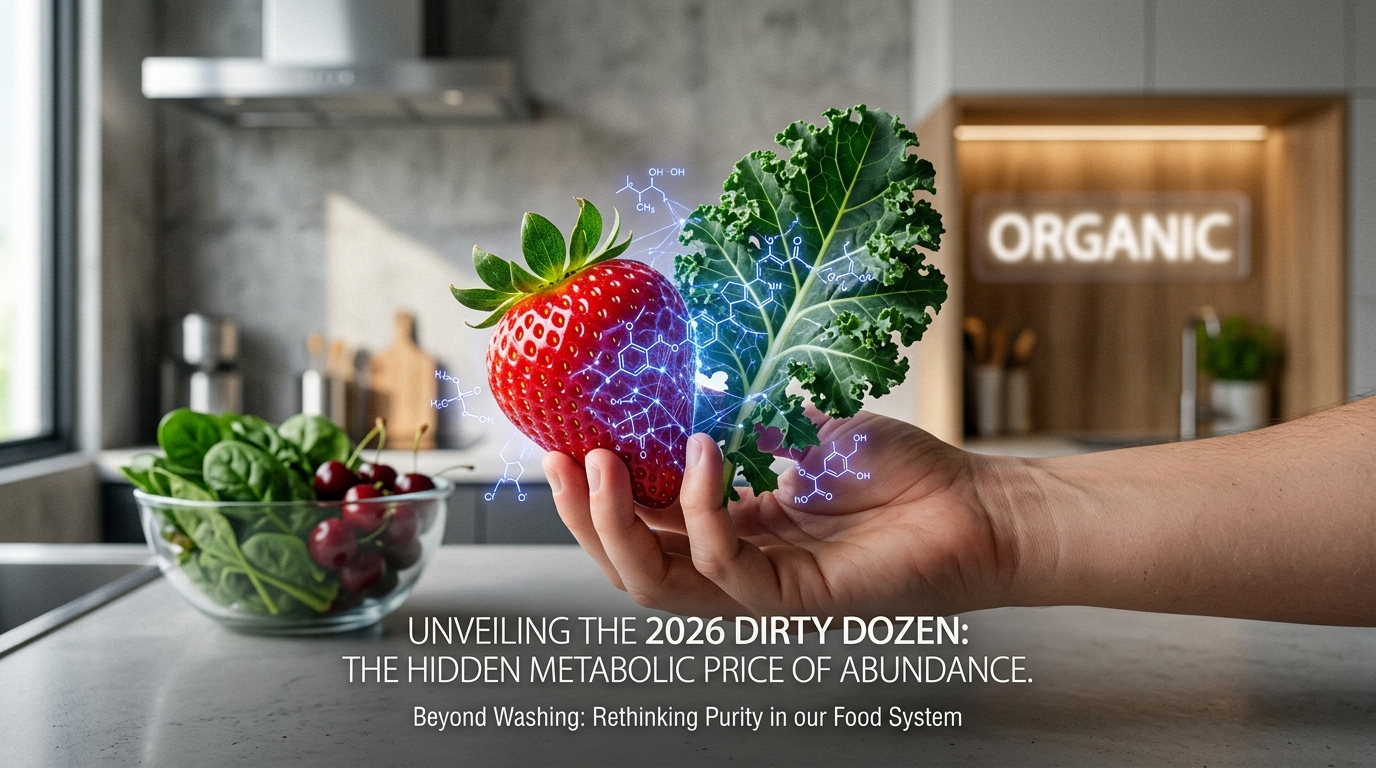
The 2026 Dirty Dozen: Pesticides Hiding in Your Produce
According to the EWG's 2026 Shopper's Guide to Pesticides in Produce, these are the most heavily contaminated fruits and vegetables, ranked in order:
- Spinach
- Kale, Collard, and Mustard Greens
- Strawberries
- Grapes
- Nectarines
- Peaches
- Cherries
- Apples
- Blackberries
- Pears
- Potatoes
- Blueberries
Pesticides were detected on 96% of samples across all 12 types of produce. In total, 203 different pesticides were identified. These are not trace amounts on obscure crops. These are chemicals coating the fruits and vegetables that most Americans eat every single day.
While there is still debate about long-term, low-dose, and cumulative exposure effects, the data pointing toward their potential health consequences is becoming almost impossible to ignore.
The Research You Cannot Afford to Ignore
Two studies stand out, not just because of their results, but because of the quality of evidence behind them. Both used rigorous exposure assessment, showed clear dose-response relationships, and have been highly influential in the broader discussion around pesticide safety.
Pesticides and Children's Brain Development
The first study examined prenatal exposure to organophosphate pesticides, the kind commonly used on produce, and measured IQ in children at age seven. Children in the highest exposure group scored an average of 7 IQ points lower than those with the least exposure, with a clear dose-response relationship. This was not self-reported data. Researchers used urinary biomarkers to directly measure exposure in pregnant mothers (PMID: 21507776).
Seven IQ points may not sound like much in isolation. But at the population level, that shift moves millions of children from "average" into ranges associated with learning difficulties. From a bioenergetic perspective, this makes complete sense: organophosphates are known mitochondrial toxins that interfere with ATP production in developing neural tissue. When the cells responsible for building a child's brain cannot produce adequate energy, the architecture suffers.
Glyphosate and Cancer Risk
The second is a meta-analysis pooling data from six high-quality epidemiological studies on glyphosate exposure and non-Hodgkin lymphoma. The highest exposure groups showed a 41% increased risk of this blood cancer. This was the study that reinforced the International Agency for Research on Cancer's classification of glyphosate as "probably carcinogenic" to humans (PMID: 31342895).
More broadly, synthetic pesticides have been linked to increased risk of various types of cancer, Parkinson's disease, neurodevelopmental conditions, endocrine disruption, and reproductive harm (PMID: 36134639, 22627180, 29729297, 23184105, 29596925, 39000054, 32380469).
So the question is not whether pesticides are harmful. The question is: how can we best protect ourselves from them?
Why Pesticides Are a Metabolic Problem (Not Just a "Toxin" Problem)
Most health content about pesticides frames the issue purely in terms of cancer risk. That matters, but it misses the bigger picture.
At Biospark Health, we view pesticides through the lens of cellular energy production, and the picture is far more alarming than most people realize.
Your mitochondria, the energy-producing organelles in every cell, require very specific conditions to convert food into usable ATP. Pesticides disrupt this process at multiple levels:
Mitochondrial poisoning. Organophosphates and other pesticide classes directly inhibit the electron transport chain, the final and most efficient stage of cellular energy production. When this system is compromised, your cells cannot generate adequate ATP regardless of how well you eat. According to the bioenergetic model, toxins kill cells by forcing them to expend energy faster than it can be replaced, a process that leads to structural collapse at the cellular level.
Gut microbiome destruction. Glyphosate, the most widely used herbicide on the planet, is patented as an antimicrobial agent. It decimates beneficial gut bacteria while promoting the overgrowth of pathogenic species. This bacterial imbalance leads to massive production of metabolic endotoxins (lipopolysaccharides), which are absorbed into the bloodstream and further inhibit mitochondrial energy conversion throughout the entire body.
Mineral chelation. Glyphosate binds to essential minerals like magnesium, zinc, and manganese, the very cofactors your mitochondria need for energy production. You could be taking all the right supplements while glyphosate renders them useless.
Endocrine disruption. Many pesticides act as endocrine disruptors, interfering with thyroid hormones, reproductive hormones, and cortisol regulation. Since thyroid hormones are the master regulators of your metabolic rate, even subtle disruption can cascade into fatigue, weight gain, brain fog, and dozens of other symptoms that conventional medicine treats with drugs rather than tracing back to the root cause.
This is not a minor inconvenience. This is a direct assault on your body's ability to produce energy at the cellular level. And when cellular energy fails, everything downstream fails with it.
Spinach and Kale: The Worst Offenders Deserve Special Attention
Leafy greens sitting at numbers one and two on the Dirty Dozen list is no surprise, and the pesticide data here is genuinely alarming.
Spinach: Not the Superfood You Think
Three-quarters of non-organic spinach samples are contaminated with permethrin, a neurotoxic insecticide that Europe has banned from use on food crops since 2000. At high doses, permethrin overwhelms the nervous system and causes tremors and seizures. But even lower-level exposure poses real risks, particularly for children. In one study, kids with detectable permethrin residues in their urine were twice as likely to be diagnosed with ADHD (PMID: 26017680).
And that is before even getting into the oxalate problem. Spinach is one of the most oxalate-dense foods on the planet. Oxalates are plant defense chemicals that bind to minerals like calcium and iron in your gut, blocking absorption and contributing to kidney stone formation. A food that is already working against you nutritionally, combined with a neurotoxic pesticide? That is a combination worth avoiding.
Kale: The Other "Superfood" With a Dark Side
Nearly 60% of kale samples tested positive for DCPA, a pesticide the EPA classifies as a possible carcinogen and one the EU banned back in 2009. According to the EPA's own assessment, exposure to DCPA during pregnancy can disrupt fetal thyroid hormone levels, which are critical for brain development. Animal studies also showed increased liver and thyroid tumors with long-term exposure.
Kale is also a hyperaccumulator of thallium, a toxic heavy metal. Combined with its pesticide burden and its goitrogenic properties (compounds that can suppress thyroid function), kale is far from the innocent superfood that mainstream wellness culture promotes.
If you do want to eat greens, the least problematic options are those with fewer defense chemicals and a lower pesticide load. Lettuce is probably the most benign choice if you are going to go that route.
How to Protect Yourself: Three Practical Steps
The good news is that you can significantly reduce your exposure through a few intentional choices. Do not let perfect be the enemy of good here. Whatever steps you take will have compounding effects for your health.
1. Go Organic Where It Matters Most
The single best thing you can do is switch to organic for the worst offenders on the Dirty Dozen list. If going fully organic is not feasible for your budget, pick your battles. Tackling even two or three items from this list would be a meaningful victory for your health.
Leafy greens are clearly the ones to be most cautious about. Avoid conventional spinach and kale entirely, or spring for organic. Head to your local farmers' market, shake the hand that feeds you, and ask questions about how their fruits and vegetables are grown. That direct relationship with your food source provides peace of mind that no grocery store label can match.
For the items lower on the list (pears, potatoes, blueberries), organic is still ideal but less urgent. And the EWG's Clean Fifteen list (avocados, sweet corn, pineapple, onions, and papaya top it) shows you which conventional produce carries the least risk.
2. Remove Pesticides With a Baking Soda Soak
If you cannot find or afford organic produce for everything, baking soda is remarkably effective at removing most surface pesticide residues. A mildly alkaline solution helps break down certain pesticide compounds, which tend to be acidic.
The protocol: Soak your produce in one teaspoon of baking soda per liter of water for fifteen minutes. Rinse thoroughly before eating.
One important note: do NOT mix baking soda with vinegar. They neutralize each other on contact because vinegar is acidic, rendering the solution less effective. Use baking soda alone.
This will not eliminate pesticides that have been absorbed into the tissue of the produce, but it can significantly reduce surface contamination, which is where most of the residue sits.
3. Think Beyond Just Fruits and Vegetables
Pesticide contamination does not stop at the produce aisle. It runs through staples most people never think to question:
-
Grains: Glyphosate is heavily used as a pre-harvest desiccant on wheat, oats, and barley. Residues can actually be higher in these grains than in many produce items. This is one reason we recommend being very selective about grain consumption.
-
Meat: Conventionally raised livestock are often fed glyphosate-sprayed grains, and those residues can accumulate in the meat and organs on your plate. Even grass-fed labels can be misleading, because grass itself can be sprayed with glyphosate.
-
Honey: Multiple studies have consistently detected glyphosate in honey (PMID: 29995880, 36811186, 36981082, 39792968). Even organic brands can be contaminated through environmental drift.
-
Coffee: Conventional coffee frequently tests positive for multiple pesticide residues, along with mycotoxins and mold. If you drink coffee daily (and we think coffee can be beneficial for metabolic health), source it carefully.
This is the food system we are all navigating. Awareness of where the risks actually live is the first step toward reducing your total toxic burden.
The Biospark Approach: Reducing Your Total Toxic Load
At Biospark Health, we do not look at pesticide exposure in isolation. We look at your total toxic burden and how it interacts with your metabolic health.
Your body has detoxification pathways designed to handle environmental insults. But those pathways require energy to function. When your mitochondria are already compromised by poor nutrition, chronic stress, thyroid dysfunction, or the very pesticides we are discussing, your detox capacity drops. You get stuck in a vicious cycle: toxins suppress energy production, and low energy production impairs your ability to clear toxins.
Breaking this cycle requires a root-cause approach:
- Optimize cellular energy production so your detox pathways have the fuel they need. This means adequate calories from clean sources, proper thyroid support, and strategic supplementation.
- Reduce incoming toxin exposure through the practical steps outlined above. Every pesticide molecule you avoid is one less demand on your already-strained detox systems.
- Support your liver and gut with targeted protocols. Dr. Presciutti works with patients to identify their unique metabolic bottlenecks and build personalized strategies for restoring cellular function.
The mainstream approach to pesticide exposure is to shrug and say "the dose makes the poison." The bioenergetic model recognizes that there is no truly safe threshold for metabolic toxins, especially when your cells are already energy-depleted. Every reduction in exposure matters.
Ready to restore your metabolism at the cellular level?
The Bioenergetic Reset Program addresses root causes, not symptoms. Join 300+ members who have discovered what real metabolic health feels like.
- 9+ hours of comprehensive training
- Twice-monthly LIVE coaching calls
- Complete meal plans and protocols
- Direct email support
/month | Cancel anytime
Reducing Pesticide Exposure in Reading and Berks County, PA
If you are concerned about pesticide exposure in the Reading or Wyomissing area, you are not alone. Many residents throughout Berks County face the same challenge of finding clean, affordable produce without access to practitioners who understand the metabolic impact of these chemicals.
Fortunately, southeastern Pennsylvania has a strong network of local farmers' markets and organic farms. The Reading Terminal area, Lancaster County farms, and seasonal markets throughout Berks County offer direct access to growers who can tell you exactly how their produce is raised.
At Biospark Health, we serve clients throughout the region, including Lancaster, Downingtown, Allentown, West Chester, King of Prussia, and the greater Philadelphia suburbs. Whether you are local to Wyomissing or connecting with us virtually, Dr. Presciutti can help you build a personalized plan that reduces your toxic load while restoring the cellular energy production your body needs to thrive.
Frequently Asked Questions
What is the dirty dozen food list for 2026?
The EWG's 2026 Dirty Dozen lists the 12 most pesticide-contaminated fruits and vegetables: spinach, kale/collard/mustard greens, strawberries, grapes, nectarines, peaches, cherries, apples, blackberries, pears, potatoes, and blueberries. Pesticides were detected on 96% of all samples tested across these 12 categories.
Are pesticides on produce actually dangerous?
The evidence is substantial and growing. Prenatal organophosphate exposure has been linked to a 7-point IQ reduction in children. Glyphosate exposure is associated with a 41% increased risk of non-Hodgkin lymphoma. Permethrin, found on 75% of conventional spinach, doubles the risk of ADHD in children with detectable residues. Beyond cancer and neurodevelopment, pesticides act as endocrine disruptors that can suppress thyroid function and impair your metabolism at the cellular level.
How do you remove pesticides from fruits and vegetables?
The most effective at-home method is soaking produce in a baking soda solution: one teaspoon of baking soda per liter of water for fifteen minutes, then rinse thoroughly. This breaks down many surface-level pesticide residues. Do not mix baking soda with vinegar, as they neutralize each other. Note that this method primarily addresses surface contamination and may not remove pesticides absorbed into the tissue.
Is organic produce really worth the extra cost?
You do not need to go 100% organic to make a meaningful difference. Prioritize organic for the Dirty Dozen, especially spinach and kale, which carry the highest contamination loads. The EWG's Clean Fifteen (avocados, sweet corn, pineapple, onions, papaya) are generally safe to buy conventional. Even switching two or three items from the Dirty Dozen to organic reduces your total pesticide exposure significantly.
Does washing produce remove all pesticides?
Washing under running water removes some surface residue, but plain water is not very effective against most pesticide compounds. A baking soda soak is substantially better. However, no washing method can remove pesticides that have been absorbed into the flesh of the produce during growth. This is why choosing organic for the most contaminated items remains the gold standard for reducing exposure.
The Bottom Line
Completely avoiding pesticides and toxins in the modern food system is nearly impossible. But that is not the goal. The goal is reducing your total exposure enough that your body's own detoxification and energy-production systems can keep up.
Every intentional choice you make, whether it is switching to organic spinach, soaking your berries in baking soda, or sourcing cleaner grains and meat, compounds over time. Your cells notice. Your mitochondria notice. Your energy levels, your hormones, and your long-term disease risk all shift in your favor.
Do not let perfect be the enemy of good. Start somewhere. Start today.
Tags:
References & Citations
This article is supported by scientific research and peer-reviewed sources. Click citations to verify the evidence.
- [1]Bouchard MF, Chevrier J, Harley KG, et al.(2011)Prenatal exposure to organophosphate pesticides and IQ in 7-year-old children.Environmental Health Perspectives.View Source
- [2]Zhang L, Rana I, Shaffer RM, Taioli E, Sheppard L(2019)Exposure to glyphosate-based herbicides and risk for non-Hodgkin lymphoma: A meta-analysis and supporting evidence.Mutation Research/Reviews in Mutation Research.View Source
- [3]Mostafalou S, Abdollahi M(2017)Pesticides: an update of human exposure and toxicity.Archives of Toxicology.View Source
- [4]Nicolopoulou-Stamati P, Maipas S, Kotampasi C, et al.(2016)Chemical Pesticides and Human Health: The Urgent Need for a New Concept in Agriculture.Frontiers in Public Health.View Source
- [5]Shelton JF, Geraghty EM, Tancredi DJ, et al.(2014)Neurodevelopmental disorders and prenatal residential proximity to agricultural pesticides: the CHARGE study.Environmental Health Perspectives.View Source
All references have been reviewed for scientific accuracy and credibility. Citations follow standard academic format and link to original research where available.
About Dr. Steven Presciutti, MD
Founder & Health Coach at Biospark Health, specializing in bioenergetic health and metabolism optimization.