
Why Your Metabolism Is Your Best Cancer Defense (Not the Food Lists Everyone Shares)
Discover how metabolic health and cellular energy production protect against cancer more effectively than avoiding food lists. Learn the science behind the Warburg effect and practical strategies.
Medical Disclaimer
This content is for informational and educational purposes only. It is not a substitute for professional medical advice, diagnosis, or treatment. Always seek the advice of your physician or other qualified health provider with any questions you may have regarding a medical condition.
You've probably seen them: the viral posts listing "cancer-causing foods" that rack up thousands of shares. Seed oils. Processed meats. Artificial sweeteners. The lists go on, each one more alarming than the last.
But here's what those fear-driven posts never tell you: your body already has a powerful cancer defense system built right in. It's called your metabolism, and when it's working properly, it does far more to protect you than any amount of food avoidance ever could.
The real question isn't which foods to avoid. It's whether your cells can produce energy efficiently enough to stay healthy.
The Warburg Effect: What Cancer Really Is
Nearly a century ago, German scientist Otto Warburg made a discovery that won him a Nobel Prize, and that we're still trying to fully understand today. He observed that cancer cells produce energy differently than healthy cells. While normal cells primarily use oxygen to generate energy through a process called oxidative phosphorylation, cancer cells rely heavily on a much less efficient process called glycolysis, even when plenty of oxygen is available.
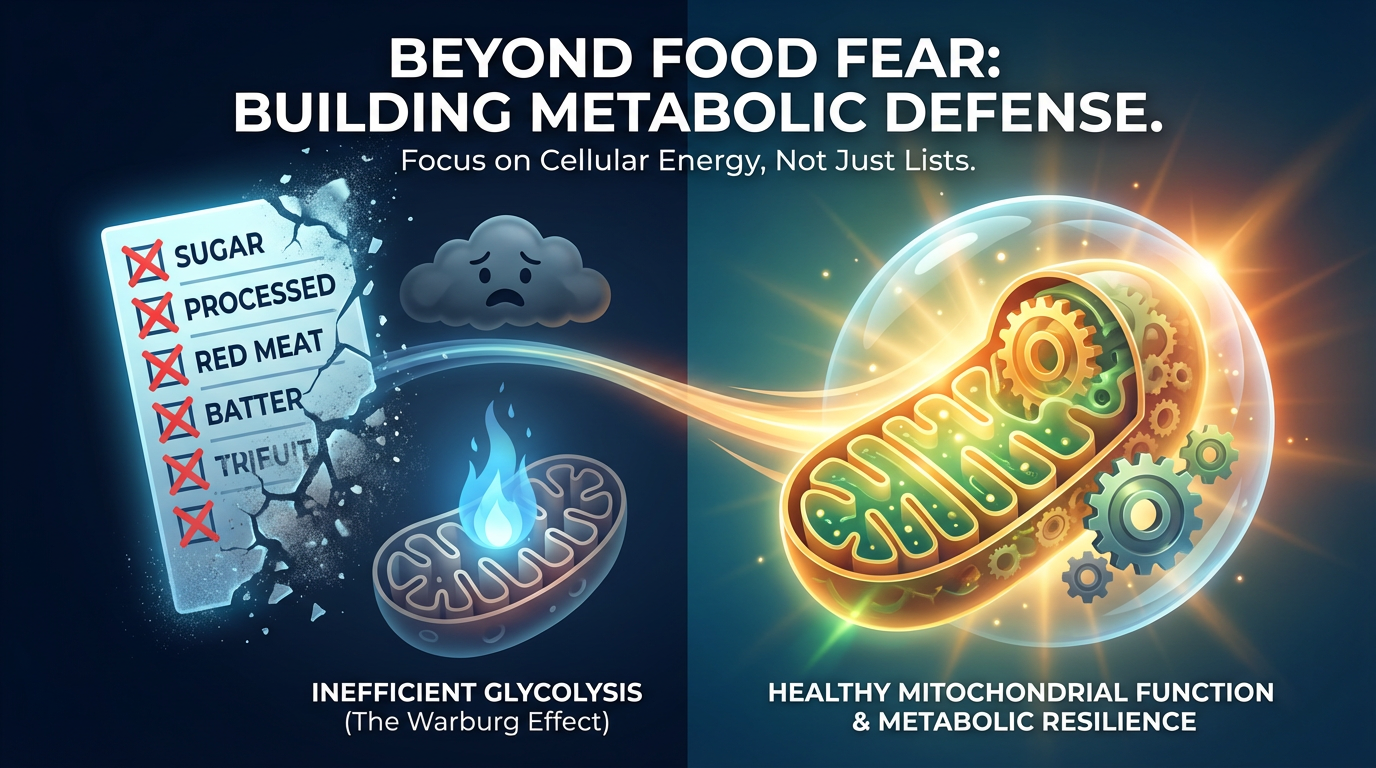
This phenomenon, now called the Warburg effect, points to something profound: cancer may fundamentally be a disease of cellular energy production.
Research published in Nature Reviews Cancer has helped clarify what Warburg observed. When mitochondria (the powerhouses of your cells) become damaged or dysfunctional, cells are forced to rely on the primitive, inefficient glycolysis pathway. This metabolic shift creates an environment where cancer can thrive.
Think of it this way: healthy mitochondria are like a clean-burning furnace that efficiently converts fuel to energy. Dysfunctional mitochondria are like a smoky, failing engine that can barely keep running and creates toxic byproducts in the process.
Why Focusing on Food Lists Misses the Point
When you see those alarming posts about carcinogens in your food, they're not entirely wrong. Certain compounds can indeed damage cells. But they're missing the bigger picture.
Your body encounters potential carcinogens constantly. They're in the air you breathe, the water you drink, and yes, some of the food you eat. What determines whether these exposures lead to cancer isn't just the exposure itself. It's how well your body can handle them.
A robust metabolic system means:
- Efficient cellular repair mechanisms that fix DNA damage before it becomes problematic
- Strong detoxification pathways that neutralize and eliminate harmful compounds
- Healthy mitochondrial function that keeps cells running on their optimal energy pathway
- Balanced inflammation responses that don't create a pro-cancer environment
When these systems work well, your body can handle reasonable levels of exposure to various compounds. When they don't, even "clean" eating may not provide adequate protection.
The Mitochondrial Connection to Cancer Prevention
Recent research has strengthened the connection between mitochondrial health and cancer risk. Studies examining cellular energy production have shown that supporting mitochondrial function may be one of the most important things you can do for cancer prevention.
Your mitochondria do more than just produce energy. They also:
- Regulate programmed cell death (apoptosis), which eliminates damaged cells before they can become cancerous
- Control cellular metabolism and determine which energy pathways cells use
- Manage oxidative stress by balancing free radical production with antioxidant defenses
- Influence gene expression through epigenetic mechanisms
When mitochondria are healthy, they essentially act as the quality control system for your cells. They ensure that damaged cells are eliminated and that healthy cells have the energy they need to function optimally.
What Actually Damages Your Metabolism
Instead of memorizing lists of "bad" foods, it's more useful to understand what actually impairs metabolic function. The research points to several key factors:
Chronic Energy Excess
Consistently eating more calories than your body needs, regardless of the source, creates metabolic stress. This isn't about occasional indulgences; it's about chronic overfeeding that overwhelms your cellular energy systems.
Ultra-Processed Food Patterns
A comprehensive umbrella review published in the BMJ in 2024 examined the health impacts of ultra-processed foods across multiple meta-analyses. The findings showed associations between high ultra-processed food consumption and various adverse health outcomes. But the key word here is "patterns." It's the overall dietary pattern, not individual foods, that matters most.
Chronic Inflammation
Persistent low-grade inflammation damages mitochondria over time. This can come from various sources: chronic infections, autoimmune conditions, obesity, sedentary lifestyle, or yes, certain dietary patterns.
Endocrine Disruption
Research has examined how endocrine-disrupting chemicals can interfere with hormonal signaling and potentially contribute to cancer risk. These compounds are found in plastics, pesticides, and various consumer products. While avoiding obvious sources makes sense, obsessing over every potential exposure isn't the answer. Supporting your body's detoxification systems is.
Epigenetic Changes
The food you eat doesn't just provide calories. It sends signals to your genes. Research on diet, nutrition, and cancer epigenetics has shown that dietary patterns can influence which genes get turned on or off. This is both sobering and empowering: your dietary choices literally shape your gene expression.
Building Metabolic Resilience: What Actually Works
Rather than living in fear of specific foods, focus on building a metabolism that can handle life's inevitable challenges. Here's what the science supports:
Prioritize Mitochondrial Health
Your mitochondria need specific nutrients to function optimally:
- CoQ10 supports the electron transport chain
- B vitamins are essential cofactors for energy production
- Magnesium participates in hundreds of enzymatic reactions including ATP production
- Quality protein provides amino acids for mitochondrial repair and regeneration
Practice Metabolic Flexibility
Metabolic flexibility, your body's ability to switch between burning carbohydrates and fats, is a sign of healthy cellular function. You can improve metabolic flexibility through:
- Time-restricted eating (allowing periods without food intake)
- Regular physical activity, especially a combination of aerobic and resistance training
- Avoiding constant snacking and grazing
Support Detoxification Pathways
Your liver, kidneys, and other organs are designed to eliminate harmful compounds. Support them by:
- Staying well-hydrated
- Consuming adequate fiber for proper elimination
- Including cruciferous vegetables (broccoli, cauliflower, Brussels sprouts) which support liver detoxification enzymes
- Getting adequate sleep, when many repair and detox processes occur
Address Chronic Inflammation
Reducing chronic inflammation protects mitochondria and supports healthy cellular function:
- Prioritize sleep quality and duration
- Manage stress through evidence-based practices
- Include anti-inflammatory foods like fatty fish, colorful vegetables, and olive oil
- Address underlying conditions that drive inflammation
Move Your Body Regularly
Exercise is one of the most powerful ways to improve mitochondrial function. Physical activity:
- Stimulates mitochondrial biogenesis (the creation of new mitochondria)
- Improves insulin sensitivity and metabolic flexibility
- Reduces chronic inflammation
- Supports healthy body composition
The Biospark Approach: Root Cause Over Fear
At Biospark Health, we see the limitations of the "avoid this list" approach every day. People come to us exhausted from trying to eat perfectly, yet still struggling with metabolic dysfunction.
Our approach is different. Instead of adding to your anxiety about food, we focus on understanding your unique metabolic picture and addressing root causes. Through comprehensive assessment and targeted interventions, we help you build the metabolic resilience that actually protects health.
The Bioenergetic Reset program is designed specifically for this purpose: to optimize your cellular energy production and support your body's natural protective mechanisms. Rather than fighting against imaginary enemies in your pantry, you're building strength from the inside out.
Metabolic Health Support in Reading & Wyomissing, PA
If you're in the Reading, Wyomissing, or greater Berks County area and tired of the fear-based approach to health, Biospark Health offers a different path. Our metabolic health programs serve clients throughout Pennsylvania, including Lancaster, Allentown, West Chester, and the surrounding communities.
We understand that people in our community are looking for real answers, not another list of foods to avoid. Whether you're dealing with fatigue, weight resistance, or simply want to optimize your health for the long term, our bioenergetics-focused approach addresses the root cause of metabolic dysfunction.
For Pennsylvania residents seeking comprehensive metabolic assessment and support, our Reading-area clinic provides the testing, interpretation, and personalized protocols you need to actually move the needle on your health.
Frequently Asked Questions
Does this mean I can eat whatever I want?
Not exactly. The quality of your food still matters. Whole, nutrient-dense foods provide the raw materials your metabolism needs. The point is that obsessing over specific "carcinogens" while ignoring overall metabolic health misses the bigger picture. Focus on building metabolic resilience, and reasonable dietary flexibility becomes possible.
What about truly dangerous compounds like aflatoxins or known carcinogens?
There's a difference between obvious toxins and the fear-mongering that dominates social media. Moldy peanuts? Yes, avoid them. Occasional processed food in the context of an otherwise healthy lifestyle? Probably not worth the anxiety. Use common sense and focus on the fundamentals.
How do I know if my metabolism is working well?
Signs of healthy metabolic function include: steady energy throughout the day, healthy body composition, good sleep quality, stable mood, and efficient digestion. If you're struggling with any of these, a comprehensive metabolic assessment can identify where your system needs support.
Can metabolic damage be reversed?
In many cases, yes. The body has remarkable capacity for healing when given the right conditions. Mitochondrial function can improve, inflammation can resolve, and metabolic flexibility can be restored. It takes time and the right approach, but meaningful improvement is possible for most people.
What's the single most important thing I can do for my metabolism?
If we had to choose one thing, it would be regular physical activity. Exercise improves mitochondrial function, reduces inflammation, enhances metabolic flexibility, and supports nearly every aspect of metabolic health. Combined with adequate sleep and whole-food nutrition, it forms the foundation of metabolic resilience.
The Bottom Line
Those viral carcinogen lists aren't entirely wrong, but they're missing the forest for the trees. Your body's ability to prevent cancer depends far more on your metabolic health than on avoiding specific foods.
Instead of living in fear, invest in building a metabolism that can protect you. Support your mitochondria. Reduce chronic inflammation. Develop metabolic flexibility. Get moving.
That's the real cancer prevention strategy, one that empowers you rather than frightens you.
Your metabolism is your best defense. It's time to start treating it that way.
Tags:
References & Citations
This article is supported by scientific research and peer-reviewed sources. Click citations to verify the evidence.
- [1]Koppenol WH, Bounds PL, Dang CV(2011)Otto Warburg's contributions to current concepts of cancer metabolism.Nature Reviews Cancer.View Source
- [2]Seyfried TN, Arismendi-Morillo G, Mukherjee P, Chinopoulos C(2020)On the Origin of ATP Synthesis in Cancer.iScience.View Source
- [3]Lane MM, Gamage E, Du S, et al.(2024)Ultra-processed food exposure and adverse health outcomes: umbrella review of epidemiological meta-analyses.BMJ.View Source
- [4]Wan MLY, Co VA, El-Nezami H(2022)Endocrine disrupting chemicals and breast cancer: a systematic review of epidemiological studies.Critical Reviews in Food Science and Nutrition.View Source
- [5]Sapienza C, Issa JP(2016)Diet, Nutrition, and Cancer Epigenetics.Annual Review of Nutrition.View Source
All references have been reviewed for scientific accuracy and credibility. Citations follow standard academic format and link to original research where available.
About Dr. Steven Presciutti, MD
Founder & Health Coach at Biospark Health, specializing in bioenergetic health and metabolism optimization.
Check out our other content!
Prefer video content? Watch this article in video format on our YouTube channel.