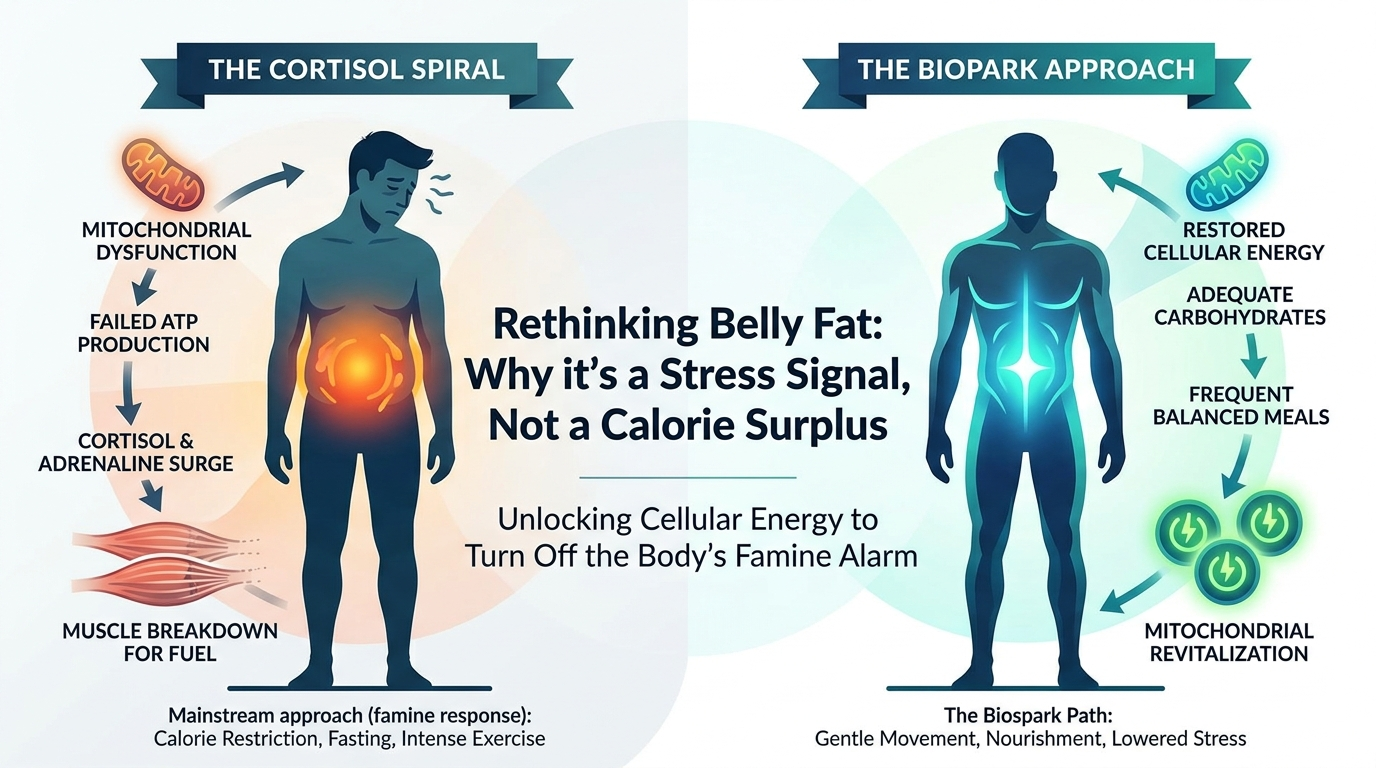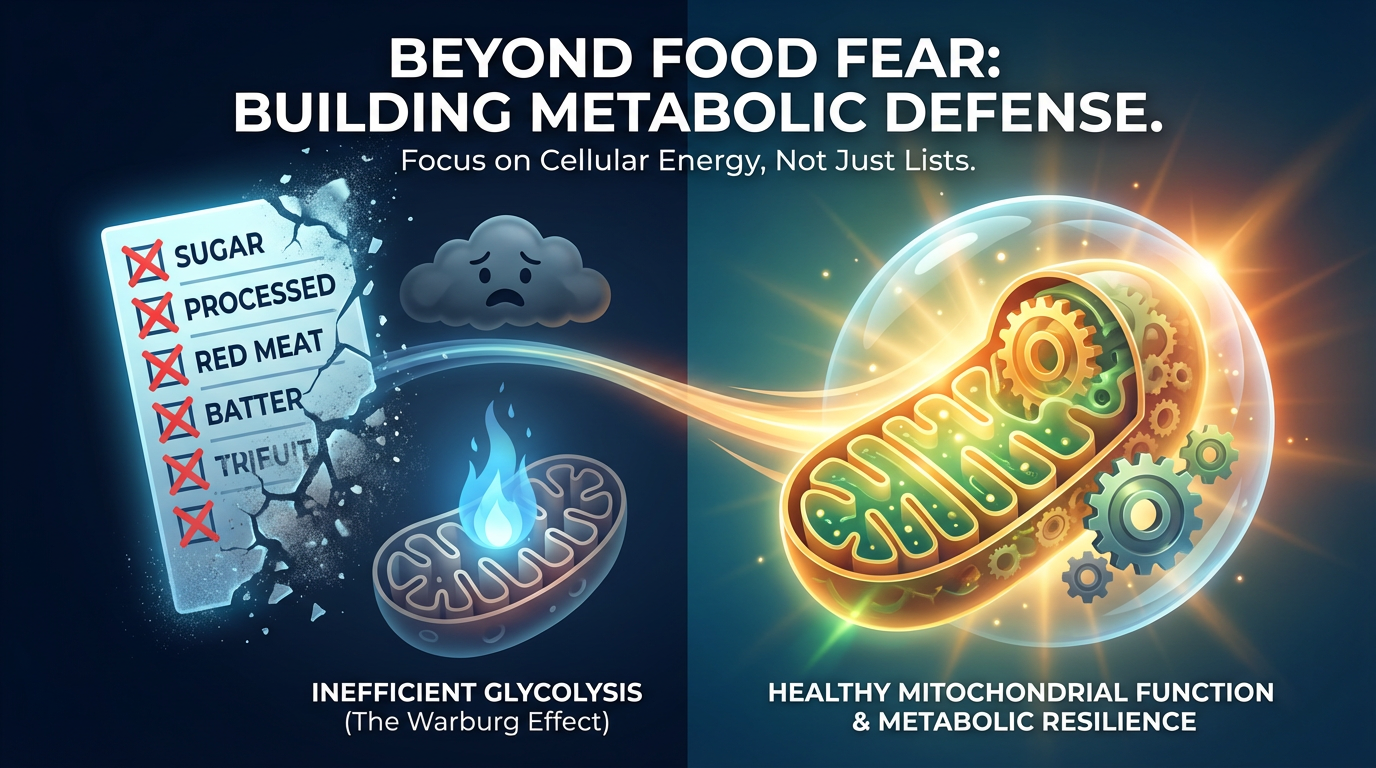
How Chronic Stress and Cortisol Destroy Your Mitochondria (And 10 Ways to Stop It)
Chronic stress and elevated cortisol impair mitochondrial function, driving cognitive decline, muscle wasting, and heart disease. Here are 10 evidence-based strategies to protect your cellular energy.
Medical Disclaimer
This content is for informational and educational purposes only. It is not a substitute for professional medical advice, diagnosis, or treatment. Always seek the advice of your physician or other qualified health provider with any questions you may have regarding a medical condition.
Cortisol keeps you alive. When you face a threat, real or perceived, your adrenal glands release this hormone to mobilize energy, sharpen focus, and keep blood pressure stable. Short-term, that survival mechanism works beautifully.
But chronic stress tells a different story. When cortisol stays elevated for weeks, months, or years, it stops protecting you and starts dismantling you from the inside out, starting with your mitochondria.
Research published in Trends in Endocrinology and Metabolism showed that chronic glucocorticoid exposure increases lactate production after exercise (a sign of mitochondrial dysfunction), decreases Complex I activity in the electron transport chain, and causes oxidative damage to both mitochondrial and nuclear DNA in skeletal muscle (Manoli et al., 2007). These effects show up in every tissue type: neurons, muscle cells, and vascular cells alike.
If you have been told your symptoms are "just stress," this article will explain exactly what that means at the cellular level and, more importantly, what you can do about it.
What Cortisol Does to Your Mitochondria
Cortisol directly attacks the mitochondrial electron transport chain. Research shows glucocorticoids inhibit Complex I activity by up to 30%, which reduces ATP production, depletes antioxidants, and triggers a surge in reactive oxygen species (Picard & McEwen, 2018).
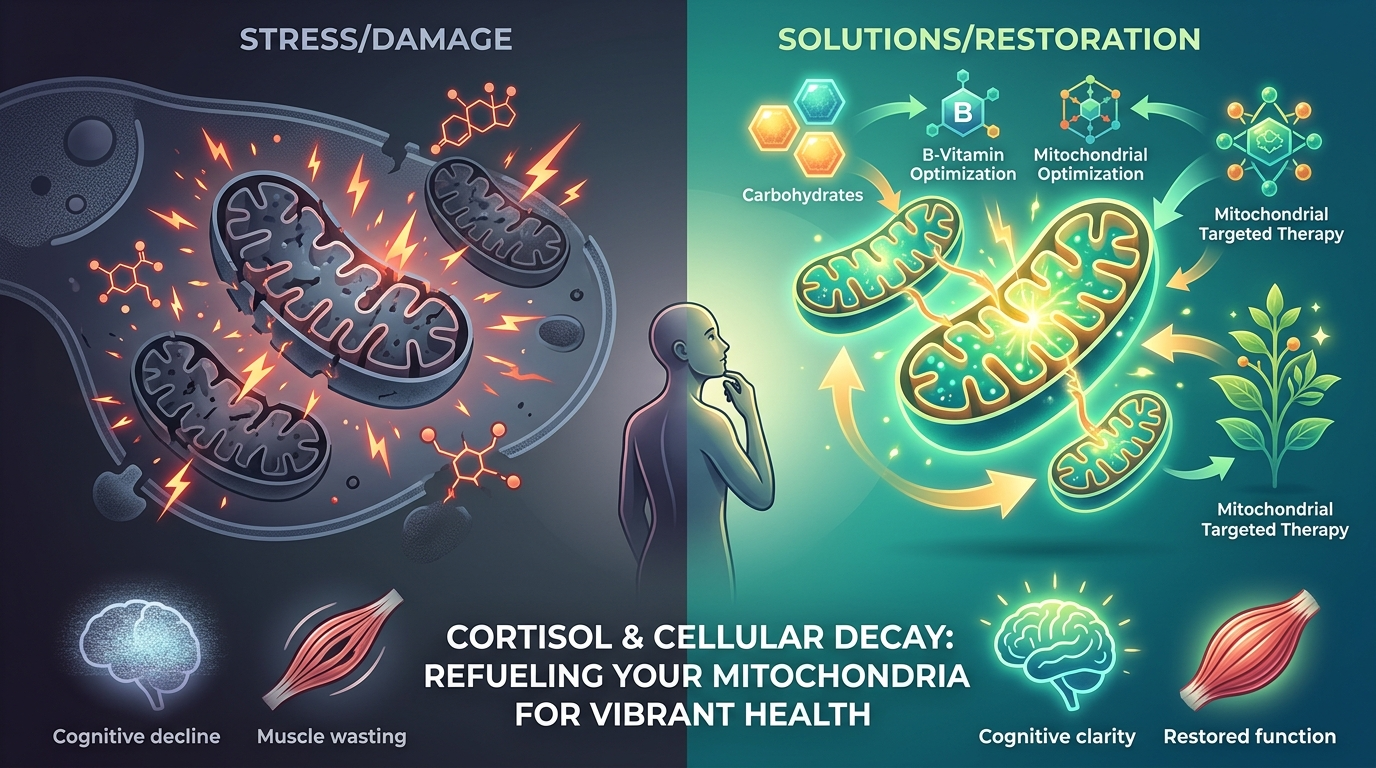
Here is what happens step by step when cortisol stays chronically elevated.
Mitochondrial respiration slows down. Your cells produce less ATP, the fundamental energy currency. Every process in your body that requires energy, from thinking to moving to repairing tissue, suffers.
Glucose oxidation is impaired. Cortisol forces your cells to switch from burning glucose (efficient, clean fuel) to breaking down fats and your own tissues for energy. This compensatory mechanism produces more oxidative waste and less usable energy per molecule of fuel.
Oxidative stress skyrockets. With fewer antioxidants available and a damaged electron transport chain, free radicals accumulate rapidly. These reactive oxygen species damage proteins, lipids, and DNA throughout your cells.
DNA damage accumulates. Both mitochondrial DNA and nuclear DNA take hits. Mitochondrial DNA is particularly vulnerable because it sits right next to the electron transport chain where free radicals are produced. Once mitochondrial DNA is damaged, the cell loses its ability to produce the proteins needed for healthy energy production, creating a vicious cycle.
The researchers Manoli and colleagues noted that antioxidant compounds and enzymes can prevent glucocorticoid-induced mitochondrial DNA oxidative damage and cell death in skeletal muscle and vascular endothelium. This finding points to a critical insight: the damage is preventable if you intervene at the right level.
Why Chronic Stress Breaks Down Your Body, Cell by Cell
The downstream effects of cortisol-induced mitochondrial damage appear across three major tissue types.
Brain Cells (Neurons)
Cortisol damages hippocampal neurons by increasing glutamate and calcium levels while simultaneously decreasing antioxidant enzymes (Manoli et al., 2007). Research by Sorrells and colleagues demonstrated that glucocorticoids directly increase excitotoxic injury and inflammation in the hippocampus, the brain region responsible for memory formation and emotional regulation (Sorrells et al., 2014).
This is not a subtle effect. Chronically elevated cortisol literally kills brain cells by making them unable to use glucose efficiently. The result is brain fog, memory problems, anxiety, and over time, cognitive dysfunction and increased risk of neurodegenerative disease.
Muscle Cells
Chronic glucocorticoid exposure decreases Complex I activity and causes oxidative damage to mitochondrial and nuclear DNA in skeletal muscle. You experience this as unexplained fatigue, weakness, and progressive muscle loss despite adequate activity.
Cortisol also forces gluconeogenesis, the process of converting your own muscle tissue into glucose for the brain. This is an incredibly wasteful metabolic trade-off: your body burns six ATP molecules to synthesize one glucose molecule that yields only two ATP in return. You are literally cannibalizing your own lean tissue at a net energy loss.
Vascular Cells (Blood Vessels)
The same oxidative stress and mitochondrial damage affect the cells lining your blood vessels. When vascular endothelium is damaged by cortisol-driven free radicals, blood vessels lose their flexibility, become inflamed, and are more prone to plaque formation. This is one reason chronic stress is such a powerful driver of cardiovascular disease.
The oxidative stress pathway connects all three tissue types. Research on metabolic syndrome showed that oxidative stress mechanisms are a unifying factor across metabolic, neurological, and cardiovascular dysfunction (Masenga et al., 2023). The common thread is mitochondrial energy failure.
The Bioenergetic View: Why Mainstream Stress Advice Falls Short
Mainstream wellness culture loves hormesis: the idea that intentional stress makes you stronger. Ice baths, 48-hour fasts, high-intensity interval training on empty stomachs, cold plunges. The narrative says these stressors trigger "healthy adaptation."
The bioenergetic model rejects this framework entirely. All stress draws from the same limited adaptive pool. If your cellular energy is already compromised by chronic psychological stress, poor sleep, or nutritional deficiencies, adding more physical stress does not build resilience. It accelerates tissue breakdown.
Think of it this way: if your car engine is already overheating, pushing the accelerator harder does not make the engine stronger. It blows the gasket.
Research on glucocorticoids and brain activity confirmed that chronic cortisol exposure suppresses metabolic function across organ systems rather than stimulating adaptive improvements (Jaszczyk & Juszczak, 2021). The mainstream approach of adding stress to combat stress is biochemically backwards.
10 Evidence-Based Strategies to Protect Your Mitochondria from Cortisol
1. Dial In Your Energy Intake
Chronic energy deficits force your body to rely on cortisol to release fuel by breaking down your own tissues. Calculate your baseline energy needs using the Katch-McArdle formula, then adjust based on your goals and results. Undereating is not a strategy for metabolic health; it is a stressor that triggers the exact cortisol cascade you are trying to avoid.
2. Eat Adequate Carbohydrates (Minimum 150g Per Day)
Carbohydrates are your mitochondria's preferred fuel. Glucose oxidation produces approximately 50% more protective carbon dioxide than fat oxidation, which facilitates oxygen delivery to tissues and directly lowers stress hormones. The minimum target of 150g per day is based on the brain's glucose requirements alone. Focus on easily digestible sources: ripe fruit, fresh orange juice, raw honey, well-cooked root vegetables like potatoes, carrots, and squash.
When you restrict carbohydrates, you upregulate cortisol, adrenaline, and glucagon. Your body compensates for the missing glucose by breaking down muscle and organ tissue. Adequate carbohydrate intake is one of the most direct ways to lower cortisol at the source.
3. Eat Adequate Protein
Protein provides the amino acids your body needs so it does not have to break down your own tissues when under stress. For lean individuals, target 0.72 to 0.82g per pound of body weight. For those with higher body fat (men above 26%, women above 38%), target 1g per pound of lean body mass.
Balance muscle meats with gelatin, collagen, or bone broth. Muscle meats are high in methionine and tryptophan, which can suppress thyroid function and promote inflammation when consumed in excess. Glycine from gelatin is anti-inflammatory, protects against ATP depletion, and helps lower cortisol.
4. Shift Your Fat Intake Away from PUFA
Stress drives oxidative stress. Polyunsaturated fats (PUFA) have a fragile molecular structure that makes them highly susceptible to oxidative damage. When your tissues are composed of PUFA and oxidative stress increases, those fats peroxidize, creating toxic byproducts that damage cell membranes throughout your body.
Instead, emphasize monounsaturated and saturated fats: coconut oil, butter, ghee, beef tallow, and olive oil. These fats are structurally stable and far less likely to peroxidize under oxidative stress. This is not about avoiding all unsaturated fats; it is about not loading your tissues with the most vulnerable ones during periods of high stress.
5. Optimize Your B-Vitamin Intake
The B-vitamins most critical for mitochondrial function are B1 (thiamine), B2 (riboflavin), B3 (niacin), and B5 (pantothenic acid). These cofactors are essential for the enzymatic reactions that drive the Krebs cycle and electron transport chain.
When B-vitamin status is suboptimal, mitochondrial function and carbohydrate oxidation both suffer, compounding the energy crisis that cortisol creates. A high-quality B-complex supplement, combined with a nutrient-dense diet, can help restore these critical cofactors. Niacinamide (a form of B3) is particularly valuable because it is a direct precursor for NAD+, a coenzyme essential for mitochondrial respiration, and it directly inhibits the stress-induced release of free fatty acids.
6. Build Your Antioxidant Defenses
Protecting your tissues from cortisol-driven oxidative stress requires adequate glutathione, vitamin C, vitamin E, and plant polyphenols. Glutathione is your body's master antioxidant, and it is directly depleted by chronic cortisol exposure.
Research showed that antioxidant compounds can prevent glucocorticoid-induced mitochondrial DNA damage and cell death in both skeletal muscle and vascular tissue (Manoli et al., 2007). This means that while cortisol causes the damage, adequate antioxidant status can significantly reduce its impact. Foods rich in polyphenols (berries, citrus, cocoa) support glutathione production and provide direct free-radical scavenging capacity.
7. Balance Your Allostatic Load
Allostatic load is the total burden of stressors your system is managing at any given time. This includes psychological stress, physical training, sleep deprivation, nutritional deficiencies, relationship strain, financial pressure, and environmental toxins.
During periods of high stress, strategically reduce inputs you can control: lower training volume, prioritize sleep, increase food intake, and create deliberate rest periods. This is not about avoiding all stress; it is about managing the total load so your system has the capacity to recover rather than continuously breaking down.
8. Optimize Your Hormonal Profile
Several hormones actively protect against cortisol's damaging effects. DHEA, testosterone, progesterone, and pregnenolone all counterbalance cortisol at the cellular level. Progesterone, in particular, directly opposes cortisol and estrogen, stabilizes blood sugar, and protects brain cells from excitotoxic damage.
Before supplementing hormones, build the foundation first: dial in diet, optimize micronutrients, and assess your hormonal profile with comprehensive lab testing. Hormones are powerful, but they work best when the underlying metabolic environment supports them.
9. Consider Adaptogenic Substances
Adaptogens help shift the hormonal profile and mitigate the downstream effects of stress: immune dysfunction, mitochondrial impairment, neuronal damage, and vascular injury. Research-backed options include:
- Ashwagandha: lowers cortisol and improves stress resilience
- Rhodiola: reduces fatigue and supports mitochondrial function
- Schisandra: protects the liver and supports glutathione production
- Cordyceps: improves oxygen utilization and ATP production
- Lion's mane: supports nerve growth factor and brain cell health
- L-theanine: promotes calm focus without sedation
- Cocoa polyphenols: support cardiovascular health and reduce oxidative stress
These compounds stack well with the dietary and hormonal strategies above. They are not replacements for the foundational work, but they can accelerate recovery when used appropriately.
10. Consider Mitochondrial-Targeted Therapies
When the stress-mitochondria cycle has been running for a long time, targeted interventions can help restart stalled energy production:
- Fat-soluble thiamine derivatives (sulbutiamine, benfotiamine): bypass absorption limitations of regular B1 and directly support mitochondrial energy production
- NAD+ precursors (nicotinamide riboside, nicotinamide mononucleotide): replenish the critical coenzyme that cortisol depletes
- Red light therapy: stimulates cytochrome c oxidase in the electron transport chain, improving ATP production
- CO2 therapy: increases tissue oxygenation and supports the Bohr effect, improving oxygen delivery to stressed cells
- Thyroid support: since cortisol actively suppresses T4-to-T3 conversion, supporting thyroid function directly counters one of cortisol's most damaging metabolic effects
The Biospark Approach
At Biospark Health, we do not treat stress as a psychological inconvenience to be managed with breathing exercises and meditation apps. We look at what chronic stress is actually doing to your cells.
Dr. Steven Presciutti, MD, uses a bioenergetic framework to assess how cortisol and other stress hormones are affecting your mitochondrial function, thyroid metabolism, hormonal balance, and overall cellular energy production. Rather than suppressing symptoms, the goal is to identify and address the root cause of the energy crisis driving your symptoms.
Through comprehensive lab testing, personalized nutrition protocols, and targeted supplementation, we help patients rebuild mitochondrial function from the ground up. Whether you are dealing with chronic fatigue, brain fog, unexplained weight gain, or metabolic dysfunction, the approach starts with understanding what is happening inside your cells.
Ready to restore your metabolism at the cellular level?
The Bioenergetic Reset Program addresses root causes, not symptoms. Join 300+ members who have discovered what real metabolic health feels like.
- 9+ hours of comprehensive training
- Twice-monthly LIVE coaching calls
- Complete meal plans and protocols
- Direct email support
energy/month | Cancel anytime
Cortisol and Metabolic Health Support in Reading and Berks County, PA
If you are struggling with chronic stress symptoms in the Reading or Wyomissing area, you are far from alone. Many residents throughout Berks County experience fatigue, brain fog, weight gain, and hormonal imbalances without ever getting answers about what is actually happening in their bodies.
At Biospark Health, we serve clients throughout southeastern Pennsylvania, including Lancaster, Downingtown, Allentown, and the greater Philadelphia suburbs. Our bioenergetic approach has helped local residents address cortisol-driven metabolic dysfunction at its source rather than masking symptoms with medications.
Whether you are in West Chester, King of Prussia, or anywhere in Chester County, our virtual and in-person options make it straightforward to get the metabolic support you need. You do not have to accept "your labs look normal" as the final word on how you feel.
Frequently Asked Questions
Does cortisol damage mitochondria?
Yes. Research shows that chronic cortisol exposure directly inhibits Complex I of the mitochondrial electron transport chain, reducing ATP production by up to 30%. This impaired energy production triggers a cascade of oxidative stress, DNA damage, and cellular dysfunction that affects every tissue in your body, particularly brain cells, muscle tissue, and blood vessels.
What happens to metabolism when cortisol is high?
High cortisol shifts your metabolism from efficient glucose oxidation to wasteful tissue breakdown. It suppresses thyroid hormone conversion (reducing metabolic rate), increases blood sugar through muscle tissue breakdown, promotes fat storage (especially visceral fat), and impairs mitochondrial ATP production. The net result is a slower metabolism that stores fat while your cells literally starve for energy.
How do you reverse mitochondrial dysfunction from chronic stress?
Recovery requires removing the stressors driving cortisol elevation while simultaneously providing the raw materials your mitochondria need to heal. The most impactful interventions include eating adequate carbohydrates (minimum 150g/day), optimizing B-vitamin intake (especially B1, B2, B3, and B5), shifting from PUFA to stable saturated fats, building antioxidant capacity with glutathione and vitamin C, and considering mitochondrial-targeted supplements like fat-soluble thiamine derivatives and NAD+ precursors.
What are the symptoms of poor mitochondrial function?
Common symptoms include chronic fatigue that does not improve with rest, brain fog and difficulty concentrating, unexplained muscle weakness or loss, exercise intolerance, cold extremities, poor recovery from illness or injury, and metabolic dysfunction like weight gain or insulin resistance. Because mitochondria power every cell, the symptoms can appear across virtually any body system.
Are ice baths and fasting helpful for stress recovery?
The bioenergetic model cautions against adding physical stressors (ice baths, extended fasting, intense exercise) when your system is already under chronic stress. All stress draws from the same adaptive capacity. If your cellular energy is already depleted, additional stress accelerates tissue breakdown rather than building resilience. Prioritize nourishment and recovery first; hormetic stressors can be reintroduced once mitochondrial function is restored.
Conclusion
Chronic stress is not just an unpleasant feeling. It is a measurable, cellular-level assault on your mitochondria that drives cognitive decline, muscle wasting, and cardiovascular disease through well-characterized biochemical pathways.
The good news is that this damage is not permanent. By addressing the root cause (the energy crisis at the mitochondrial level) rather than just managing symptoms, you can restore your cells' ability to produce energy efficiently and reverse the cascade of dysfunction that chronic cortisol creates.
The strategies outlined here are not quick fixes. They are foundational principles that support the metabolic environment your mitochondria need to thrive. Start with the basics: adequate energy intake, sufficient carbohydrates, stable fats, and B-vitamin optimization. Then layer in antioxidants, adaptogens, and mitochondrial-targeted therapies as needed.
Your cells are not broken. They are responding exactly as they should to the signals they are receiving. Change the signals, and you change the outcome.
Tags:
References & Citations
This article is supported by scientific research and peer-reviewed sources. Click citations to verify the evidence.
- [1]Manoli I, Alesci S, Blackman MR, Su YA, Rennert OM, Chrousos GP(2007)Mitochondria as key components of the stress response.Trends in Endocrinology and Metabolism.View Source
- [2]Picard M, McEwen BS(2018)Psychological Stress and Mitochondria: A Systematic Review.Psychosomatic Medicine.View Source
- [3]Jaszczyk A, Juszczak GR(2021)Glucocorticoids, metabolism and brain activity.Neuroscience and Biobehavioral Reviews.View Source
- [4]Masenga SK, Kabwe LS, Chakulya M, et al.(2023)Mechanisms of Oxidative Stress in Metabolic Syndrome.International Journal of Molecular Sciences.View Source
- [5]Sorrells SF, Munhoz CD, Manley NC, Sapolsky RM(2014)Glucocorticoids increase excitotoxic injury and inflammation in the hippocampus of adult male rats.Neuroendocrinology.View Source
All references have been reviewed for scientific accuracy and credibility. Citations follow standard academic format and link to original research where available.
About Dr. Steven Presciutti, MD
Founder & Health Coach at Biospark Health, specializing in bioenergetic health and metabolism optimization.