The Stress Hormone Your Doctor Never Tests That's Silently Wrecking Your Metabolism
High prolactin symptoms go far beyond lactation. Learn how this overlooked stress hormone drives fatigue, low libido, weight gain, and metabolic dysfunction.
Medical Disclaimer
This content is for informational and educational purposes only. It is not a substitute for professional medical advice, diagnosis, or treatment. Always seek the advice of your physician or other qualified health provider with any questions you may have regarding a medical condition.
You have been told your labs are normal. Your thyroid panel came back fine. Your estrogen is within range. Your testosterone is technically acceptable. And yet you are exhausted, your libido has disappeared, you cannot lose weight no matter what you try, and something feels fundamentally off with your hormones.
There is a high probability that one specific hormone was never measured. It is not on the standard panel your doctor orders. Most physicians only think to test it when a woman is not pregnant but is producing breast milk, or when a pituitary tumor is suspected. Outside of those scenarios, it is largely ignored.
That hormone is prolactin.
And if you have been struggling with the symptoms described above, including fatigue that does not respond to sleep, low libido, cold intolerance, brain fog, irregular cycles, or weight that simply will not move, prolactin may be the missing piece your workup has never addressed.
This is not a fringe idea. A 2022 review published in Frontiers in Endocrinology confirmed that prolactin excess is associated with weight gain, obesity, metabolic syndrome, and impairment in glucose and lipid metabolism. The research has existed for decades. The clinical translation has not caught up.
High Prolactin Symptoms Are Not What Most Doctors Think
When prolactin appears in a standard textbook, it is described as the lactation hormone. It rises during pregnancy, drives milk production, and then returns to baseline after breastfeeding ends. That is the entire clinical story most physicians carry.
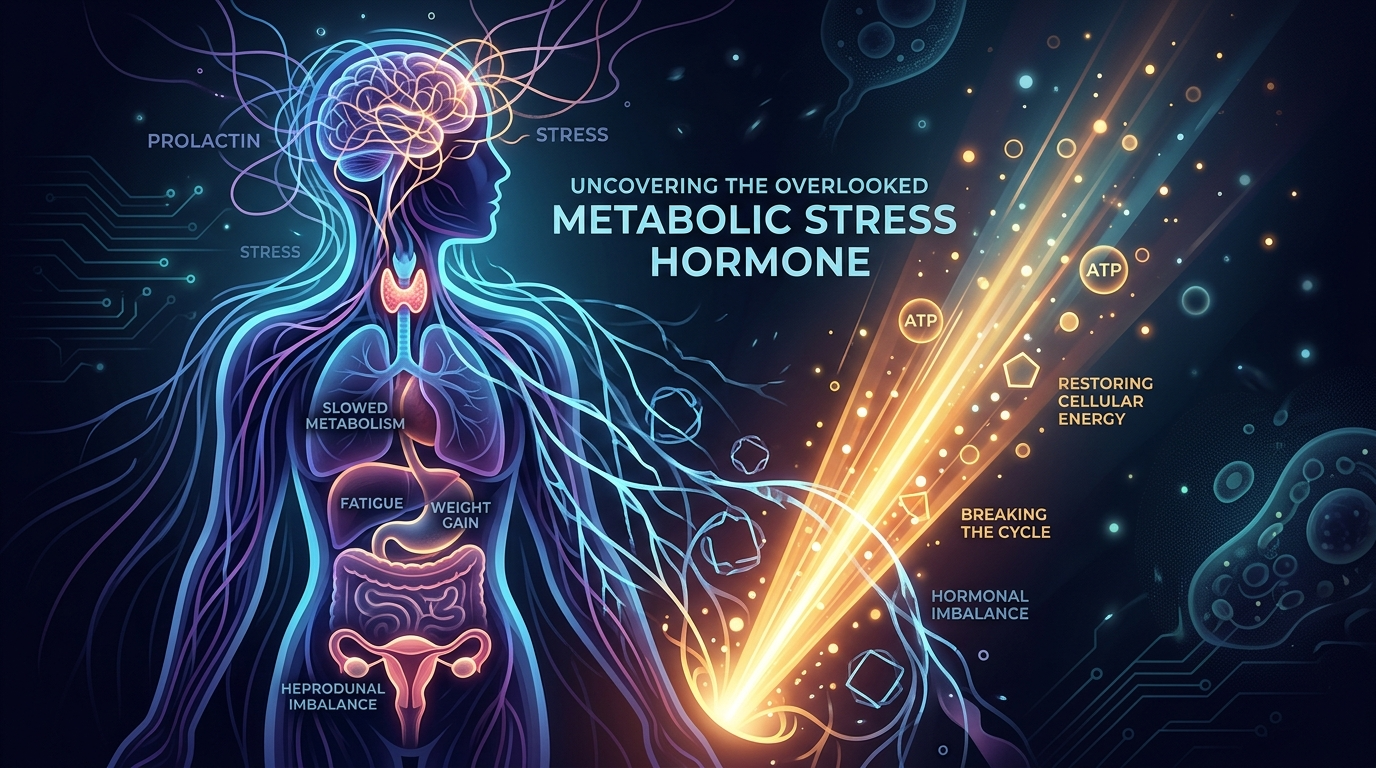
But prolactin is not a passive hormone that simply helps with nursing. It is a stress-response signal, one that rises under the same conditions as cortisol: energy deprivation, inflammation, chronic stress, estrogen dominance, and impaired thyroid function. Once elevated, it does not simply sit in the background. It actively suppresses metabolism, blunts reproductive hormones, and reinforces the exact conditions that caused it to rise in the first place.
High prolactin symptoms in females are frequently misdiagnosed as estrogen dominance, adrenal fatigue, hypothyroidism, or depression, because prolactin affects all of those systems simultaneously. In men, elevated prolactin is consistently associated with reduced testosterone production, low libido, erectile dysfunction, and poor recovery from exercise, even when prolactin levels are only moderately above normal.
The symptom picture is not subtle. Fatigue that worsens in the afternoon. Loss of motivation and drive. Cold hands and feet. Difficulty maintaining body temperature. Hair thinning. Irregular or absent menstrual cycles. Persistent weight gain that does not respond to caloric restriction. Brain fog. Reduced orgasm intensity. Anxiety without an obvious cause.
These are not vague complaints. They are the predictable downstream consequences of a metabolic system being actively suppressed by a stress hormone that your doctor has likely never measured.
Why Elevated Prolactin Causes These Symptoms: The Metabolic Mechanism
Understanding why prolactin produces this symptom pattern requires understanding what it actually does at the cellular level.
Prolactin is primarily inhibited by dopamine. When dopamine signaling is robust, prolactin remains low. When dopamine falls, whether from chronic stress, poor sleep, nutritional deficiencies, or inflammatory signaling, prolactin rises. This is not a malfunction of the pituitary. It is the predictable result of removing the inhibitory brake.
Once prolactin rises, its effects on metabolism are direct and significant. Research confirms that prolactin reduces mitochondrial respiration and pushes cells away from efficient oxidative energy production toward glycolysis, the primitive pathway that produces lactic acid instead of ATP. Every cell in your body runs on ATP. When prolactin is chronically elevated, cellular energy production is compromised at the most fundamental level.
This matters because mitochondrial function is not a niche concern. It is the foundation of every system in your body: hormone production, immune regulation, cognitive function, body temperature regulation, and the ability to actually burn fat for fuel. When prolactin suppresses oxidative metabolism, the ripple effects are felt across every organ and tissue.
Estrogen compounds the problem significantly. Estrogen directly stimulates the pituitary to produce more prolactin. It also sensitizes prolactin receptors throughout peripheral tissues. In a body already running low on cellular energy, estrogen and prolactin frequently rise together, each amplifying the other's suppressive effects. This is why the symptom picture of estrogen dominance and elevated prolactin overlap so heavily: they are often the same problem viewed from two different angles.
There is also an inflammatory feedback loop. Prolactin and estrogen together promote the production of interleukin-6, an inflammatory cytokine that then stimulates even more prolactin secretion. The loop tightens with time, which explains why the symptoms often progress gradually rather than appearing suddenly.
Elevated Prolactin Causes: Why This Keeps Rising Even When You Are Trying to Fix Your Hormones
One of the most frustrating patterns in hormonal health is the person who is doing everything right, eating well, sleeping adequately, reducing stress, perhaps even using hormonal support, yet their symptoms persist or worsen. Elevated prolactin causes are worth understanding in this context, because several mainstream interventions can inadvertently make prolactin worse.
Chronic stress and cortisol: Elevated cortisol suppresses dopamine synthesis and signaling. Less dopamine means less inhibition of prolactin release. This is why people in prolonged high-stress states so frequently develop the hormonal symptom picture described above, even when their cortisol panel looks "normal" by standard reference ranges.
Hypothyroidism, even subclinical: When thyroid function is impaired, the body loses sodium and retains water relative to sodium concentration. This state, called hypotonicity, is a direct physiological trigger for prolactin release from the pituitary. The hypothyroid person then secretes more prolactin, which further suppresses thyroid activity, which worsens the hypotonic state, which triggers more prolactin. The loop is self-reinforcing and can progress for years without appearing on standard thyroid panels.
Serotonin elevation: Serotonin directly antagonizes dopaminergic tone and is itself a prolactin secretagogue. Factors that raise serotonin chronically, including tryptophan-heavy diets, insufficient carbohydrate intake, chronic inflammation, and certain supplements and medications, can sustain elevated prolactin even when other stressors are being addressed.
Estrogen exposure: Whether from endogenous estrogen dominance, environmental estrogens (xenoestrogens from plastics and food), or exogenous hormone therapy, elevated estrogen reliably stimulates pituitary prolactin production. If you are on estrogen replacement therapy or hormonal birth control and your symptoms have been worsening, prolactin is worth measuring.
Excess water, low salt: This one surprises almost everyone. The pituitary releases prolactin in direct response to hypotonicity, the condition of having too much water relative to sodium in circulation. Conventional advice to "drink more water" and "reduce salt" can inadvertently sustain or worsen prolactin elevation in individuals who are already metabolically stressed.
Prolactin and the Thyroid Axis: Why Your Labs Look Normal but You Feel Terrible
One of the most clinically significant effects of elevated prolactin is its suppression of thyroid function. This connection explains a phenomenon that baffles both patients and practitioners: the person whose thyroid labs are within the reference range but who has every symptom of hypothyroidism.
Prolactin reduces thyrotropin-releasing hormone (TRH) output from the hypothalamus and interferes with thyroid-stimulating hormone (TSH) signaling at the pituitary. It also lowers peripheral thyroid hormone responsiveness at the cellular level, reducing the ability of cells to respond to T3 even when circulating levels appear adequate.
The result is what practitioners in the bioenergetic model call a functional hypothyroid state. Body temperature runs chronically low. Resting pulse is slow. Digestion is sluggish. Energy is unreliable. Fat metabolism is impaired. But the TSH falls within the "normal" range, so the thyroid is dismissed as a cause.
As thyroid function declines in this pattern, oxidative metabolism slows further, carbon dioxide production drops, serotonin rises, and prolactin rises with it. The feedback loop described earlier accelerates. This is not theoretical. It is the mechanistic explanation for why so many people get worse despite doing everything their conventional doctor recommends.
High Prolactin and Weight Loss: Why the Scale Won't Move
The connection between high prolactin and weight loss resistance is one of the most underappreciated relationships in metabolic health. The mechanisms are multiple and layered.
Prolactin directly suppresses metabolic rate by reducing mitochondrial respiration. When your cells are less efficient at burning fuel for energy, your body compensates by reducing overall energy expenditure. This is not laziness or lack of willpower. It is the cellular consequence of a stress hormone actively downregulating your metabolic output.
Prolactin also promotes insulin resistance. It increases reliance on stress hormones to maintain blood glucose availability, which means more cortisol, more blood sugar dysregulation, and more fat storage, particularly around the abdomen. The more you restrict calories in this state, the more stress hormones rise, the more prolactin is stimulated, and the more deeply the body defends against fat loss.
This is why conventional caloric restriction consistently fails for people with underlying hormonal dysfunction. The body is not defying thermodynamics. It is responding rationally to the signal it is receiving: energy is scarce, stress is high, conserve everything. Until that signal changes at the hormonal level, the scale will not cooperate.
For people specifically struggling with high prolactin and weight loss, the entry point is not eating less. It is restoring the metabolic conditions that allow the body to feel safe burning fuel again.
The Biospark Approach: Testing What Matters, Addressing the Root Cause
At Biospark Health, we approach elevated prolactin not as an isolated pituitary abnormality but as a metabolic signal. When prolactin is chronically elevated without a tumor cause, the question is not "how do we suppress prolactin pharmacologically?" but rather "what metabolic conditions are sustaining this elevation, and how do we correct them?"
That starts with actually measuring prolactin. A prolactin level drawn on a standard morning lab panel is one of the most informative and underutilized tests in metabolic medicine. Ideally, it should be below 10 ng/mL for optimal metabolic function. Levels in the teens and twenties, while often dismissed as clinically insignificant, can produce meaningful suppression of thyroid output, reproductive hormones, and cellular energy production over time.
Beyond prolactin, a complete picture includes a full thyroid panel (not just TSH), fasting glucose and insulin, waking body temperature, resting pulse, and in many cases a more thorough sex hormone assessment. The goal is to understand the full metabolic context, not just identify an abnormal number.
From a therapeutic standpoint, the bioenergetic model addresses prolactin elevation by removing the upstream drivers rather than targeting prolactin directly:
Supporting thyroid function is often the highest-leverage intervention. When cellular energy production rises and the body exits the hypothyroid state, the hypotonic trigger for prolactin release diminishes, and the feedback loop begins to unwind.
Addressing estrogen dominance through progesterone support removes one of the primary pituitary stimulators of prolactin. Bioidentical progesterone acts as a direct estrogen antagonist, lowers serotonin, reduces cortisol, and raises metabolic rate. Its effect on prolactin is indirect but significant.
Optimizing sodium intake is a simple but powerful intervention that is consistently overlooked. Salt-restricted diets create the exact hypotonic state that triggers pituitary prolactin release. Liberal salt intake, matched to individual need, maintains isotonicity and reduces this particular prolactin stimulus.
Eliminating polyunsaturated fats matters because PUFAs suppress thyroid function at multiple levels, increase aromatase activity (driving estrogen production), and accumulate in cell membranes where they impair mitochondrial respiration directly. Replacing seed oils with stable saturated fats such as butter, coconut oil, and tallow removes a chronic anti-metabolic stressor.
Vitamin B6 serves as a direct prolactin inhibitor and is essential to dopamine synthesis. Many people chronically deficient in B6 are also chronically running with elevated prolactin and suppressed dopamine tone, yet B6 is rarely measured or supplemented in a targeted way.
Ready to restore your metabolism at the cellular level?
The Bioenergetic Reset Program addresses root causes, not symptoms. Join 300+ members who have discovered what real metabolic health feels like.
- 9+ hours of comprehensive training
- Twice-monthly LIVE coaching calls
- Complete meal plans and protocols
- Direct email support
$149/month | Cancel anytime
Hormonal Health and Metabolic Support in Reading and Berks County, PA
If you are experiencing unexplained fatigue, low libido, difficulty losing weight, or persistent hormonal symptoms despite normal lab work, you are not alone. Many residents throughout Reading, Wyomissing, and Berks County are navigating exactly this experience, having been told their numbers are fine while their symptoms continue to worsen.
At Biospark Health, we work with clients throughout southeastern Pennsylvania, including Lancaster, Downingtown, Allentown, West Chester, and the greater Philadelphia suburbs. Dr. Presciutti takes a fundamentally different approach to hormonal health: one that begins with measuring what standard panels overlook, including prolactin, and understanding the full metabolic picture before recommending any intervention.
Whether you are in King of Prussia, Montgomery County, or Chester County, our virtual and in-person options make comprehensive metabolic assessment accessible without requiring a referral to an endocrinologist or waiting months for a specialist appointment.
Frequently Asked Questions
Can high prolactin affect metabolism?
Yes, significantly. Research published in Frontiers in Endocrinology confirms that elevated prolactin is associated with weight gain, obesity, metabolic syndrome, and impairment in glucose and lipid regulation. At the cellular level, prolactin reduces mitochondrial respiration, increases reliance on glycolysis, promotes insulin resistance, and suppresses the thyroid axis. The metabolic effects can be substantial even when prolactin levels are only moderately elevated above optimal range.
What are the most common high prolactin symptoms in females?
The most frequently reported symptoms include fatigue, low libido, irregular or absent menstrual cycles, difficulty losing weight, cold intolerance, brain fog, anxiety, hair thinning, and reduced motivation. In some women, nipple discharge occurs, though this is not universal. Many women with elevated prolactin have no obvious single symptom but describe a general sense that their body is not functioning normally despite labs appearing within range.
What health conditions cause high prolactin levels?
Pituitary adenomas (prolactinomas) are the most commonly cited cause, but they account for only a fraction of clinically relevant elevations. Chronic stress, hypothyroidism, estrogen dominance, serotonin elevation, certain medications (particularly antidepressants and antipsychotics), inflammatory conditions, and dietary factors such as low salt intake and high polyunsaturated fat consumption can all sustain elevated prolactin without a structural cause.
Is elevated prolactin dangerous even without a tumor?
Chronically elevated prolactin, even without a pituitary tumor, is associated with meaningful downstream consequences: suppressed thyroid function, reduced testosterone and progesterone production, impaired bone density (prolactin mobilizes calcium from bone), insulin resistance, and impaired mitochondrial energy production. The absence of a tumor does not mean the elevation is clinically irrelevant. It means the root cause is metabolic rather than structural.
How does prolactin relate to estrogen dominance?
Estrogen and prolactin have a directly stimulatory relationship. Estrogen increases prolactin production at the pituitary and sensitizes prolactin receptors in peripheral tissues. In a body experiencing estrogen dominance, prolactin tends to be elevated as well, reinforcing each other's suppressive effects on thyroid function and cellular energy production. This is why treating estrogen dominance alone sometimes produces incomplete results: the prolactin component of the hormonal dysfunction is not addressed.
The Bottom Line
The standard hormone panel your doctor orders was designed to catch frank pathology: tumors, autoimmune disease, severe deficiencies. It was not designed to identify the subtle but consequential hormonal imbalances that make people feel chronically unwell while their numbers stay technically within range.
Prolactin is one of the clearest examples of this gap. It is easy to measure, clinically informative, and almost never ordered outside of a narrow set of specific indications. Meanwhile, the people who would benefit most from knowing their prolactin level, those with unexplained fatigue, hormonal symptoms, metabolic resistance, and labs that show nothing wrong, are the least likely to ever have it checked.
Your body is not randomly malfunctioning. The symptoms you are experiencing are the predictable output of a metabolic system that has been asked to operate under chronic stress without the support it needs. Prolactin is often a key part of that story. And the good news is that once the underlying metabolic conditions are addressed, the feedback loop can run in reverse: better energy production, lower prolactin, stronger thyroid function, restored hormonal balance.
That is the direction we work toward at Biospark Health. Not suppressing signals, but understanding what they are telling you.
Tags:
References & Citations
This article is supported by scientific research and peer-reviewed sources. Click citations to verify the evidence.
- [1]Pirchio R, Graziadio C, Colao A, et al.(2022)Metabolic effects of prolactin..Frontiers in endocrinology.View Source
- [2]Gierach M, Bruska-Sikorska M, Rojek M, et al.(2022)Hyperprolactinemia and insulin resistance..Endokrynologia Polska.View Source
- [3]Andersen M, Glintborg D(2018)Metabolic Syndrome in Hyperprolactinemia..Frontiers of Hormone Research.View Source
- [4]Lisboa PC, Pires L, de Oliveira E, et al.(2010)Prolactin inhibition at mid-lactation influences adiposity and thyroid function in adult rats..Hormone and Metabolic Research.View Source
- [5]Bachimanchi B, Vaikkakara S, Sachan A, et al.(2019)Effect of Adequate Thyroid Hormone Replacement on the Hypothalamo-Pituitary-Gonadal Axis in Premenopausal Women with Primary Hypothyroidism..European Thyroid Journal.View Source
All references have been reviewed for scientific accuracy and credibility. Citations follow standard academic format and link to original research where available.
About Dr. Steven Presciutti, MD
Founder & Health Coach at Biospark Health, specializing in bioenergetic health and metabolism optimization.