Prolactin and Hair Loss: The Real Reason You're Thinning (It's Not DHT)
Prolactin, not DHT, may be causing your hair loss. Learn the bioenergetic root cause of thinning hair and how to lower prolactin and regrow hair naturally.
Medical Disclaimer
This content is for informational and educational purposes only. It is not a substitute for professional medical advice, diagnosis, or treatment. Always seek the advice of your physician or other qualified health provider with any questions you may have regarding a medical condition.
You have been told the same story for thirty years. Dihydrotestosterone, the supposedly evil cousin of testosterone, is attacking your hair follicles. The fix is to block it with finasteride, stimulate growth with minoxidil, and accept your genetics. Billions of dollars later, millions of people are still watching their hair circle the shower drain.
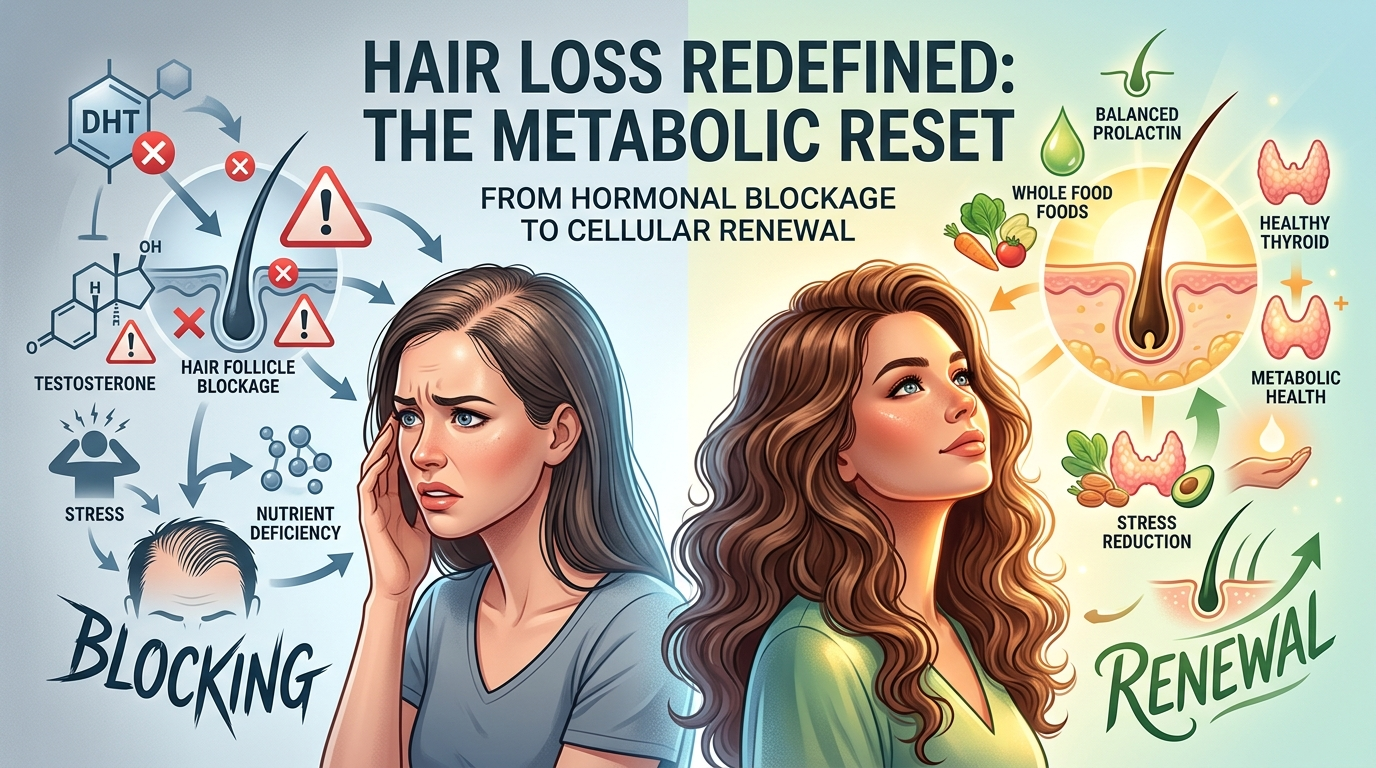
What if the headline hormone is innocent, and the real driver is one your doctor almost never tests? Prolactin is the hormone of milk production and stress. It also happens to be one of the most powerful suppressors of hair follicle regeneration in the human body. When prolactin climbs, hair falls. And prolactin climbs whenever you are undernourished, overstressed, under-slept, estrogen-dominant, or running a slow thyroid.
This is the bioenergetic view of hair loss, and it changes everything about how to reverse hair thinning. Instead of declaring war on a hormone your body needs, you remove the conditions that push prolactin, cortisol, and estrogen out of balance. The follicle recovers because you fixed the environment it lives in.
Prolactin Hair Loss: The Hormone Your Doctor Never Tests
If you are losing hair, your dermatologist likely ordered a thyroid panel, an iron panel, maybe a free testosterone level, and then handed you a prescription. Prolactin is rarely on the list. That is a problem, because the evidence connecting prolactin to hair loss is decades old and remarkably consistent.
Prolactin receptors are present in the human hair follicle, and they are not decorative. Research examining prolactin and its receptor in alopecia areata found clear biological activity of this hormone inside the follicle itself, not just circulating in the blood [4]. When researchers have looked at women with elevated prolactin, the connection to thinning hair is hard to ignore. A clinical review titled "Hair loss and hyperprolactinemia in women" documented that elevated prolactin is a real and underrecognized contributor to female hair loss, one that resolves when the underlying prolactin elevation is addressed [6].
The mechanism is not subtle. Prolactin pushes hair follicles out of their growth phase (anagen) and into regression, and lengthens the resting phase (telogen), so follicles sit dormant longer before shedding [4, 6]. The net result is exactly what you see in the mirror: thinner density, shorter growth cycles, more hairs in the brush.
The bioenergetic literature adds a deeper layer. Ray Peat noted decades ago that prolactin "has strong effects on the...skin (sweat and oil glands, hair follicles...)" and that it is "promoted by estrogen, and inhibited by progesterone" [9]. What makes rising prolactin so destructive is that estrogen does not merely signal more of it — it physically multiplies the prolactin-secreting cells in the pituitary [9]. The gland literally enlarges and pumps out ever more of the hormone.
Prolactin does not act alone, either. Estrogen raises serotonin, and serotonin in turn drives prolactin release. Peat went further and linked excess serotonin directly to shedding: "The hair loss that occurs in hypothyroidism, postpartum syndrome, and with the use of drugs such as St. John's wort...could be another effect of excess serotonin" [10]. This is why postpartum hair loss is so common — the hormonal aftermath of pregnancy leaves serotonin and prolactin elevated precisely when the follicle is most vulnerable.
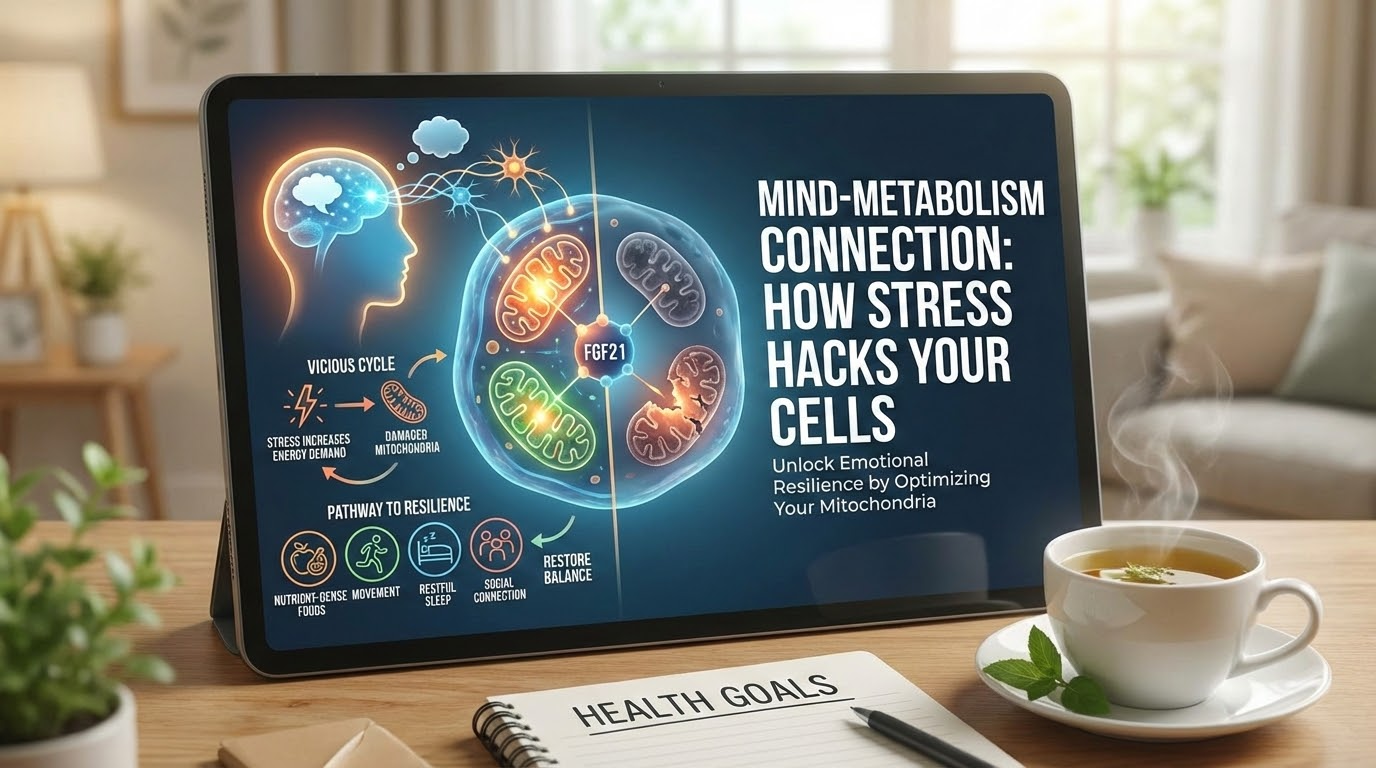
Why does prolactin climb in the first place? Prolactin is a stress hormone. It rises with chronic psychological stress, with estrogen dominance, with blood sugar instability, with sleep disruption, and with anything that suppresses thyroid function. A modern review of the hormonal background of non-scarring hair loss laid out the full picture: prolactin, cortisol, and thyroid dysfunction form a tangled web, and pulling on any one strand moves the others [3]. This is why isolated fixes fail. You cannot lower prolactin with a single supplement if the thyroid is still sluggish and the cortisol is still screaming.
The most telling piece of evidence comes from an unexpected place. Bromocriptine is a drug that lowers prolactin by stimulating dopamine receptors. Researchers studying men with early-onset androgenic alopecia found that these men had measurably different cardiometabolic responses to bromocriptine than men without hair loss, suggesting that the prolactin and metabolic systems of balding men are genuinely different from the start [2]. In other words, male pattern baldness is not purely an androgen problem. The prolactin and metabolic axis is disturbed in these men long before the hair is gone.
So the question is not "how do I block DHT." The better question is "what is driving my prolactin up, and how do I bring it back down." Answer that, and the follicle gets a fighting chance.
The DHT Myth: Why Blocking the Wrong Hormone Fails
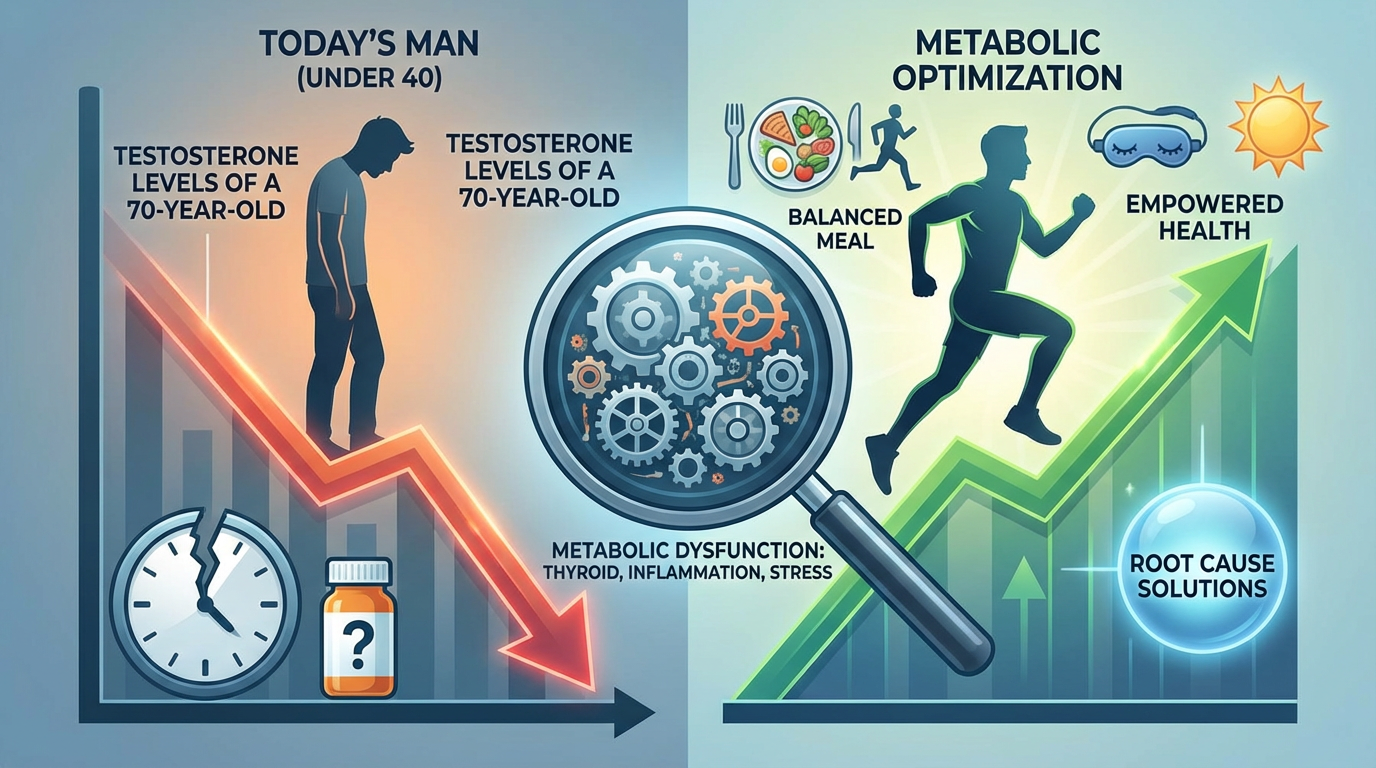
Mainstream dermatology is built on the DHT hypothesis: testosterone converts to dihydrotestosterone, DHT miniaturizes the follicle, therefore block the conversion with finasteride or dutasteride. The treatments work for some people, modestly. A systematic review and meta-analysis in the Journal of the American Academy of Dermatology confirmed that finasteride and minoxidil do produce results, but the effect sizes are modest, the treatments must continue forever, and a meaningful share of patients see no benefit at all [7]. If DHT were truly the sole villain, the results would be far more universal.
The bioenergetic literature tells a more interesting, and more accurate, story. The late researcher Georgi Dinkov, summarizing the broader Peat-inspired metabolism literature, pointed to animal studies in which physiologic concentrations of DHT applied directly to skin actually accelerated hair growth rather than destroying it. Only doses ten times higher than anything the body produces naturally, the kind seen with androgen-secreting tumors or heavy steroid abuse, inhibited growth. If DHT were intrinsically follicle-poisoning, this outcome would be impossible.
The same body of work reframes the true driver. Dinkov argued, based on a chain of animal and human studies, that chronic stress is the main driver of hair loss, operating through a cascade of mediators: cortisol, estrogen, prolactin, aldosterone, parathyroid hormone, and serotonin. Each of these rises under stress, and each one individually damages the follicle. DHT is downstream, a scapegoat blamed for the damage the stress cascade actually caused.
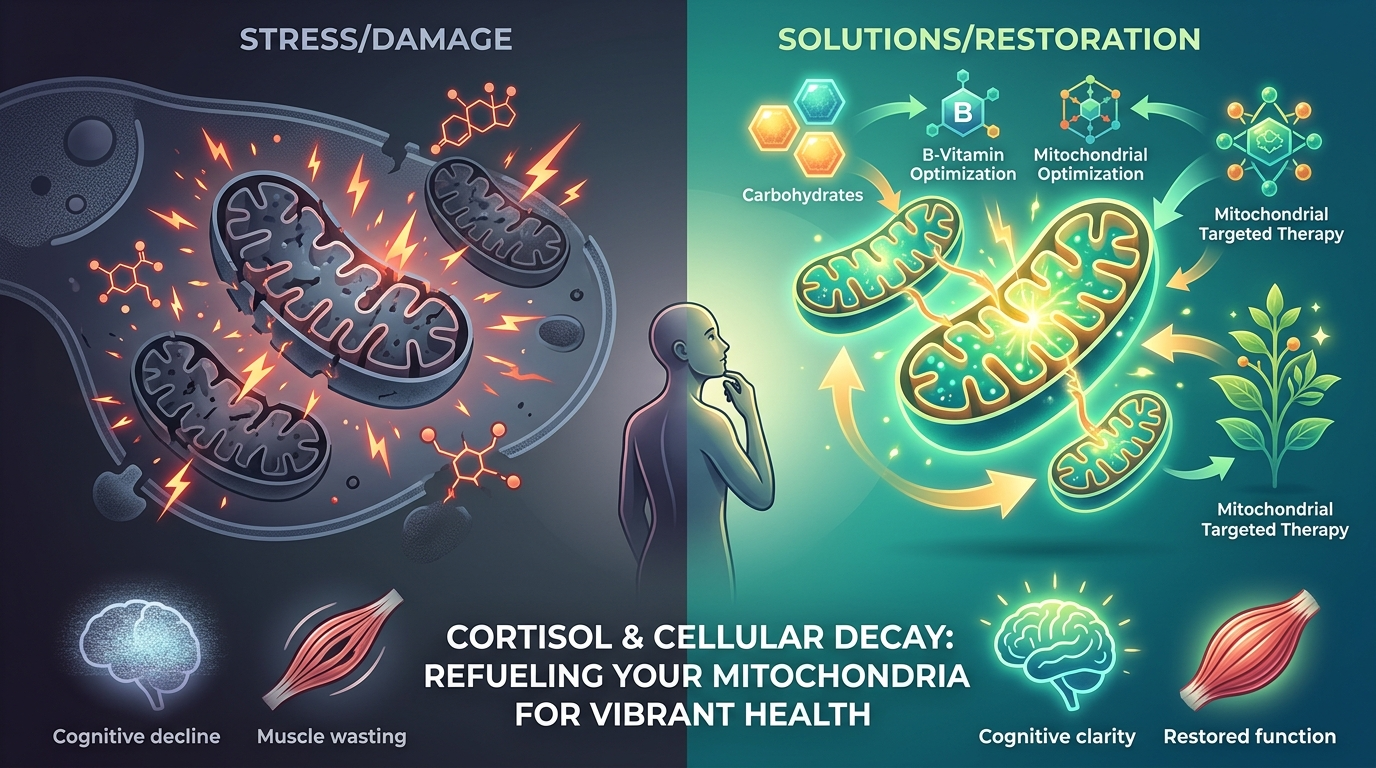
Here is the vicious cycle that ties it together. Cortisol activates an enzyme called aromatase, which converts testosterone into estrogen. Estrogen then promotes further cortisol and prolactin output. The more stressed you are, the more estrogen-dominant and prolactin-heavy you become, and the less your follicles can sustain growth. Estrogen itself, in this framework, is a hair suppressor. Studies have shown that blocking estrogen can reverse hair loss, while administering androgens (which oppose cortisol and estrogen) supports regrowth.
There is a second, more fundamental reason this cascade destroys hair, and it rewrites the entire "miniaturization" story. A follicle does not shrink because hormones are toxic to it. It shrinks because it is starved. When thyroid function drops and cellular energy (ATP) falls, the body releases stress hormones that constrict blood vessels, choking the follicle of oxygen and nutrients. In that energy-depleted state the follicle becomes hypersensitive to signals a well-nourished follicle handles easily, so even ordinary androgen or prolactin levels register as an assault [9]. The follicle is not dying of poisoning. It is dying of hunger.
Chronic stress also triggers what bioenergetic researchers call the "pregnenolone steal": the body funnels its raw hormonal material toward cortisol production and away from progesterone. Because progesterone is the hormone that holds prolactin in check, losing it removes the brake entirely [9]. More cortisol, less progesterone, more prolactin, less hair — one continuous metabolic failure showing up at the scalp.
This is why a stressed, under-slept, underfed twenty-something can lose hair while a relaxed, well-nourished fifty-something keeps a full head. It is not genetics destiny. It is metabolic state. And metabolic state is something you can change.
The takeaway is not that DHT is irrelevant. It is that DHT is a downstream signal, not the upstream cause. Blocking it chemically may buy time, but it does nothing for the cortisol-estrogen-prolactin storm that started the shedding. To actually reverse thinning, you have to go upstream.
How to Regrow Hair Naturally: Lower Prolactin, Raise Metabolism
If stress hormones cause hair loss, then the path to regrowth is the opposite of what most people try. Instead of adding a drug on top of a broken system, you remove what is breaking the system. That means lowering prolactin, supporting thyroid function, stabilizing blood sugar, and feeding the follicle what it needs to rebuild.
Start with the thyroid. Thyroid hormone, specifically the active form known as T3, is one of the most powerful regulators of hair follicle stem cell function. Research has shown that thyroid hormone signaling directly controls how those stem cells behave, determining whether a follicle re-enters the growth phase or stays dormant [8]. When your thyroid is underconverting T4 to T3, which happens under stress, fasting, and low-carb dieting, your follicle stem cells lose their signal to grow. Supporting thyroid conversion with adequate calories, sufficient carbohydrate, selenium, and the amino acid taurine gives the follicle its marching orders again.
This connects directly to one of the most overlooked causes of modern hair loss: aggressive dieting and fasting. A landmark 2025 study in the journal Cell showed that intermittent fasting triggers interorgan communication that actively suppresses hair follicle regeneration [1]. The fasting protocol that many people adopt for weight loss or longevity literally tells the follicle to stop growing. If your hair started thinning two or three months after you began skipping breakfast or extended fasting, this is likely why. The body, sensing a famine, shuts down non-essential tissue like hair to conserve energy.
Then there is protein. Hair is made of keratin, a protein, and the follicle requires a steady supply of amino acids to build it. The standard recommended daily allowance of roughly 0.8 grams per kilogram of body weight is barely enough to prevent overt deficiency, let alone support robust hair growth, especially in active women. Adequate protein, with attention to anti-stress amino acids like glycine (found abundantly in gelatin and collagen), gives the follicle raw material while simultaneously helping to quiet the cortisol response.
Protein is also the liver's fuel for clearing estrogen, and this is where under-eating silently wrecks hair. The liver metabolizes spent estrogen out of circulation, and it needs ample dietary protein plus a healthy thyroid to do it. As the bioenergetic literature puts it bluntly, "an estrogen excess is a dietary protein deficiency — the liver simply cannot detoxify estrogen when it is under-nourished" [9]. Starve the liver and estrogen lingers, which means more aromatase, more prolactin, and more shedding — a chain reaction set off by something as simple as not eating enough.
Finally, lower prolactin directly with the specific nutrients and signals that hold it in check. The protocol is well mapped:
- Vitamin B6 (as P5P). B6 is a direct prolactin inhibitor — a documented biochemical effect, not folk medicine. When estrogen runs high, B6 helps rebalance the system [9].
- Vitamin E. True vitamin E both shields tissue from the damage of unsaturated fats and acts as an estrogen antagonist, blunting the very signaling that drives prolactin upward [11].
- Vitamin A (retinol). Animal-source vitamin A — liver, egg yolks, butter — is required to convert cholesterol into pregnenolone and progesterone, the body's own prolactin brake. Peat observed that "vitamin A's effect on the skin opposes that of estrogen" [9]. Plant beta-carotene is a poor substitute for this job.
- Progesterone. Progesterone opposes estrogen at the receptor and directly inhibits prolactin [9]. When chronic stress has drained it, restoring progesterone (with medical guidance) is sometimes the single most effective lever in the whole stack.
- Cut the PUFA. Seed oils and their polyunsaturated fats block thyroid function at nearly every step and raise estrogen by activating aromatase. Saturated fats terminate the stress response; unsaturated fats amplify it [12]. This is why the fat on your plate eventually shows up in the hair on your head.
Underneath all of it sits the dopamine–prolactin seesaw. When dopamine activity is healthy, prolactin stays low; stress, a slow thyroid, and high serotonin tilt it the wrong way. Reduce the alcohol, fix the sleep, stabilize blood sugar, support the thyroid — and prolactin has every reason to fall.
None of this is magic. It is physiology. Lower the stress hormones, raise the metabolic rate, feed the follicle, and the hair has what it needs to come back.
The Biospark Approach
At Biospark Health, we do not start with a prescription. We start with the question mainstream medicine skips: why is your body producing the hormones that are destroying your hair?
Dr. Steven Presciutti approaches hair loss as a metabolic and hormonal signal, not an isolated cosmetic problem. Your thinning hair is your body trying to tell you something. Usually it is saying that your thyroid is underperforming, your stress hormones are chronically elevated, your prolactin is climbing, or your cells are not producing enough energy to sustain optional tissue like hair. The fix is to restore the conditions under which hair grows naturally.
That means comprehensive evaluation of thyroid function (including the T3 that most panels ignore), assessment of stress hormone patterns, identification of estrogen dominance, and a hard look at the lifestyle factors (fasting, overtraining, under-eating, poor sleep) that drive the prolactin cascade. From there, the work is precise and individualized: targeted nutritional support for thyroid conversion, strategic use of amino acids like glycine and taurine, blood sugar stabilization, and removal of the endocrine-disrupting inputs that keep the stress cycle running.
This is root cause medicine. It takes longer than swallowing a pill. It also produces results that last, because you are not fighting your own hormones, you are restoring the balance that lets them work for you.
Ready to restore your metabolism at the cellular level?
The Bioenergetic Reset Program addresses root causes, not symptoms. Join 300+ members who have discovered what real metabolic health feels like.
- 9+ hours of comprehensive training
- Twice-monthly LIVE coaching calls
- Complete meal plans and protocols
- Direct email support
/month | Cancel anytime
Hair Loss Support in Reading and Berks County, PA
If you are struggling with hair loss in the Reading or Wyomissing area, you are far from alone. Many residents throughout Berks County watch their hair thin year after year, bouncing between dermatologists and drugstore shampoos without ever learning why it is happening in the first place.
At Biospark Health, we serve clients throughout southeastern Pennsylvania, including Lancaster, Downingtown, Allentown, West Chester, and the greater Philadelphia suburbs. Our root-cause approach to hormonal and metabolic hair loss has helped local residents finally address prolactin, thyroid, and stress-driven thinning at its source, rather than masking it with lifelong medication.
Whether you are in King of Prussia, Montgomery County, or anywhere across the region and you are tired of being told your labs are normal while your hair keeps falling, our virtual and in-person options make it easy to get the metabolic and hormonal support your follicles actually need.
Frequently Asked Questions
Can hair loss really be reversed?
Yes, when the underlying driver is hormonal or metabolic rather than permanently scarring. Stress-driven shedding (telogen effluvium), prolactin-related thinning, and thyroid-linked hair loss can all improve once the root cause is addressed. The key is going upstream to the hormones and metabolic state, rather than only treating the scalp. Even long-standing thinning often responds when thyroid function, prolactin, and stress hormones are brought back into balance.
How do you treat perimenopause hair loss?
Perimenopausal hair loss is usually driven by the same hormonal shifts discussed here: falling progesterone, relative estrogen dominance, rising cortisol, and climbing prolactin. The bioenergetic approach is to support thyroid function, restore metabolic rate, reduce the stress hormone cascade, and address nutrient gaps that accelerate during this transition. This tends to work far better than isolated hormone creams, because it stabilizes the entire endocrine environment the follicle depends on.
What reverses hair loss naturally?
The most effective natural approach combines four pillars: support thyroid conversion (adequate calories, carbohydrate, selenium, taurine), lower prolactin and cortisol (consistent sleep, blood sugar stability, stress reduction, B6, glycine), remove estrogen-mimicking inputs (plastics, certain personal care products, extreme fasting), and provide adequate protein for keratin synthesis. Avoid aggressive fasting and overtraining, both of which signal the follicle to stop growing.
Why does hair fall out after pregnancy?
Postpartum hair loss is the same cascade on fast-forward. During pregnancy, high progesterone holds estrogen and prolactin in check. After delivery, progesterone collapses while estrogen, serotonin, and prolactin stay elevated — the exact hormonal storm that suppresses the follicle. Peat explicitly grouped postpartum shedding with hypothyroid hair loss as a likely effect of excess serotonin [10]. The fix is the same as everywhere else in this article: support thyroid function, rebuild protein and nutrient status, and let the stress-hormone cascade settle. For most women it resolves over months once the metabolic environment recovers.
Does prolactin cause hair loss in men?
Yes. Prolactin receptors are present in male hair follicles too, and research on men with early-onset androgenic alopecia shows their prolactin and metabolic systems behave differently from the start [2]. Male hair loss is not purely a DHT problem. Chronic stress, under-eating, poor sleep, and thyroid suppression push prolactin up in men just as they do in women, and addressing those factors is often the missing piece when finasteride alone falls short.
Conclusion
The story you were sold about hair loss is incomplete. DHT is not the villain, genetics are not a life sentence, and a prescription is not your only option. For a large share of people losing hair, the real driver is a hormonal and metabolic cascade that starts with stress, runs through cortisol and estrogen, and expresses itself as elevated prolactin and a sluggish thyroid.
The follicle is not broken. It is responding exactly as it should to the environment you have placed it in. Feed it energy, restore your thyroid, lower your stress hormones, give it the amino acids it needs, and the same body that shed the hair can grow it back.
That is the promise of the bioenergetic approach, and it is the work we do every day at Biospark Health. If you are tired of fighting your own hormones and ready to restore the conditions under which your hair, your energy, and your metabolism were designed to thrive, the next step is yours.
References
- Chen H, Liu C, Cui S, et al. Intermittent fasting triggers interorgan communication to suppress hair follicle regeneration. Cell. 2025. https://pubmed.ncbi.nlm.nih.gov/39674178/
- Krysiak R, Basiak M, Szkróbka W, et al. Impaired Cardiometabolic Effects of Bromocriptine in Men With Early-Onset Androgenic Alopecia. Journal of Clinical Pharmacology. 2023. https://pubmed.ncbi.nlm.nih.gov/36222207/
- Owecka B, Tomaszewska A, Dobrzeniecki K, et al. The Hormonal Background of Hair Loss in Non-Scarring Alopecias. Biomedicines. 2024. https://pubmed.ncbi.nlm.nih.gov/38540126/
- El Tahlawi SM, El Eishi NH, Kahhal RK, et al. Do Prolactin and its Receptor Play a Role in Alopecia Areata? Indian Journal of Dermatology. 2018. https://pubmed.ncbi.nlm.nih.gov/29937561/
- Carmina E, Azziz R, Bergfeld W, et al. Female Pattern Hair Loss and Androgen Excess. The Journal of Clinical Endocrinology and Metabolism. 2019. https://pubmed.ncbi.nlm.nih.gov/30785992/
- Lutz G. Hair loss and hyperprolactinemia in women. Dermato-endocrinology. 2012. https://pubmed.ncbi.nlm.nih.gov/22870355/
- Adil A, Godwin M. The effectiveness of treatments for androgenetic alopecia: A systematic review and meta-analysis. Journal of the American Academy of Dermatology. 2017. https://pubmed.ncbi.nlm.nih.gov/28396101/
- Contreras-Jurado C, Lorz C, García-Serrano L, et al. Thyroid hormone signaling controls hair follicle stem cell function. Molecular Biology of the Cell. 2015. https://pubmed.ncbi.nlm.nih.gov/25657324/
- Peat R. Aging, estrogen, and progesterone. RayPeat.com. https://raypeat.com/articles/aging/aging-estrogen-progesterone.shtml
- Peat R. Tryptophan, serotonin, and aging. RayPeat.com. https://raypeat.com/articles/aging/tryptophan-serotonin-aging.shtml
- Peat R. Vitamin E: Estrogen antagonist, energy promoter, and anti-inflammatory. RayPeat.com. https://raypeat.com/articles/nutrition/vitamine.shtml
- Peat R. Saturated and unsaturated fats and the stress response. RayPeat.com. https://raypeat.com/articles/aging/fats-stress.shtml
Tags:
References & Citations
This article is supported by scientific research and peer-reviewed sources. Click citations to verify the evidence.
- [1]Chen H, Liu C, Cui S, et al.(2025)Intermittent fasting triggers interorgan communication to suppress hair follicle regeneration.Cell.View Source
- [2]Krysiak R, Basiak M, Szkróbka W, et al.(2023)Impaired Cardiometabolic Effects of Bromocriptine in Men With Early-Onset Androgenic Alopecia.Journal of Clinical Pharmacology.View Source
- [3]Owecka B, Tomaszewska A, Dobrzeniecki K, et al.(2024)The Hormonal Background of Hair Loss in Non-Scarring Alopecias.Biomedicines.View Source
- [4]El Tahlawi SM, El Eishi NH, Kahhal RK, et al.(2018)Do Prolactin and its Receptor Play a Role in Alopecia Areata?.Indian Journal of Dermatology.View Source
- [5]Carmina E, Azziz R, Bergfeld W, et al.(2019)Female Pattern Hair Loss and Androgen Excess: A Report From the Multidisciplinary Androgen Excess and PCOS Committee.The Journal of Clinical Endocrinology and Metabolism.View Source
- [6]Lutz G(2012)Hair loss and hyperprolactinemia in women.Dermato-endocrinology.View Source
- [7]Adil A, Godwin M(2017)The effectiveness of treatments for androgenetic alopecia: A systematic review and meta-analysis.Journal of the American Academy of Dermatology.View Source
- [8]Contreras-Jurado C, Lorz C, García-Serrano L, et al.(2015)Thyroid hormone signaling controls hair follicle stem cell function.Molecular Biology of the Cell.View Source
- [9]Peat R(n.d.)Aging, estrogen, and progesterone.RayPeat.com.View Source
- [10]Peat R(n.d.)Tryptophan, serotonin, and aging.RayPeat.com.View Source
- [11]Peat R(n.d.)Vitamin E: Estrogen antagonist, energy promoter, and anti-inflammatory.RayPeat.com.View Source
- [12]Peat R(n.d.)Saturated and unsaturated fats and the stress response.RayPeat.com.View Source
All references have been reviewed for scientific accuracy and credibility. Citations follow standard academic format and link to original research where available.
About Dr. Steven Presciutti, MD
Founder & Health Coach at Biospark Health, specializing in bioenergetic health and metabolism optimization.