Your "Silver Fillings" Are Half Mercury: The Dental Industry's Dirtiest Secret
Discover why so-called silver fillings are actually 50% mercury, who still gets them, and how mercury disrupts your metabolism at the cellular level.
Medical Disclaimer
This content is for informational and educational purposes only. It is not a substitute for professional medical advice, diagnosis, or treatment. Always seek the advice of your physician or other qualified health provider with any questions you may have regarding a medical condition.
Your "Silver Fillings" Are Half Mercury: The Dental Industry's Dirtiest Secret
The truth about mercury fillings dangers that your dentist, your insurance company, and the dental establishment would rather you never discover.
You probably call them "silver fillings." Your dentist calls them "silver fillings." Your insurance company lists them as "silver amalgam restorations." The word silver appears everywhere. The word mercury appears nowhere.
Here is what nobody tells you at your dental appointment: those fillings are roughly 50% mercury by weight. Not 5%. Not some trace amount. Half. Mercury is the single largest ingredient, and it is one of the most toxic non-radioactive elements on the planet. Understanding the full scope of mercury fillings dangers is critical for anyone who has them in their mouth right now, or who might be offered one at their next visit.
This is not a fringe theory. In 2020, the U.S. Food and Drug Administration itself issued a safety communication recommending that dental amalgam not be placed in certain high-risk groups. The international community has moved even further, with over 140 nations signing the Minamata Convention to phase out mercury use globally.
So why are millions of Americans still getting mercury fillings in 2026?
The answer involves insurance economics, institutional inertia, environmental injustice, and a naming trick so effective that most patients never question what is going into their teeth. In this article, you will learn exactly what dental amalgam mercury does to your body, who is being harmed the most, and what you can do to protect yourself and your family. You will also discover how mercury acts as a metabolic disruptor at the cellular level, something that connects directly to the bioenergetic approach we take at Biospark Health.
The Name Game: How "Silver" Hides the Mercury
Language matters. And in dentistry, the language around amalgam fillings is a masterclass in misdirection.
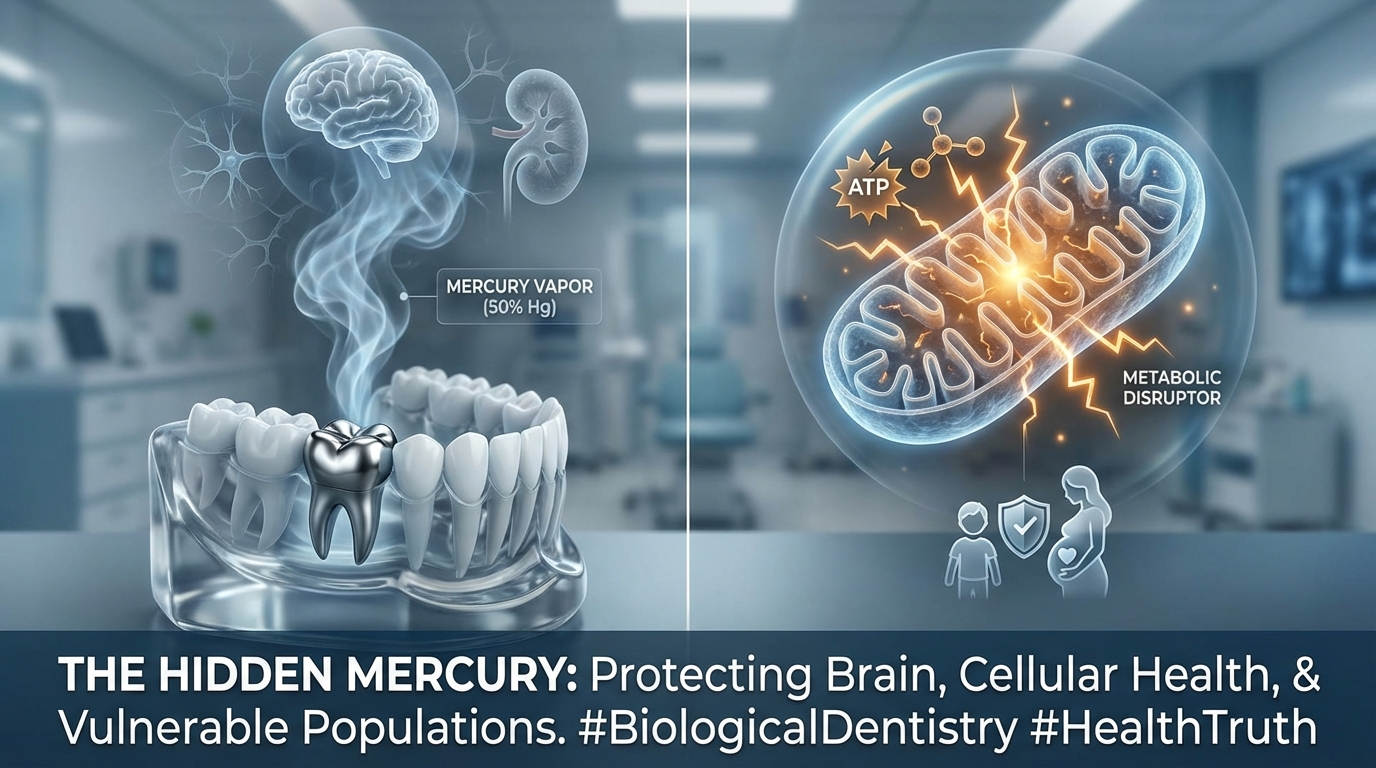
When your dentist says "silver filling," you picture a shiny, inert metal sitting quietly in your tooth. Silver sounds safe. Silver sounds clean. Silver sounds like jewelry. What you do not picture is a filling that is approximately 50% elemental mercury, mixed with silver, tin, copper, and sometimes zinc.
The dental industry has used the term "silver filling" for over a century, and it is not an accident. The American Dental Association (ADA) has consistently promoted this terminology, even as evidence of mercury fillings side effects has mounted over the decades. The label "silver" is not a description of the primary ingredient. It is a marketing decision designed to sidestep the one word that would make every patient ask questions: mercury.
Consider this analogy. If you purchased a food product that was 50% arsenic and 50% sugar, would you accept the manufacturer calling it a "sugar snack"? Of course not. Yet this is precisely what happens every time a dental office refers to dental amalgam mercury as a "silver filling."
What is actually in a dental amalgam filling?
- Approximately 50% mercury
- Approximately 22-32% silver
- Approximately 14% tin
- Approximately 8% copper
- Trace amounts of zinc and other metals
Mercury is not merely present. It is the majority component. It is the ingredient that makes the filling workable, because mercury is the only metal that is liquid at room temperature. When your dentist mixes the amalgam, mercury binds with the powdered metals to form a pliable substance that can be packed into a cavity. That chemical bond does not lock mercury in permanently. As you will learn shortly, mercury vapor escapes continuously for the entire life of the filling.
Is the Mercury in Amalgam Fillings Safe?
This is the question patients ask most frequently, and the dental establishment's answer has remained remarkably consistent: "Amalgam has been used safely for over 150 years."
But as one researcher put it, "Historical longevity of use is not the same as proof of safety." Consider lead paint, which was used in homes for centuries before science finally caught up with the damage it was causing to children's brains. Asbestos was considered a miracle building material for decades. Tobacco was once endorsed by physicians.
The pattern is always the same. An industry that profits from a product defends that product long after the evidence of harm becomes difficult to ignore. And in the case of dental amalgam mercury, the ADA itself has held patents on amalgam formulations, creating a financial incentive to defend the material regardless of emerging evidence about mercury fillings dangers.
The honest answer is this: no amount of chronic mercury vapor exposure has been established as completely safe, and the FDA's own 2020 communication acknowledged that certain populations face unacceptable risk.
Who Still Gets Mercury Fillings in 2026?
If you visit a private dental office in an affluent area, you may never see a mercury filling placed. Many private practices have gone mercury-free entirely, using tooth-colored composite resins, glass ionomer, or ceramic materials instead.
But step into a Medicaid dental clinic, a military dental facility, a prison, or a tribal health center, and the picture changes dramatically. Do they still use mercury fillings in these settings? Absolutely. And at rates far higher than in private practice.
The reason is not clinical. It is financial.
Mercury amalgam is cheap. A mercury filling costs a fraction of what a composite restoration costs. Insurance reimbursement rates, particularly in public health programs, are calibrated to the lowest-cost option. When Medicaid reimburses a dentist $50 for a filling and the composite material alone costs $30, but amalgam costs $5, the math pushes clinicians toward mercury whether they prefer it or not.
This creates a two-tiered system. Patients who can afford private insurance or out-of-pocket payments get mercury-free options. Patients who depend on public assistance, or who receive dental care through institutional systems, get mercury.
The demographics of this divide are stark. Children of color, low-income families, incarcerated individuals, military service members, and Native American communities all receive dental amalgam mercury at disproportionately higher rates. This is not a matter of clinical necessity. It is a matter of systemic inequity baked into reimbursement structures.
What the FDA Actually Said in 2020
In September 2020, the FDA issued a safety communication that represented a significant shift. The agency recommended that dental amalgam not be used in the following groups:
- Pregnant women and their developing fetuses
- Women who are planning to become pregnant
- Nursing women and their newborns and infants
- Children, especially those younger than six years of age
- People with pre-existing neurological disease (such as multiple sclerosis, Alzheimer's disease, or Parkinson's disease)
- People with impaired kidney function
- People with known heightened sensitivity (allergy) to mercury or other components of dental amalgam
This was not a ban, and it carried no regulatory teeth. But it was an acknowledgment, from the agency responsible for dental device safety, that the mercury fillings side effects are real enough to warrant caution in vulnerable populations.
The question that remains is: if mercury amalgam is not safe for pregnant women, children, and people with neurological conditions, on what basis is it considered safe for everyone else?
How Mercury Fillings Damage Your Health
To understand why mercury fillings are dangerous, you need to understand one critical property of mercury: it is the only metal that exists as a liquid at room temperature. This means it has a vapor pressure. It releases gas continuously. Not once, not only when you chew, but every minute of every day, for the entire lifespan of the filling.
Think of it like a block of dry ice. Dry ice is solid carbon dioxide, but it constantly releases CO2 gas through sublimation. Mercury in a dental filling behaves similarly. The surface of the filling is constantly off-gassing mercury vapor, and that rate increases with heat (hot beverages, hot food), mechanical stimulation (chewing, grinding, polishing), and acidity.
Every time you chew, drink coffee, or grind your teeth at night, you are releasing mercury vapor directly into your oral cavity. You inhale that vapor. It crosses your lung membranes and enters your bloodstream within seconds.
Where Mercury Accumulates
Once in the bloodstream, mercury does not distribute evenly. It has a specific affinity for sulfur-containing proteins, which are abundant in neural tissue. This means the brain and central nervous system are primary targets for mercury accumulation.
Mercury also concentrates in the kidneys, which are responsible for filtering it out of the blood, and in the liver. In pregnant women, mercury crosses the placental barrier and accumulates in the developing fetus, where even small amounts can disrupt neurological development.
Symptoms of Mercury Poisoning from Amalgam Fillings
The symptoms of mercury poisoning from amalgam fillings are often subtle and develop gradually over years, which makes them easy to dismiss or attribute to other causes. They can include:
- Neurological symptoms: brain fog, memory problems, difficulty concentrating, headaches, tremors, numbness or tingling in hands and feet
- Mood disturbances: anxiety, depression, irritability, mood swings
- Fatigue: persistent, unexplained exhaustion that does not improve with rest
- Digestive issues: nausea, loss of appetite, metallic taste in the mouth
- Immune dysfunction: increased susceptibility to infections, autoimmune-like symptoms
- Kidney stress: changes in urinary function
The challenge is that these symptoms overlap with dozens of other conditions. Most physicians will never ask how many mercury fillings you have. And because the exposure is chronic and low-level rather than acute, standard toxicology panels may not flag it.
Dental Workers Bear a Hidden Burden
There is a population that faces mercury exposure from dental amalgam at levels far beyond what patients experience: dental assistants and hygienists.
These professionals, who are predominantly women, breathe mercury vapor every single time amalgam is placed, drilled, polished, or removed. They handle mercury-containing materials with their hands. They work in environments where ambient mercury vapor levels can exceed occupational safety thresholds, particularly in older offices with inadequate ventilation.
The mercury fillings dangers do not stop at the patient's mouth. They extend to every person in the operatory.
The Metabolic Connection
At Biospark Health, we view mercury through a specific lens: its impact on cellular energy production. Mercury does not just sit in tissues passively. It actively disrupts metabolic processes at the mitochondrial level.
Mercury binds to selenium-dependent enzymes that are critical for thyroid function and antioxidant defense. It inhibits key enzymes in the electron transport chain, the very machinery your mitochondria use to produce ATP (cellular energy). It increases oxidative stress, damages cell membranes, and interferes with the body's ability to produce and utilize energy efficiently.
This is why patients with significant mercury burden often present with symptoms that look like metabolic dysfunction: fatigue, weight gain, brain fog, cold hands and feet, poor exercise tolerance. The mercury is not just "toxic" in the conventional sense. It is actively sabotaging your cells' ability to make energy.
The Environmental Cycle That Poisons Communities Twice
Mercury fillings do not only harm the person who has them. They harm the environment, and by extension, entire communities.
Every time a mercury filling is placed, drilled out, or replaced, mercury-containing waste enters the dental office's wastewater system. From there, it flows into municipal water treatment plants, which are not designed to remove elemental mercury. The mercury enters rivers, lakes, and eventually the ocean.
In aquatic environments, bacteria convert elemental mercury into methylmercury, the organic form that accumulates in fish. This is the same methylmercury that the EPA warns pregnant women about. The irony is staggering: a pregnant woman might avoid eating tuna because of mercury in fish, while sitting in a dental chair receiving a mercury filling that contributes to that very contamination.
And then there is cremation. When a person with mercury fillings is cremated, the mercury in their teeth vaporizes and enters the atmosphere. Crematoria are now one of the leading sources of atmospheric mercury emissions in developed countries. The mercury falls back to earth in rainfall, enters waterways, and the cycle begins again.
Communities effectively pay twice. They pay when the filling is placed (through the health effects on the individual). And they pay again through environmental contamination that affects drinking water, food supplies, and air quality.
The Minamata Convention on Mercury, named after the Japanese city devastated by industrial mercury poisoning in the 1950s, represents the international community's recognition that mercury use must be phased down across all sectors, including dentistry. Over 140 nations have signed this treaty. The momentum toward mercury-free dentistry is global.
As one advocate noted, "Historical longevity of use is not proof of safety." We said the same thing about lead paint. We said the same thing about asbestos. And eventually, the evidence became too overwhelming to ignore. Mercury in dentistry is following the same trajectory.
The Biospark Approach: Mercury as a Metabolic Disruptor
At Biospark Health, Dr. Steven Presciutti approaches mercury exposure the way he approaches every health challenge: by looking at root causes, not just symptoms.
Mercury is not simply a toxin to be removed. It is a metabolic disruptor that undermines cellular energy production at every level. When mercury binds to sulfur-containing amino acids like cysteine and methionine, it does not just "damage" tissue in a vague sense. It specifically disables the enzymatic machinery your cells need to produce energy.
Your mitochondria, the organelles responsible for generating over 90% of your body's ATP, are exquisitely sensitive to mercury. Mercury inhibits Complex I and Complex III of the electron transport chain, the two sites most critical for efficient energy production. It depletes glutathione, your body's master antioxidant, leaving mitochondria vulnerable to the oxidative stress that mercury itself generates.
This creates a vicious cycle. Mercury damages the very systems your body needs to detoxify mercury. Your energy drops. Your detox pathways slow down. More mercury accumulates. Energy drops further.
This is why Dr. Presciutti emphasizes that mercury fillings removal, while important, should not be the first step. Before any amalgam is removed, the body's detoxification capacity needs to be supported and optimized. This means:
- Optimizing mineral status, particularly selenium, zinc, and magnesium, which support the enzymes mercury disrupts
- Supporting glutathione production through adequate protein intake and targeted nutritional strategies
- Restoring gut health, because a compromised gut allows more mercury to be reabsorbed rather than eliminated
- Improving cellular energy production so the body has the metabolic resources to handle the detoxification process
For a deeper dive into how dental health impacts your metabolism at every level, read our comprehensive guide: Why Your Teeth Are the Window to Your Metabolism
Ready to restore your metabolism at the cellular level?
The Bioenergetic Reset Program addresses root causes, not symptoms. Join 300+ members who have discovered what real metabolic health feels like.
- 9+ hours of comprehensive training
- Twice-monthly LIVE coaching calls
- Complete meal plans and protocols
- Direct email support
$133/month | Cancel anytime
How to Protect Yourself: A Practical Action Plan
Knowledge without action is just entertainment. Here is what you can do right now to protect yourself and your family from mercury fillings dangers.
Step 1: Ask the Question
The single most powerful thing you can do at your next dental appointment is ask: "Do you still place mercury fillings?" This question accomplishes two things. First, it tells your dentist that you are an informed consumer who will not accept amalgam by default. Second, it applies market pressure. When enough patients ask this question, clinics respond by going mercury-free.
Consumer behavior shifts outcomes. Every patient who asks this question makes it slightly harder for the dental industry to maintain the status quo.
Step 2: Refuse the Word "Silver"
Language shapes perception. When your dentist or insurance company uses the term "silver filling," correct them. The accurate term is "mercury amalgam filling" or "dental amalgam containing mercury." This is not pedantic. It is a refusal to participate in the deception that has kept patients uninformed for over a century.
Step 3: Override Insurance Defaults
If your insurance plan defaults to covering amalgam and requires pre-authorization or additional cost for composite, put your objection in writing. Send a letter to your insurance provider stating that you do not consent to mercury-containing dental materials and requesting coverage for mercury-free alternatives. Many states have patient rights provisions that support this.
Changing insurance reimbursement is the fastest route to reform. When insurers stop covering mercury amalgam as the default, the economic incentive to place it disappears.
Step 4: If You Already Have Mercury Fillings
If you currently have mercury amalgam fillings in your mouth, do not panic, and do not rush to have them removed. Improper removal can actually increase your mercury exposure dramatically if the dentist does not follow safe removal protocols.
In the meantime, reduce your daily vapor exposure:
- Avoid chewing gum on the side with amalgam fillings
- Minimize very hot beverages and foods on that side
- Do not allow a dentist to polish amalgam fillings
- Address teeth grinding (bruxism) if you have it, as this significantly increases vapor release
Step 5: Find a Biological Dentist for Safe Removal
When you are ready for mercury fillings removal, find a dentist who follows the SMART (Safe Mercury Amalgam Removal Technique) protocol. These dentists use rubber dams, high-volume suction, external air sources, and room air filtration to minimize mercury vapor exposure during the removal process.
Resources for finding qualified practitioners include:
- The International Academy of Oral Medicine and Toxicology (IAOMT)
- The International Academy of Biological Dentistry and Medicine (IABDM)
Most importantly, prep your body first. Work with a practitioner who understands the metabolic preparation needed before removal. Optimize your nutrition, gut health, and mineral status so your body can handle the temporary spike in mercury exposure that occurs even with the safest removal techniques.
Mercury-Free Dentistry in Reading and Berks County, PA
If you are in the Reading, Pennsylvania area, finding mercury-free dental care and metabolic support does not have to be a solo journey. Biospark Health, located in Wyomissing, serves patients throughout Berks County and the surrounding region who are looking for a root-cause approach to health.
For those searching for a biological dentist in Berks County or mercury-free dentistry in Pennsylvania, the practitioners affiliated with IAOMT and IABDM maintain searchable directories that include providers in the Reading, Lancaster, Allentown, Downingtown, and West Chester areas.
At Biospark Health, Dr. Presciutti works with patients to address the metabolic consequences of chronic mercury exposure, supporting detoxification pathways and restoring cellular energy production. Whether you are preparing for mercury fillings removal or recovering from years of low-level mercury exposure, the bioenergetic approach provides a framework for true healing.
If you are concerned about dental health in Wyomissing or the broader Reading, PA community, understanding the connection between what is in your mouth and how your metabolism functions is the first step toward taking control.
Frequently Asked Questions
Are amalgam fillings still safe?
The answer depends on who you ask and how you define "safe." The ADA maintains that amalgam is safe for the general population. However, the FDA's 2020 safety communication acknowledged that certain groups face elevated risk, including children under six, pregnant and nursing women, and people with neurological or kidney conditions. No long-term randomized controlled trial has ever established a safe threshold for chronic mercury vapor inhalation. The precautionary principle would suggest that when mercury-free alternatives exist and perform well, there is no justification for continuing to place mercury in human teeth.
How much mercury is released from dental fillings?
Research shows that a single dental amalgam filling releases between 1 and 3 micrograms of mercury vapor per day, and this rate increases with chewing, hot beverages, teeth grinding, and acidic foods. A person with multiple amalgam fillings can have daily mercury vapor exposure that exceeds what the EPA considers safe for environmental exposure. Importantly, this is not a one-time release. It is continuous for the entire life of the filling, which can be 20 years or more.
Can you get mercury poisoning from amalgam fillings?
Acute mercury poisoning from dental fillings is extremely unlikely. However, chronic low-level exposure over years and decades can produce symptoms of mercury poisoning from amalgam fillings that are real and clinically significant. These include fatigue, brain fog, mood disturbances, immune dysfunction, and neurological symptoms. The challenge is that these symptoms develop slowly and are often attributed to aging, stress, or other conditions. Urinary mercury testing and provocation challenges can help identify whether mercury burden is contributing to symptoms.
What are the pros and cons of removing mercury fillings?
The primary benefit of mercury fillings removal is ending the chronic vapor exposure from existing fillings. Many patients report improvements in energy, cognitive clarity, mood, and immune function after safe removal and appropriate detoxification support. The primary risk is that improper removal dramatically increases mercury exposure during the procedure. This is why the SMART protocol exists and why preparation matters. The cons also include cost, as safe removal by a trained biological dentist is typically more expensive than standard dental work, and most insurance plans do not cover the additional safety measures. The bottom line: removal is worthwhile for most patients, but only when done safely and with proper metabolic preparation.
The Choice Is Yours
You now know something that most dental patients never learn: those "silver fillings" are half mercury, and they release toxic vapor into your body every single day.
You know that the dental industry's reliance on the word "silver" is not an accident. You know that mercury fillings dangers extend beyond the individual patient to dental workers, communities, and ecosystems. You know that insurance economics, not clinical evidence, drive the continued use of mercury amalgam in populations that are already vulnerable.
And you know that mercury does not just sit there. It actively disrupts the metabolic machinery your cells need to produce energy, contributing to the fatigue, brain fog, and dysfunction that so many people accept as normal.
But you also know that you have the power to change this. You can ask the question. You can refuse the deceptive language. You can demand mercury-free alternatives. You can prepare your body properly before removal. And you can support your metabolism through the process.
At Biospark Health, we believe that real health starts at the cellular level. Mercury is one of the many root causes we help our patients identify and address. If you suspect that mercury exposure is undermining your energy, your clarity, or your vitality, you do not have to navigate it alone.
Your mouth. Your body. Your choice.
Tags:
References & Citations
This article is supported by scientific research and peer-reviewed sources. Click citations to verify the evidence.
- [1]Bernhoft RA(2012)Mercury toxicity and treatment: a review of the literature.Journal of Environmental and Public Health.View Source
- [2]Tibau AV, Grube BD(2019)Mercury Contamination from Dental Amalgam.Journal of Health & Pollution.View Source
- [3]Stadtler P(1991)Dental amalgam. III: Toxicity.International Journal of Clinical Pharmacology, Therapy, and Toxicology.View Source
- [4]Spencer AJ(2000)Dental amalgam and mercury in dentistry.Australian Dental Journal.View Source
- [5]Risher JF, De Rosa CT(2007)Inorganic: the other mercury.Journal of Environmental Health.View Source
- [6]Carocci A, Rovito N, Sinicropi MS, et al.(2014)Mercury toxicity and neurodegenerative effects.Reviews of Environmental Contamination and Toxicology.View Source
- [7]Shah N, Saxena B, Gupta R(2025)Mitochondria: Key Mediator for Environmental Toxicant-Induced Neurodegeneration.International Journal of Toxicology.View Source
All references have been reviewed for scientific accuracy and credibility. Citations follow standard academic format and link to original research where available.
About Dr. Steven Presciutti, MD
Founder & Health Coach at Biospark Health, specializing in bioenergetic health and metabolism optimization.