The 'Geriatric Pregnancy' Lie: Why Your Fertility After 35 Is More About Metabolism Than Your Birthday
Discover why the 'geriatric pregnancy' label at 35 is misleading. Learn how metabolic health, thyroid function, and egg quality matter more than age for fertility after 35.
Medical Disclaimer
This content is for informational and educational purposes only. It is not a substitute for professional medical advice, diagnosis, or treatment. Always seek the advice of your physician or other qualified health provider with any questions you may have regarding a medical condition.
You're 36 years old. You've finally found the right partner, built your career, and feel ready to start a family. Then you walk into your OB's office and hear those two words that make your stomach drop: "geriatric pregnancy."
Suddenly you're not a healthy woman in her mid-thirties. You're a medical risk. A ticking time bomb. A statistical liability.
The fear sets in. You've heard the warnings your whole life: fertility falls off a cliff at 35. Your eggs are deteriorating by the day. Every month that passes is another nail in the coffin of your chances at motherhood.
But here's what nobody tells you: the "geriatric pregnancy" label and the fear-based narrative around fertility after 35 are built on outdated data, statistical manipulation, and a fundamental misunderstanding of what actually drives fertility.
Your age is not the primary determinant of your fertility. Your metabolic health is.
And that changes everything.
The Origin of the "Geriatric Pregnancy" Myth
Let's start with where this terrifying term actually comes from.
The medical establishment didn't pull "35" out of thin air. But the origins of this cutoff reveal just how arbitrary it really is.
The oft-cited statistics about fertility decline come from a study published in 2004 that analyzed French birth records from 1670 to 1830. Yes, you read that correctly. Much of our modern fertility anxiety is based on data from women who lived before electricity, antibiotics, modern nutrition, and indoor plumbing.
These were women who had already given birth to multiple children, often starting in their teens. They faced chronic malnutrition, infectious diseases, and physical labor that would be unimaginable today. Comparing their fertility at 35 to yours is like comparing apples to horse-drawn carriages.
More recent and more relevant data tells a different story.
A large study published in Obstetrics & Gynecology followed women actively trying to conceive and found that 82% of women aged 35-39 conceived within one year of trying. That's compared to 86% of women aged 27-34. The difference? Four percentage points. Hardly the "cliff" we've been warned about.
Another study found that the decline in fertility between ages 28 and 37 is approximately 4%. Not 40%. Four.
The "geriatric pregnancy" label (now more commonly called "advanced maternal age") was created for insurance coding and risk stratification purposes, not because 35 represents some biological threshold where everything falls apart.
What Actually Determines Fertility
Here's the truth that fertility clinics and fear-mongering articles don't want you to know: chronological age is a proxy for biological factors that actually matter. And those factors are largely modifiable.
Your fertility isn't determined by the number of candles on your birthday cake. It's determined by:
Egg quality: Not just quantity, but the metabolic health and chromosomal integrity of your eggs.
Hormonal balance: The intricate dance between estrogen, progesterone, FSH, LH, and thyroid hormones that orchestrates ovulation and implantation.
Uterine environment: Blood flow, lining thickness, and the absence of inflammation that allows implantation and early development.
Metabolic function: Your cells' ability to produce energy, which affects every aspect of reproduction.
Oxidative stress: The balance between free radicals and antioxidants that affects egg quality and embryo development.
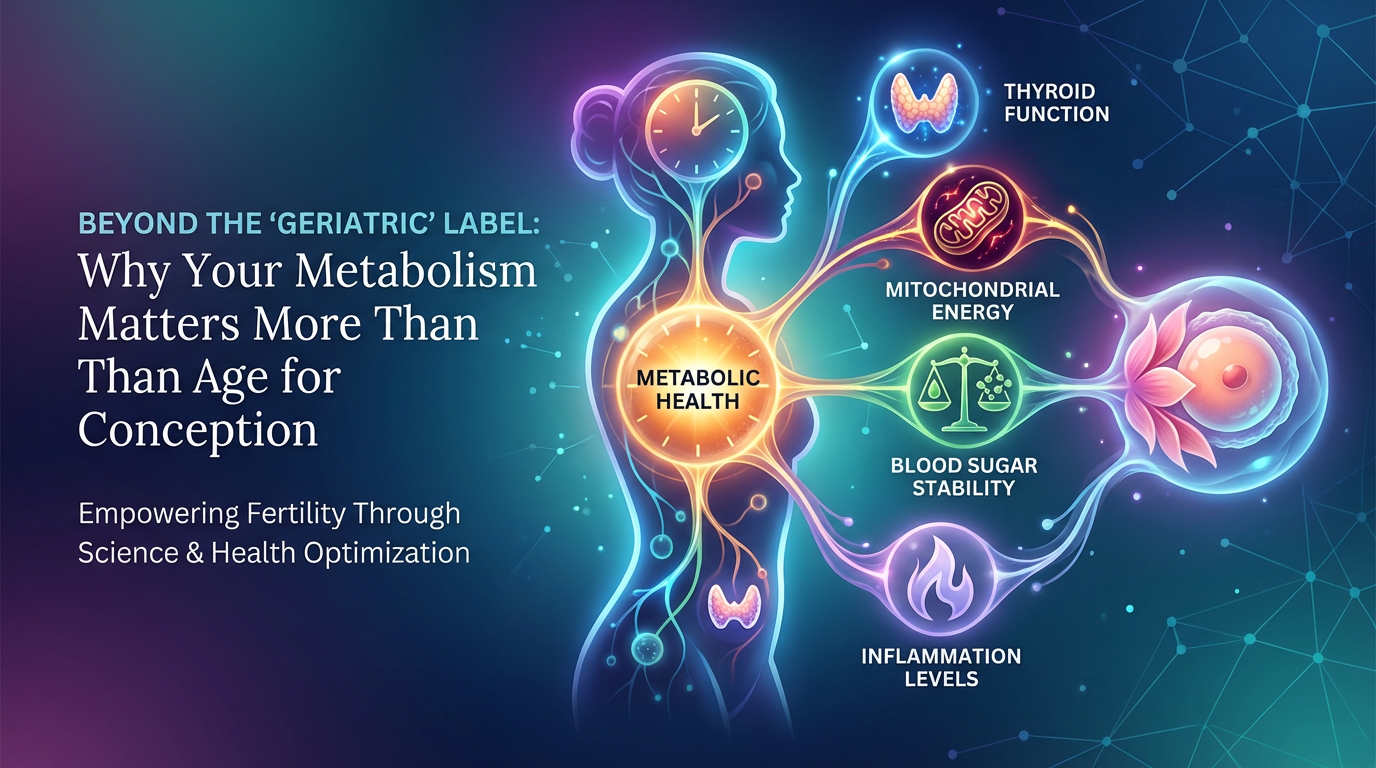
Here's the critical insight: all of these factors are influenced more by your metabolic health than by your age.
A metabolically healthy 38-year-old can have better egg quality than a metabolically dysfunctional 28-year-old. We see this clinically all the time. Age is a factor, but it's far from the only one, and often not even the most important one.
The Metabolic-Fertility Connection
Your ovaries are among the most metabolically active tissues in your body. Egg maturation is an incredibly energy-intensive process. A developing egg requires massive amounts of ATP (cellular energy) to undergo proper division and maintain chromosomal integrity.
When your metabolism is compromised, your eggs feel it first.
Here's what's actually happening:
Mitochondrial Function and Egg Quality
Your eggs contain more mitochondria than almost any other cell in your body. These cellular powerhouses provide the energy required for fertilization, cell division, and early embryonic development.
Research has shown that eggs from women with poor fertility outcomes consistently have fewer mitochondria and reduced mitochondrial function. The eggs simply don't have enough energy to develop properly.
And here's the key: mitochondrial function is not primarily determined by age. It's determined by metabolic health, nutrient status, oxidative stress levels, and thyroid function.
Thyroid and Ovarian Function
Your thyroid controls your metabolic rate. When thyroid function is low, everything slows down, including ovarian function.
Subclinical hypothyroidism (thyroid dysfunction that doesn't meet the threshold for diagnosis but still causes symptoms) is rampant in women trying to conceive. Studies show it's associated with:
- Irregular ovulation
- Poor egg quality
- Increased miscarriage risk
- Implantation failure
Many women labeled as having "age-related infertility" actually have undiagnosed thyroid dysfunction. Fix the thyroid, and fertility often improves dramatically, regardless of age.
Blood Sugar and Hormonal Balance
Insulin resistance doesn't just cause weight gain. It wreaks havoc on reproductive hormones.
When blood sugar is chronically elevated, insulin levels rise. High insulin stimulates the ovaries to produce excess androgens (male hormones), disrupting the delicate hormonal balance required for ovulation.
This is the mechanism behind PCOS (polycystic ovary syndrome), but even women without a PCOS diagnosis can experience fertility-disrupting effects from blood sugar instability.
The good news? Blood sugar regulation is entirely modifiable through diet and lifestyle. It has nothing to do with your age.
Inflammation and Implantation
Chronic low-grade inflammation creates a hostile environment for conception and early pregnancy.
Inflammation affects:
- Egg quality through oxidative stress
- Fallopian tube function
- Uterine lining receptivity
- Implantation success
- Early embryonic development
Where does chronic inflammation come from? Poor diet (especially seed oils and processed foods), gut dysfunction, chronic stress, inadequate sleep, and environmental toxins.
None of these are age-determined. All of them are modifiable.
The Real Risks of Pregnancy After 35 (In Context)
Let's be clear: there are real statistical increases in certain risks for women over 35. Dismissing them entirely would be irresponsible. But context matters enormously.
Chromosomal abnormalities: The risk of Down syndrome does increase with maternal age. At 25, it's approximately 1 in 1,250. At 35, it's 1 in 378. At 40, it's 1 in 106.
But look at those numbers differently: at 40, you still have a 99% chance of NOT having a baby with Down syndrome. And modern prenatal screening can provide clarity early in pregnancy.
Miscarriage: Miscarriage rates do increase with age, from about 10% in your early 20s to about 20% at 35 and 40% at 40.
But here's what those statistics hide: miscarriage rates are dramatically affected by metabolic health factors. Women with optimized thyroid function, stable blood sugar, and low inflammation have significantly lower miscarriage rates at every age.
Gestational diabetes and preeclampsia: These risks increase with age, but they're fundamentally metabolic conditions. A metabolically healthy 38-year-old has lower risk than a metabolically dysfunctional 28-year-old.
The medical establishment treats age as the risk factor. But age is largely a proxy for the accumulated effects of metabolic dysfunction over time. Address the dysfunction, and the age-related risks diminish significantly.
Why the Fear-Based Narrative Persists
If the data doesn't support the "fertility cliff at 35" narrative, why does it persist so strongly?
The fertility industry: IVF and fertility treatments are a multi-billion dollar industry. Fear drives women into clinics earlier, often before they've addressed basic metabolic factors that might resolve their fertility challenges naturally.
Defensive medicine: Doctors face liability concerns. Labeling pregnancies as "high risk" provides legal protection even when the actual risk increase is minimal.
Outdated medical education: Many OBs learned fertility statistics from the same French historical data that launched the myth. Medical education is slow to update.
Media amplification: "Your fertility is fine" doesn't generate clicks. Fear sells.
Misunderstanding of statistics: Relative risk increases sound terrifying (doubled risk!) even when absolute risks remain low (from 1% to 2%).
The result is a generation of women paralyzed by fertility anxiety, making fear-based decisions about their reproductive lives based on statistics that don't reflect modern health realities.
What Actually Improves Fertility After 35
If metabolic health matters more than age, what actually moves the needle on fertility?
Optimize Thyroid Function
This is non-negotiable. Get a complete thyroid panel (not just TSH): Free T4, Free T3, Reverse T3, and thyroid antibodies.
"Normal" TSH ranges (0.5-4.5) are too broad for fertility optimization. Research suggests TSH should be below 2.5, and ideally below 2.0, for optimal fertility.
If you have Hashimoto's or subclinical hypothyroidism, addressing it can be the single most impactful fertility intervention, regardless of your age.
Stabilize Blood Sugar
Insulin resistance sabotages fertility. Focus on:
- Eating protein with every meal
- Avoiding processed carbohydrates
- Never eating carbohydrates alone
- Prioritizing whole foods over processed alternatives
- Regular movement (not excessive exercise)
Blood sugar stability improves egg quality, hormonal balance, and implantation rates.
Support Mitochondrial Function
Your eggs need energy. Support mitochondrial health through:
- CoQ10: Research shows CoQ10 supplementation improves egg quality and IVF outcomes, particularly in women over 35.
- Adequate calories: Chronic undereating suppresses reproductive function. Your body won't prioritize reproduction during perceived famine.
- Saturated fats: Cholesterol is the precursor to all reproductive hormones. Low-fat diets impair fertility.
- Avoiding PUFAs: Polyunsaturated fatty acids (seed oils) accumulate in tissues and impair mitochondrial function.
Reduce Inflammation
Chronic inflammation is a fertility killer at any age.
- Eliminate seed oils: Soybean, canola, corn, and other industrial oils drive inflammation.
- Support gut health: Gut dysfunction is a major source of systemic inflammation.
- Prioritize sleep: Sleep deprivation triggers inflammatory cascades.
- Manage stress: Chronic stress is inflammatory stress.
Address Environmental Toxins
Endocrine-disrupting chemicals interfere with reproductive hormones. Reduce exposure to:
- Plastics (especially when heated)
- Conventional personal care products
- Non-organic produce (prioritize the dirty dozen)
- Household cleaning chemicals
- PFAS (found in non-stick cookware and stain-resistant fabrics)
Optimize Nutrient Status
Key nutrients for fertility include:
- Folate (not folic acid): From leafy greens, liver, and methylated supplements
- Vitamin D: Critical for reproductive function; most women are deficient
- Zinc: Essential for egg development
- Selenium: Supports thyroid function and egg quality
- Iron: Required for ovulation and early pregnancy
The Biospark Approach: Fertility as a Metabolic Signal
At Biospark Health, we view fertility differently than conventional medicine.
Fertility isn't just about making babies. It's a vital sign of your overall metabolic health. When your body is thriving, reproduction is supported. When your body is struggling, reproduction is suppressed.
The inability to conceive isn't primarily an age problem. It's a signal that something in your metabolism needs attention.
Our fertility program doesn't start with IVF referrals or invasive procedures. It starts with comprehensive metabolic assessment: thyroid function, blood sugar regulation, inflammatory markers, nutrient status, and hormone balance.
We address root causes rather than bypassing them with technology. For many women, this approach restores fertility naturally, regardless of the number on their driver's license.
When advanced interventions are needed, they're far more likely to succeed in a metabolically optimized body.
Fertility Support for Women Over 35 in Reading & Berks County, PA
If you're a woman over 35 in the Reading, Wyomissing, or greater Berks County area feeling anxious about your fertility, you deserve a practitioner who sees beyond the "geriatric pregnancy" label.
At Biospark Health in Wyomissing, we work with women throughout southeastern Pennsylvania who've been told their age is working against them. We serve clients from Lancaster, Allentown, Downingtown, West Chester, and the greater Philadelphia suburbs.
Our approach to fertility optimization recognizes that your birthday is just one factor among many, and often not the most important one. Whether you're in King of Prussia, the Main Line, or anywhere in Chester County, we offer both in-person and virtual consultations to help you understand what's actually affecting your fertility.
For Pennsylvania women seeking comprehensive fertility support that goes beyond age-based fear, Biospark Health provides the thorough metabolic assessment and personalized protocols that conventional medicine overlooks.
Frequently Asked Questions
Is "geriatric pregnancy" a real medical term?
Technically, yes. The medical term is "advanced maternal age" (AMA), and it applies to any pregnancy in a woman 35 or older. However, the term is primarily used for insurance coding and risk categorization, not because 35 represents a biological cliff. The label triggers additional monitoring, which can be valuable, but it shouldn't trigger panic.
Why is 35 considered high-risk for pregnancy?
The age 35 was chosen somewhat arbitrarily based on the point where the risk of chromosomal abnormalities like Down syndrome exceeds the risk of invasive testing procedures like amniocentesis. It's a statistical cutoff, not a biological threshold. Many healthy women over 35 have uncomplicated pregnancies, while some women under 35 face significant complications.
Are my eggs still good at 35?
Egg quality is not determined solely by age. It's heavily influenced by metabolic health, thyroid function, oxidative stress, and nutrient status. Women with optimal metabolic health at 38 can have better egg quality than metabolically dysfunctional women at 28. Age matters, but it's one factor among many.
How can I improve my fertility after 35 naturally?
Focus on metabolic optimization: ensure thyroid function is optimal (TSH below 2.5), stabilize blood sugar, reduce inflammation, support mitochondrial function with adequate nutrition and CoQ10, and minimize exposure to endocrine disruptors. These interventions can significantly improve fertility regardless of age.
Should I go straight to IVF if I'm over 35?
Not necessarily. IVF success rates are much higher in metabolically healthy bodies. Addressing root causes of fertility challenges often restores natural conception ability and, when IVF is needed, improves outcomes. Rushing to IVF without metabolic optimization may mean lower success rates and more cycles required.
How fertile are women after 35?
More fertile than you've been led to believe. Studies of women actively trying to conceive show that 82% of women aged 35-39 conceive within one year. The difference between that age group and women 27-34 (86%) is only four percentage points. The "fertility cliff" narrative dramatically overstates the actual decline.
Conclusion
The "geriatric pregnancy" label is designed to scare you. And fear-based medicine rarely serves women well.
Yes, age affects fertility. No, 35 is not a cliff. The decline is gradual, highly variable between individuals, and dramatically influenced by factors within your control.
Your metabolic health matters more than your birth certificate. Your thyroid function matters more than your driver's license. Your cellular energy production matters more than the number of years you've been alive.
Stop letting a fear-based label dictate your reproductive future. Start asking the real questions: Is my metabolism supporting fertility? Is my thyroid optimized? Is my body in a state that welcomes new life?
Address those questions, and you might be surprised what's possible, regardless of what the calendar says.
Your fertility after 35 is not a countdown to failure. It's an invitation to optimize your health in ways that benefit every aspect of your life, with or without a baby.
That's the truth they don't tell you about "geriatric pregnancy."
Tags:
References & Citations
This article is supported by scientific research and peer-reviewed sources. Click citations to verify the evidence.
- [1]Ben-Meir A, Burstein E, Borrego-Alvarez A, et al.(2015)Coenzyme Q10 restores oocyte mitochondrial function and fertility during reproductive aging.Aging Cell.View Source
- [2]Chiang JL, Shukla P, Pagidas K, et al.(2020)Mitochondria in Ovarian Aging and Reproductive Longevity.Ageing Research Reviews.View Source
- [3]Korevaar TIM, Medici M, Visser TJ, et al.(2017)Thyroid disease in pregnancy: new insights in diagnosis and clinical management.Nature Reviews Endocrinology.View Source
- [4]Yildirim RM, Seli E(2024)The role of mitochondrial dynamics in oocyte and early embryo development.Seminars in Cell & Developmental Biology.View Source
- [5]Du X, Wu Y, Tao G, et al.(2024)Association between PFAS exposure and thyroid health: A systematic review and meta-analysis.Science of the Total Environment.View Source
All references have been reviewed for scientific accuracy and credibility. Citations follow standard academic format and link to original research where available.
About Dr. Steven Presciutti, MD
Founder & Health Coach at Biospark Health, specializing in bioenergetic health and metabolism optimization.