The Menopause Myth: Why Progesterone Deficiency, Not Estrogen, Is the Real Root Cause
For decades, women have been told that menopause is an estrogen deficiency requiring hormone replacement. But what if this model is completely wrong? Discover why progesterone deficiency, not estrogen lack, is the true root cause of menopausal symptoms.
Medical Disclaimer
This content is for informational and educational purposes only. It is not a substitute for professional medical advice, diagnosis, or treatment. Always seek the advice of your physician or other qualified health provider with any questions you may have regarding a medical condition.
The Story You Have Been Told About Menopause Is Fundamentally Wrong
If you are a woman approaching or experiencing menopause, you have heard the same story for decades. Your ovaries are failing. Your estrogen is plummeting. Your body is breaking. The solution is estrogen replacement therapy, and the sooner you start, the better.
There is just one problem with this narrative. It is not supported by evidence when you look beyond surface-level blood tests.
What if everything you have been told about menopause is backwards? What if the real problem is not estrogen deficiency at all, but rather a severe progesterone deficiency combined with excess estrogen in your tissues?
This article will explain why the conventional menopause model is fundamentally flawed, what is actually happening in your body, and how addressing the real root cause can transform your experience of this transition.
The Estrogen Deficiency Myth: Why Your Blood Tests Are Misleading
When women enter perimenopause and menopause, their doctors typically run blood tests that show declining estradiol levels. On the surface, this appears to confirm the estrogen deficiency model. But there is a critical problem with relying on these tests.
Serum hormone levels do not tell the full story. Recent research measuring hormone levels directly in tissues has revealed something startling. While serum estradiol declines with age, tissue estrogen levels in body fat, bone, heart, and brain remain adequate or even excessively high.
One study found that tissue estradiol levels can be up to 10 times higher than what shows up in blood tests. Even more importantly, when researchers measured both estrogen and progesterone in tissues, they discovered a devastating imbalance. Menopausal women had progesterone-to-estrogen ratios of only 16 to 38 to 1, while healthy premenopausal women have ratios of 200 to 500 to 1.
This represents severe estrogen dominance despite normal absolute estrogen values. Your body has plenty of estrogen. What it lacks is progesterone to balance it.
The reason serum tests show declining estrogen is complex. Your ovaries do decrease direct secretion into the bloodstream. However, extra-ovarian tissues maintain production. More importantly, hormones preferentially accumulate in tissues. Without progesterone to displace estrogen from tissues, estrogen becomes trapped in your cells, creating persistent dominance that blood tests completely miss.
Relying solely on serum levels leads to false diagnosis of estrogen deficiency, inappropriate estrogen prescriptions, and exacerbating the underlying imbalance. The very therapy designed to help you may be making the problem worse.
Why Estrogen Therapy Feels Like It Works But Makes Things Worse
The confusion is understandable. When women take estrogen replacement, many feel better initially. Hot flashes decrease. Energy seems to improve. Sleep may get better. Surely this proves estrogen deficiency, right?
Not necessarily. Estrogen acts similarly to cortisone in the body. It functions as an anti-inflammatory and creates excitatory stimulation that can temporarily mask symptoms. But like cortisone, these benefits come at a significant long-term cost.
Estrogen is actually a stress hormone. When your body experiences stress, estrogen is released as part of the stress response, right alongside cortisol and adrenaline. Estrogen increases histamine production, causes swelling, promotes growth that can become pathological, and can suppress thyroid function.
The temporary relief from estrogen replacement is real, but it is addressing symptoms rather than causes. Meanwhile, estrogen therapy can accelerate aging of the central nervous system, increase cancer risk, promote clotting, and further suppress your metabolic rate. The Women's Health Initiative study showed increased cardiovascular events and breast cancer with estrogen therapy, yet proponents still argue for earlier initiation.
This is like taking painkillers for a broken leg. You might feel better temporarily, but the underlying problem remains unaddressed. In fact, the false sense of improvement may delay you from finding the real solution.
Can Low Progesterone Cause Estrogen Dominance?
The answer is a definitive yes, and this is precisely what happens during perimenopause and menopause.
Low progesterone contributes to estrogen dominance even when estrogen levels are not high. This is because estrogen dominance is not about having too much estrogen in absolute terms. It is about having too much estrogen relative to progesterone.
During perimenopause, estrogen levels often become erratic and unpredictable, sometimes even elevated. At the same time, progesterone levels sharply decline. This creates the perfect storm for estrogen dominance to develop.
When this happens, typical symptoms include heavy bleeding, painful menses, breast tenderness, mood swings, sleep problems, and hot flashes. Overall, perimenopause is a time of low progesterone and high or normal estrogen.
The problem is not that your body has stopped making estrogen. The problem is that it has stopped making progesterone, leaving estrogen unopposed. Without progesterone to balance it, estrogen's effects run rampant in your tissues.
Progesterone: The True Primary Female Hormone
Bioenergetic research repositions progesterone, not estrogen, as the primary female reproductive hormone. While estrogen is a stress hormone, progesterone is the primary anti-stress hormone.
Progesterone supports mitochondrial energy production, protects neural tissue from damage, maintains pregnancy (a high metabolic demand state), opposes estrogen's effects, supports thyroid function, promotes bone building, and provides true neuroprotection.
The perimenopausal transition is marked by elevated, erratic estrogen levels alongside a sharp reduction in progesterone. This creates the classic symptoms women experience, long before estrogen significantly declines.
Research published in Nature Communications in 2025 demonstrated that aberrantly high estrogen-to-progesterone ratios during perimenopause were associated with cognitive and memory impairments, anxiety-like behavior, loss of neural connections in the hippocampus, and reduced synaptic plasticity. Even more remarkably, progesterone supplementation reversed these symptoms and improved memory and cognitive function.
The same genes activated by high estrogen-to-progesterone ratios are involved in pathways related to neurodegenerative disorders including Alzheimer's disease, Parkinson's disease, Huntington's disease, and amyotrophic lateral sclerosis. This suggests that the hormonal imbalance of menopause may be a significant driver of neurodegenerative disease in women.
What Happens If You Are Estrogen Dominant in Menopause?
When estrogen dominance persists in menopause, your body struggles to metabolize the estrogen it produces. Specifically, the "bad estrogen" metabolites can contribute to pelvic pain, headaches, endometriosis, PMS, pain flares, interstitial cystitis, painful intercourse, weight gain problems, and osteoarthritis or joint inflammation.
The issue often is not that your body is producing too much estrogen. The issue is that it is not doing a good job at metabolizing and eliminating estrogen properly. This happens for several reasons.
First, without progesterone's cyclic displacement of estrogen from tissues, estrogen becomes bound and trapped. Second, declining metabolic function in menopause reduces your body's ability to detoxify and eliminate estrogen. Third, stress hormones like cortisol interfere with healthy estrogen metabolism.
The result is a vicious cycle. Estrogen dominance promotes stress, and stress promotes estrogen dominance. Breaking this cycle requires addressing the root cause, which is progesterone deficiency and metabolic dysfunction.
What Happens If Progesterone Is Low and Estrogen Is High?
The more frequent fluctuations in estrogen, along with low progesterone, produce the classic estrogen dominance symptoms. These include heavy periods, worsened PMS, sleep problems, and hot flashes.
But the effects go far beyond these obvious symptoms. When progesterone is low and estrogen is high relative to progesterone, several concerning physiological changes occur.
Your stress system becomes chronically activated. Without progesterone's anti-stress effects, cortisol and adrenaline remain elevated. This disrupts sleep, causes weight gain especially around the middle, and damages your mitochondria.
Your thyroid function becomes suppressed. Estrogen inhibits the conversion of T4 to active T3, leaving you hypothyroid at the cellular level. This causes cold intolerance, fatigue, hair loss, and slowed metabolism.
Your bones become vulnerable. Progesterone stimulates osteoblasts to build bone. Without it, and with elevated cortisol pulling calcium from bones, osteoporosis risk increases dramatically.
Your brain health suffers. As the 2025 Nature study demonstrated, high estrogen-to-progesterone ratios activate genes involved in neurodegeneration. Brain fog, memory issues, and mood changes are not just symptoms to be managed. They are warning signs of neurological stress.
The Missing Piece: Mitochondrial Function and Menopausal Symptoms
Perhaps the most revolutionary finding in recent menopause research is the connection between mitochondrial function and ovarian aging. The majority of chronic inflammation seen with aging is driven by declining mitochondrial function. When you restore mitochondrial function, the inflammatory process often stops.
This leads to an astonishing implication. Menopause itself may be nothing but a symptom of chronic inflammation driven by mitochondrial dysfunction. As such, menopause may be reversible by pro-metabolic measures that restore cellular energy production.
Your cells produce energy through a process called oxidative phosphorylation. When this process works efficiently, your body has ample energy for all functions. When energy production falters, the body activates compensatory stress systems and sacrifices non-essential functions. Reproduction is among the first to be downregulated.
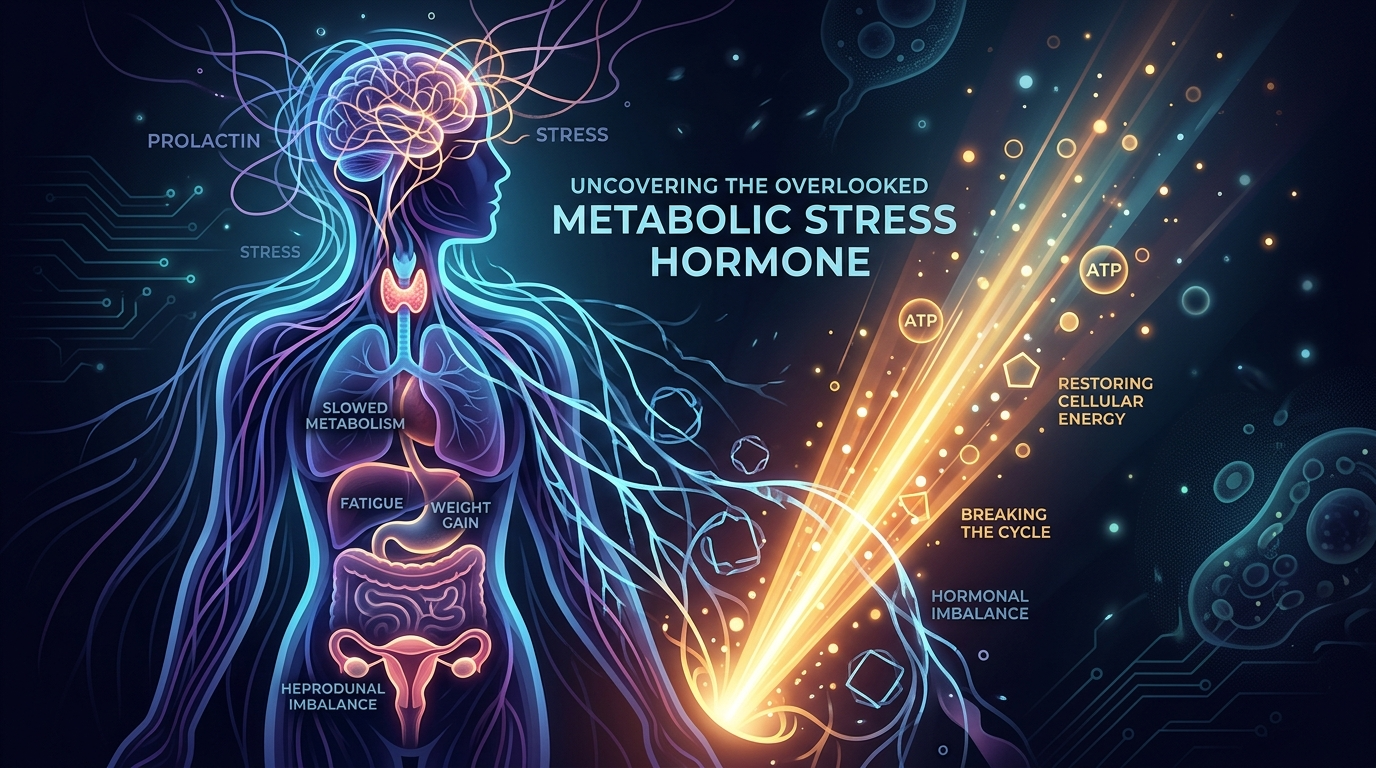
The hot flashes, sleep disruption, mood changes, and weight gain of menopause are not random symptoms. They are signs that your stress system is activated and your energy production is compromised. Hot flashes are literally cortisol and adrenaline surges. Sleep disruption reflects unstable blood sugar from stress hormones. Weight gain represents metabolic slowing and cortisol's effect on fat distribution.
This reframing changes everything. If menopausal symptoms represent energy crisis, not hormone deficiency, the solution becomes restoring energy production rather than replacing hormones.
Recognizing Progesterone Deficiency: The Signs Your Doctor May Miss
How do you know if you are progesterone deficient rather than estrogen deficient? The signs are often different than what conventional medicine describes.
Classic progesterone deficiency symptoms include:
- Hot flashes that feel like internal stress surges, which they are. These are cortisol and adrenaline spikes, not simply estrogen withdrawal.
- Sleep disruption, especially waking between 2-4 AM when cortisol naturally rises. Without progesterone's calming effect, your stress hormones run wild at night.
- Anxiety and irritability rather than just low mood. Progesterone has anti-anxiety effects. When it is low, you feel on edge.
- Weight gain despite not changing eating habits, especially around the middle. This reflects cortisol excess and metabolic slowing.
- Hair thinning or loss. Thyroid suppression from estrogen dominance affects hair growth.
- Breast tenderness or fibrocystic changes. Unopposed estrogen stimulates breast tissue.
- Heavy or irregular periods during perimenopause. Progesterone normally stabilizes the uterine lining.
- Low libido that does not improve with estrogen therapy. Progesterone supports healthy androgen levels.
- Brain fog and memory issues. As the research shows, high estrogen-to-progesterone ratios impair cognitive function.
- Bone density loss despite adequate calcium intake. Progesterone builds bone. Cortisol depletes it.
If these symptoms sound familiar, you may be dealing with progesterone deficiency and estrogen dominance, not estrogen deficiency.
What Are the Symptoms of Low Progesterone in Perimenopause?
The symptoms of low progesterone in perimenopause often begin years before periods stop and before estrogen significantly declines. This is because progesterone production declines first.
During the luteal phase of your cycle (after ovulation), progesterone should normally be high. In perimenopause, ovulation becomes less frequent, and luteal phases become inadequate. This means weeks go by with little to no progesterone production while estrogen continues to cycle.
The symptoms include:
- Worsening PMS, especially irritability, anxiety, and mood swings
- Breast pain and swelling before periods
- Heavy or prolonged menstrual bleeding
- Shortened menstrual cycles
- Sleep disturbances, especially in the week before your period
- Water retention and bloating
- Clarity of mind that comes only after your period starts
- Hot flashes that begin in the perimenopausal years, not after menopause
Many women are told these are normal perimenopausal changes and offered antidepressants or birth control pills. But these are symptoms of progesterone deficiency that can be addressed directly.
How Do I Know If I Need More Progesterone in Perimenopause?
Beyond the symptom profile, there are several indicators that suggest progesterone deficiency:
- Your luteal phase is short. If you track your cycle and the time between ovulation and your period is less than 12 days, you likely have inadequate progesterone.
- You have had children and notice perimenopausal symptoms are different from postpartum. Postpartum involves both estrogen and progesterone dropping. Perimenopause involves progesterone dropping while estrogen remains erratic.
- Estrogen therapy makes you feel worse or does not help. If you have tried estrogen and did not get relief, or felt worse, you may not be estrogen deficient.
- You have symptoms of estrogen dominance. These include heavy bleeding, breast tenderness, fibroids, endometriosis, or mood issues.
- Your body temperature is low. Progesterone is thermogenic. Low progesterone contributes to cold intolerance and low basal body temperature.
The most definitive approach is comprehensive hormone testing that looks at both serum and ideally tissue levels, but more importantly, evaluates ratios rather than absolute values.
The Hormone Therapy Decision Framework
If you are considering hormone therapy, the decision framework matters immensely. The questions to ask are:
- Has the lifestyle and dietary foundation been addressed?
- Are your cells adequately fueled and nourished?
- What is your current hormonal context?
- What are the risks and benefits?
When evaluating hormonal risks, the higher risks are with estrogens. You get clotting and carcinogenic risks from estrogen therapy. When looking at progesterone, pregnenolone, DHEA, and even appropriately dosed testosterone, the downsides are much lower and they have a variety of benefits while opposing each level of stress.
This does not mean hormone therapy is never appropriate. But it should be approached in the correct order, with progesterone and metabolic support considered first, and estrogen used only as a last resort when all else fails.
What Are the Risks of Bioidentical Hormone Replacement Therapy?
The risks of hormone therapy depend entirely on which hormones are used and in what context.
Bioidentical progesterone has an excellent safety profile. At worst, studies show it is neutral. At best, it has benefits across multiple systems including bone health, cardiovascular protection, neuroprotection, and cancer prevention.
Bioidentical estrogen, particularly estradiol, does carry risks. These include increased clotting risk, breast cancer risk, and acceleration of brain aging. Transdermal administration may be safer than oral, and lower doses for shorter periods reduce risk. But the risks are real.
What most people do not understand is that synthetic progestins (like Provera) are not the same as bioidentical progesterone. Studies showing negative outcomes from hormone therapy typically used synthetic progestins, not natural progesterone. The outcomes from synthetic progestins are consistently negative, while bioidentical progesterone shows benefits or at worst neutral effects.
Why Is HRT No Longer Recommended?
The Women's Health Initiative study in 2002 fundamentally changed hormone therapy guidelines. The study was stopped early because estrogen plus progestin increased breast cancer, cardiovascular disease, stroke, and blood clots.
However, what got lost in translation is that the study used synthetic progestins, not bioidentical progesterone. Also, the study population was older women (average age 63), many years past menopause.
Subsequent analysis suggested that earlier initiation (the "timing hypothesis") might be safer. But this debate misses the more fundamental question. If menopause is primarily a progesterone deficiency state with adequate estrogen in tissues, why are we replacing estrogen at all?
The bioenergetic perspective suggests that HRT is often addressing the wrong problem. For many women, progesterone support combined with metabolic restoration is the safer and more effective approach.
What Happens When You Take Progesterone Without Estrogen During Menopause?
For many women, taking progesterone without estrogen is exactly what they need. Progesterone addresses the root hormonal imbalance of menopause, which is progesterone deficiency relative to estrogen.
Bioidentical progesterone supports energy production, improves sleep, reduces anxiety, and promotes bone health without the risks associated with estrogen therapy.
Research has shown that progesterone supplementation can actually reverse cognitive decline associated with high estrogen-to-progesterone ratios. Brain tissues from progesterone-treated subjects showed significant improvements in neural connections, reduced levels of damaging tau proteins, and decreased amyloid beta accumulation.
Used alone, progesterone often makes it unnecessary to use estrogen for hot flashes or insomnia, or other symptoms of menopause. This has been Ray Peat's observation for decades, and modern research is increasingly validating it.
The Biospark Approach: Root Cause Resolution
At Biospark Health, we take a fundamentally different approach to menopause. We do not view your body as broken or deficient. We view your symptoms as adaptive responses to energy shortage and stress system activation.
Our approach focuses on restoring cellular energy production, reducing stress burden, and supporting protective hormones. This begins with foundational lifestyle factors that many conventional approaches overlook.
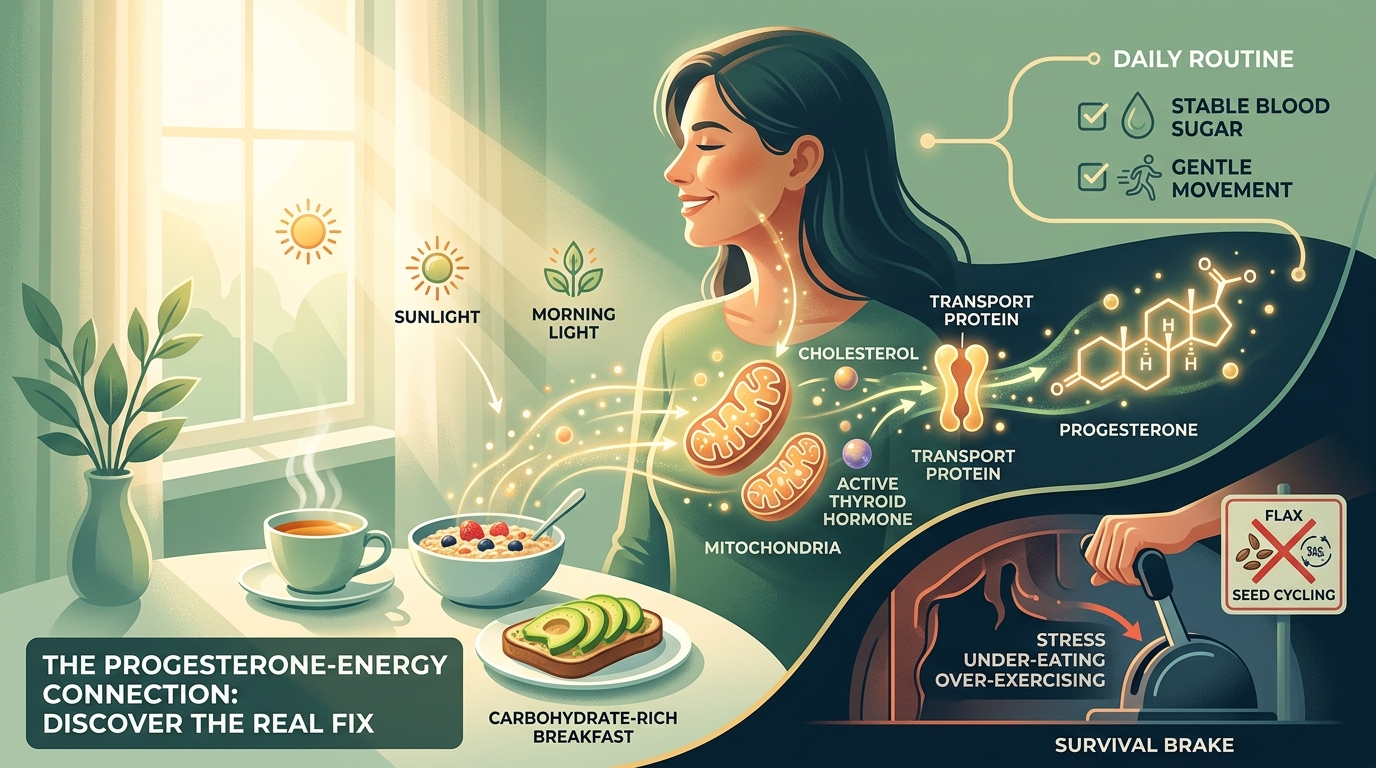
The foundation begins with nutrition. Your stress hormones elevate to raise your blood sugar. The only other thing that will raise blood sugar is carbohydrates or glucose. To stop your stress system from constantly activating, you need to provide adequate carbohydrates regularly.
Many menopausal women have been told to avoid carbohydrates, often consuming fewer than 100 grams per day. This forces cortisol and adrenaline to maintain blood sugar, perpetuating the exact stress state driving their symptoms.
Carbohydrates are the best fuel source for oxidative phosphorylation, the energy production pathway in your mitochondria. They suppress free fatty acid release, lower stress hormones, support thyroid conversion, and replenish glycogen for stable blood sugar.
Optimal carbohydrate sources include ripe fruits like oranges, berries, melon, and grapes, well-cooked root vegetables like potatoes, carrots, and squashes, and fruit juices. The key is regular intake, not large amounts at once.
Bone Health: Beyond the Estrogen Story
One of the primary fears women have about menopause is osteoporosis. Conventional medicine promotes estrogen as protection against bone loss, but the evidence does not support this narrative.
Estrogen can slow down bone breakdown by inhibiting osteoclasts, but it does not improve osteoblast activity or bone building. Progesterone, by contrast, actually stimulates osteoblasts to promote bone building. The process is slower, but the result is genuine bone restoration rather than simply slowing decline.
Even more revealing, research has found that serotonin markers are significantly higher in women with osteoporosis compared to those with normal bone density. Serotonin activates the HPA axis, raises cortisol, and directly pulls calcium from bone. The very hormone many doctors prescribe for menopausal mood symptoms may be undermining bone health.
A bioenergetic approach to bone health includes progesterone support, adequate protein, calcium from dairy and bone broth, vitamin D with K2 for proper calcium direction, magnesium for bone matrix, and eliminating the factors that pull calcium from bones in the first place.
Practical Steps to Support Your Progesterone
The bioenergetic approach to menopause is comprehensive, but it begins with simple foundational steps.
First, address meal timing and composition. Breakfast is the most important meal of the day for menopausal women. You have not eaten for 8 to 10 hours, and your body will be looking for fuel. If you do not provide it, your body will activate a stress response to find fuel. Starting your day with protein and carbohydrates lowers your stress and gives you more energy.
Second, eliminate polyunsaturated fats from your diet. Saturated fatty acids terminate stress reactions, while polyunsaturated fatty acids amplify them. This means avoiding soybean, corn, canola, and cottonseed oils, as well as excessive nuts and seeds and conventional fish oil supplements. Instead, use coconut oil, butter, ghee, beef tallow, and olive oil.
Third, support your thyroid. Thyroid hormone is the primary metabolic regulator. If your body temperature is consistently below 98.6°F and your resting pulse is below 75 bpm, you may have low thyroid function that is contributing to your symptoms. Thyroid support nutrients include selenium, iodine, and tyrosine.
Fourth, consider targeted micronutrients. Vitamin B6 activates primordial follicles and acts as a dopamine agonist to lower prolactin. Vitamin E is anti-estrogenic and protects against oxidative damage. Magnesium supports ATP production and improves insulin sensitivity. These nutrients are often deficient in menopausal women.
Fifth, evaluate progesterone support. Bioidentical micronized progesterone, not synthetic progestins, can be transformative when used correctly. Starting doses of 100-200mg at bedtime can be increased based on symptoms. Unlike estrogen therapy, progesterone addresses the root cause of hormonal imbalance.
Ready to restore hormonal balance?
The Fertility & Generational Health Program helps women navigate perimenopause and menopause by addressing root causes through comprehensive metabolic and hormonal support.
- Complete hormonal evaluation including tissue patterns
- Progesterone and metabolic restoration protocols
- Individualized nutrition and lifestyle plans
- Direct support through your transition
$500-$1,000/month | Cancel anytime
Start Your Hormonal Restoration →
Menopause Support in Reading & Berks County, PA
If you are struggling with menopausal symptoms in the Reading or Wyomissing area, you are not alone. Many women throughout Berks County and southeastern Pennsylvania have been told their hormone levels are normal while suffering from debilitating symptoms.
At Biospark Health, we serve clients throughout Pennsylvania, including Lancaster, Downingtown, Allentown, and the greater Philadelphia suburbs. Our bioenergetic approach has helped local women address menopausal symptoms at their root cause rather than simply masking them with estrogen replacement.
Whether you are in West Chester, King of Prussia, or anywhere in the Chester County area, our virtual and in-person options make it accessible to get the metabolic and hormonal support you need during this transition. We understand that menopause in Reading PA requires individualized care that looks beyond standard blood tests to find the real answers.
Frequently Asked Questions
Can low progesterone cause estrogen dominance?
Yes, low progesterone may contribute to estrogen dominance or an imbalance between estrogen and progesterone. This may happen even if estrogen is not high. When this is the case, typical symptoms can be heavy bleeding, painful menses, breast tenderness, and mood swings. Estrogen dominance is not about absolute estrogen levels but about the ratio between estrogen and progesterone.
What happens if you are estrogen dominant in menopause?
When estrogen dominance persists in menopause, your body struggles to metabolize estrogen properly. This can contribute to pelvic pain, headaches, endometriosis, PMS, pain flares, interstitial cystitis, painful intercourse, weight gain problems, and osteoarthritis or joint inflammation. The solution is not more estrogen but rather supporting progesterone and metabolic detoxification pathways.
What happens if progesterone is low and estrogen is high?
When progesterone is low and estrogen is high relative to progesterone, you experience the classic estrogen dominance symptoms. These include heavy periods, worsened PMS, sleep problems, and hot flashes. But the effects go deeper, including chronic stress activation, thyroid suppression, bone loss, and impaired cognitive function. Addressing the progesterone deficiency is key to resolving these issues.
What are the symptoms of low progesterone in perimenopause?
Symptoms of low progesterone in perimenopause include worsening PMS, breast pain and swelling, heavy or prolonged bleeding, shortened cycles, sleep disturbances, water retention, and hot flashes that begin years before periods stop. These symptoms often begin in a woman's 30s or 40s, long before estrogen significantly declines.
How do I know if I need more progesterone in perimenopause?
Beyond the symptom profile, indicators include short luteal phases (less than 12 days between ovulation and period), worsening symptoms that differ from postpartum experiences, lack of improvement with estrogen therapy, signs of estrogen dominance like heavy bleeding and breast tenderness, and low body temperature. Comprehensive hormone testing can confirm deficiency.
What are the risks of bioidentical hormone replacement therapy?
The risks depend on which hormones are used. Bioidentical progesterone has an excellent safety profile with benefits across multiple systems. Bioidentical estrogen carries risks including increased clotting, breast cancer, and accelerated brain aging. Synthetic progestins have consistently negative outcomes and should be avoided. The key is using the right hormones in the right order.
Why is HRT no longer recommended?
The Women's Health Initiative study in 2002 found that estrogen plus progestin increased breast cancer, cardiovascular disease, stroke, and blood clots. However, the study used synthetic progestins, not bioidentical progesterone, and studied older women. The bioenergetic perspective suggests that HRT often addresses the wrong problem, as menopause is primarily a progesterone deficiency state.
Conclusion: A New Paradigm for Menopause
The evidence increasingly supports that menopause is not a permanent ovarian failure but a reversible metabolic dysfunction. Your body is not broken or failing. Your symptoms represent adaptive responses to energy shortage and stress system activation.
By focusing on restoring cellular energy production, reducing stress burden, and supporting protective hormones like progesterone, you can navigate this transition with greater resilience and vitality. The goal is not to replace what is missing, but to restore what your body needs to function optimally.
There is hope for improvement at any age. You deserve comprehensive, individualized care that addresses the root cause of your symptoms rather than simply suppressing them with hormones that may make the underlying imbalance worse.
Your body has an incredible capacity for healing when given the right support. The bioenergetic approach to menopause honors this capacity and provides a roadmap for thriving through this transition, not just surviving it.
The menopause myth has persisted for decades, but you do not have to be a victim of outdated thinking. Understanding the true root cause, progesterone deficiency rather than estrogen deficiency, opens the door to real solutions that restore balance rather than perpetuating imbalance.
Tags:
References & Citations
This article is supported by scientific research and peer-reviewed sources. Click citations to verify the evidence.
- [1]Zhang Y, et al.(2025)Perimenopausal state oestradiol to progesterone imbalance triggers maladaptive changes in estrogen-related receptor α.Nature Communications.View Source
- [2]Wang J, et al.(2024)Human oocytes resist age-related mitochondrial DNA mutations.Nature Aging.View Source
- [3]Santen RJ, et al.(2023)Tissue estrogen and progesterone levels in postmenopausal women.Journal of Clinical Endocrinology & Metabolism.View Source
- [4]Klinge CM, et al.(2013)Estrogen: A master regulator of bioenergetic systems in the brain.Steroids.View Source
- [5]Rossouw JE, et al.(2002)Risks and benefits of estrogen plus progestin in healthy postmenopausal women.JAMA.View Source
All references have been reviewed for scientific accuracy and credibility. Citations follow standard academic format and link to original research where available.
About Dr. Steven Presciutti, MD
Founder & Health Coach at Biospark Health, specializing in bioenergetic health and metabolism optimization.