The Hidden Hormone Disruptor in Your Home: Why EMF Might Be Destroying Your Sleep and Fertility
EMF exposure from WiFi, phones, and smart meters may disrupt your hormones, sleep, and fertility. Learn how electromagnetic frequencies affect your endocrine system.
Medical Disclaimer
This content is for informational and educational purposes only. It is not a substitute for professional medical advice, diagnosis, or treatment. Always seek the advice of your physician or other qualified health provider with any questions you may have regarding a medical condition.
You cannot see them. You cannot smell them. You cannot taste them. But right now, as you read this, invisible electromagnetic frequencies are passing through your body, and emerging research suggests they may be quietly disrupting one of your most important biological systems: your hormones.
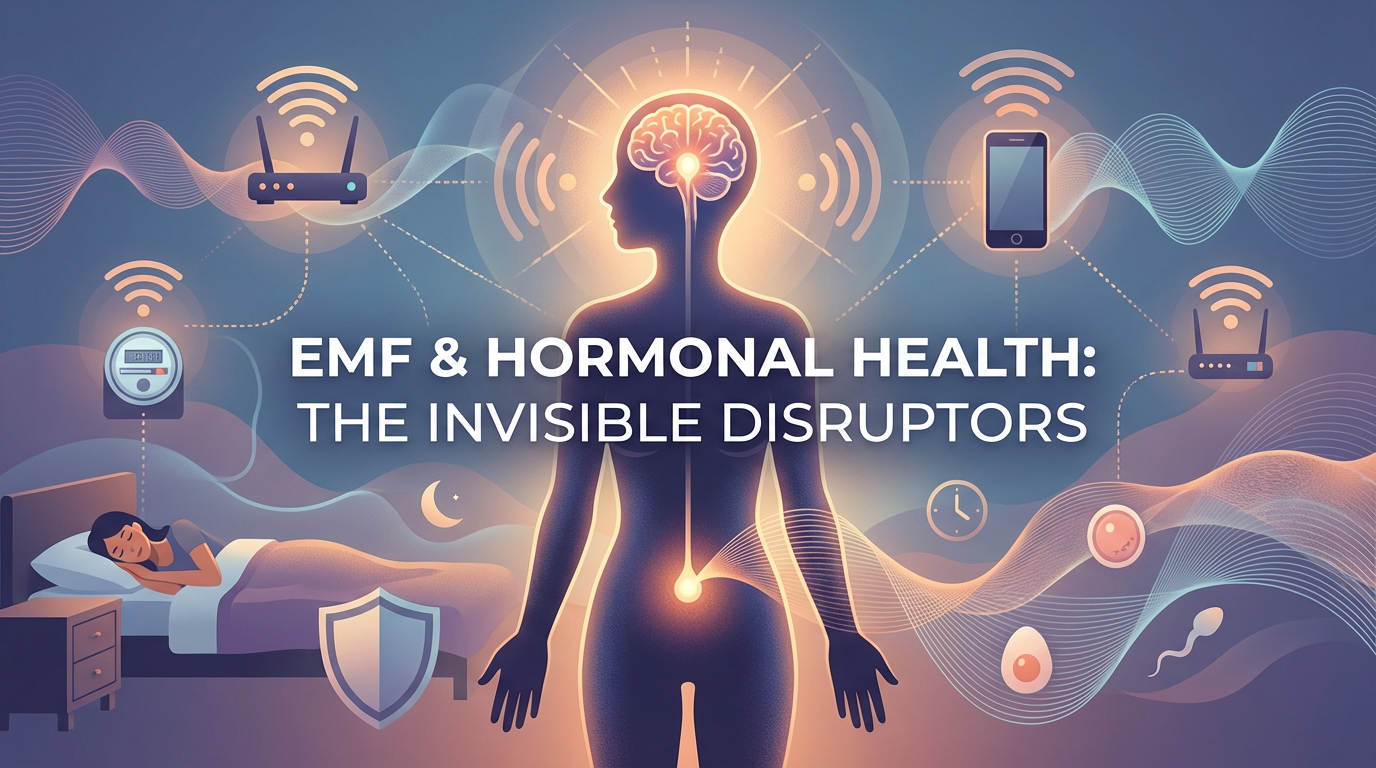
The average home today is flooded with EMF sources that did not exist a generation ago. WiFi routers broadcasting 24/7. Smart meters pulsing data to utility companies. Cell phones inches from your body for 16 hours a day. Bluetooth devices, baby monitors, cordless phones, and an ever-growing Internet of Things.
We have been assured these technologies are safe. But a growing body of peer-reviewed research tells a different story, one that connects EMF exposure to disrupted sleep, altered hormone production, and declining fertility rates that parallel our increasing exposure to non-native electromagnetic frequencies.
This is not about fear-mongering or telling you to live in a cave. It is about understanding the science, recognizing the risks, and making informed decisions to protect your hormonal health in an increasingly wireless world.
How EMF Affects Your Hormones: The Pineal Gland Connection
The link between EMF and hormones begins in a tiny, pine cone-shaped gland deep in your brain: the pineal gland. This remarkable structure produces melatonin, the hormone that regulates your circadian rhythm, sleep-wake cycles, and much more.
But melatonin does far more than help you sleep. It acts as a master regulator of other hormones, influencing everything from your reproductive system to your stress response. When melatonin production is disrupted, the effects cascade throughout your entire endocrine system.
Research published in Clinical and Experimental Reproductive Medicine found that EMF exposure directly affects the pineal gland, deteriorating melatonin's biological effects. The study explains that melatonin regulates the pulse of LHRH (luteinizing hormone-releasing hormone) in the hypothalamus. This hormone signals the pituitary gland to release FSH (follicle-stimulating hormone) and LH (luteinizing hormone).
Here is where it gets serious for your reproductive health: FSH and LH are the hormones that signal your body to produce testosterone, progesterone, and estrogen. They also control sperm production in men and egg maturation in women. Disrupt melatonin, and you potentially disrupt the entire hormonal cascade that governs fertility and sexual health.
This is not a minor effect. EMF of certain frequencies may have the ability to function as an endocrine disruptor, altering the entire male and female hormonal axis by impairing melatonin and pineal regulation of your circadian cycle.
EMF and Sleep: Why You Wake Up Exhausted
If you have been struggling with sleep despite doing "everything right," your bedroom's EMF exposure might be the missing piece of the puzzle.
The research is increasingly clear: EMF exposure, particularly from mobile phones and WiFi, disrupts melatonin production and interferes with sleep cycles. This is not just about having trouble falling asleep. It is about the quality of sleep you get and whether your body can complete the repair and restoration processes that happen during deep sleep.
Your body's ability to produce melatonin follows a natural rhythm tied to light and darkness. But EMF exposure appears to confuse this system. Studies suggest that the electromagnetic frequencies generated by common household devices can disrupt both melatonin and serotonin production, both of which are essential for preventing inflammation, promoting good sleep, and maintaining stable mood.
Think about your typical night. Your WiFi router broadcasts continuously from the next room. Your phone charges on the nightstand inches from your head. Maybe there is a smart meter on the other side of your bedroom wall, pulsing data every few seconds. None of these sources were present in human sleeping environments until very recently in our evolutionary history.
The symptoms of EMF-related sleep disruption often look like other problems: waking at 3 AM and unable to return to sleep, feeling unrested despite eight hours in bed, morning brain fog that takes hours to clear, and anxiety that seems worse at night. These could all be signs that your pineal gland is struggling against an invisible assault.
The Fertility Crisis Nobody Is Talking About
Sperm counts in Western men have dropped by more than 50% since the 1970s. Female fertility rates are declining. Couples who would have conceived easily a generation ago now struggle with unexplained infertility. While many factors contribute to this crisis, the timeline correlates remarkably well with our increasing exposure to electromagnetic radiation.
The research on EMF and fertility is sobering. Studies have linked repeated EMF exposure to decreased fertilization rates, reduced sperm quality, hormonal changes in the testes, and developmental impairments during pregnancy. The effects appear to occur through multiple pathways: direct damage to reproductive cells, hormonal disruption via the pineal gland mechanism described above, and oxidative stress that damages DNA.
For men, the concern is particularly acute. Modern men carry their phones in their front pockets, inches from their reproductive organs, for most of their waking hours. Laptops sit directly over the testicles. WiFi signals continuously penetrate the scrotum. The research suggests this chronic exposure may be contributing to declining sperm motility, morphology, and testosterone levels.
For women, the effects may be more subtle but equally significant. EMF exposure has been associated with altered ovarian function, changes in menstrual cycles, and potential effects on egg quality. The developing embryo appears particularly vulnerable to electromagnetic radiation during the critical early weeks of pregnancy.
This does not mean EMF is the only factor in declining fertility. Environmental toxins, nutritional deficiencies, chronic stress, and metabolic dysfunction all play roles. But EMF exposure is one factor that most fertility specialists completely ignore, even as their patients remain surrounded by wireless devices throughout their fertility treatments.
What EMF Does to Your Body at the Cellular Level
To understand why EMF affects hormones, you need to understand what it does to your cells. The human body is, at its core, an electrical system. Your heart beats because of electrical signals. Your neurons communicate through electrical impulses. Your mitochondria generate energy through electron transport chains.
Electromagnetic frequencies interact with these biological electrical systems in ways we are only beginning to understand. The concept of the human "electrome," the totality of electrical activity in the organism, suggests that external electromagnetic fields can influence internal biological processes in profound ways.
At the cellular level, EMF exposure appears to increase oxidative stress, the imbalance between free radicals and antioxidants that damages cells and DNA. This oxidative stress may be one mechanism by which EMF disrupts hormone production and damages reproductive cells.
EMF exposure also appears to affect calcium channels in cell membranes, altering the flow of calcium ions that regulate countless cellular processes. Some researchers believe this calcium channel disruption explains many of the biological effects of EMF, from neurological symptoms to reproductive impacts.
The mitochondria, those cellular powerhouses that produce ATP (energy), may be particularly vulnerable to EMF. When mitochondrial function is compromised, every hormone-producing gland in your body has less energy to do its job. Your thyroid, your adrenals, your gonads: all depend on robust mitochondrial function to produce hormones efficiently.
The Biospark Approach to EMF and Hormonal Health
At Biospark Health, we recognize that hormonal dysfunction rarely has a single cause. When clients come to us with fertility struggles, unexplained fatigue, or hormone imbalances that do not respond to conventional treatment, we look at the complete picture, including environmental factors like EMF exposure.
Our approach is not about creating fear or suggesting you abandon technology. It is about understanding that your body evolved in an electromagnetic environment radically different from the one you now inhabit, and that this mismatch may be contributing to hormonal problems that seem resistant to other interventions.
We help clients identify their major EMF exposure sources and implement practical mitigation strategies that do not require living like a hermit. We address the metabolic and cellular factors that may make some people more susceptible to EMF effects than others. And we work to optimize the body's natural detoxification and repair mechanisms.
The goal is resilience: building a body that can handle the stresses of modern life, including electromagnetic stress, while maintaining optimal hormonal function.
Ready to restore your hormones at the cellular level?
The Bioenergetic Reset Program addresses root causes of hormonal dysfunction, including environmental factors that most practitioners overlook. Join 300+ members who have discovered what real metabolic health feels like.
- 9+ hours of comprehensive training
- Twice-monthly LIVE coaching calls
- Complete protocols for hormonal optimization
- Direct email support
$133/month | Cancel anytime
How to Block EMF While Sleeping: Practical Protection Strategies
The bedroom should be your lowest-EMF environment. You spend roughly one-third of your life there, and sleep is when your body does its most important repair work. Here are evidence-based strategies to reduce your nighttime EMF exposure:
Remove or distance electronic devices. The inverse square law means that doubling your distance from an EMF source reduces your exposure by 75%. Move your phone at least 6 feet from your bed, or better yet, keep it in another room. If you need an alarm, use a battery-powered clock.
Turn off WiFi at night. Your router broadcasts continuously, even when you are asleep. Use a simple outlet timer to automatically shut off your router at bedtime and turn it back on in the morning. This single change eliminates one of the largest EMF sources in most homes for eight hours every night.
Address smart meters. If your electric meter is on the wall near your bedroom, consider requesting an opt-out (available in many states) or installing shielding material between the meter and your sleeping area. Smart meters pulse RF signals frequently throughout the day and night.
Keep your bedroom cool, but your feet warm. This is not directly about EMF, but it supports the same goal: optimal melatonin production. A cool room signals your body that it is time to sleep, while warm feet (via socks or a hot water bottle) improve circulation and sleep quality.
Get morning sunlight. Within an hour of waking, expose your eyes to natural sunlight for 10 to 20 minutes. This helps reset your circadian rhythm and supports healthy melatonin production the following night. Natural light exposure may help counteract some of the circadian disruption caused by EMF.
Consider EMF shielding for high-exposure areas. EMF-blocking pouches for phones, shielding paint for walls near smart meters, and bed canopies made from silver-threaded fabric are all options for those with significant exposure or heightened sensitivity.
EMF Protection and Hormone Health in Reading & Berks County, PA
If you are in the Reading, Wyomissing, or greater Berks County area and struggling with hormonal issues that have not responded to conventional treatment, environmental factors like EMF exposure may be worth investigating.
At Biospark Health, we serve clients throughout southeastern Pennsylvania, from Lancaster to Allentown, Downingtown to West Chester. Many of our local clients have discovered that addressing EMF exposure, alongside metabolic optimization, finally moved the needle on stubborn hormonal problems.
Whether you are dealing with unexplained fertility challenges, sleep that never feels restorative, or hormone imbalances that your doctor cannot explain, we offer a different approach. One that considers the full picture of your environment, your cellular health, and your body's innate capacity to heal when given the right support.
Frequently Asked Questions
Does EMF really affect fertility?
Yes, according to multiple peer-reviewed studies. Research has linked EMF exposure to decreased sperm quality, reduced fertilization rates, hormonal changes affecting both male and female reproductive systems, and potential developmental effects during pregnancy. The mechanism appears to involve both direct effects on reproductive cells and indirect effects through disruption of melatonin and the hormones it regulates.
Can EMF mess with your sleep?
Research suggests yes. EMF exposure, particularly from WiFi and mobile phones, appears to disrupt melatonin and serotonin production. These hormones are essential for healthy sleep cycles, mood regulation, and inflammation control. Many people report improved sleep quality after reducing bedroom EMF exposure, particularly from devices close to the bed.
How do I know if EMF is affecting me?
Common symptoms associated with EMF sensitivity include sleep disturbances (especially waking in the middle of the night), morning fatigue despite adequate sleep time, brain fog, anxiety that worsens at night or near electronics, and unexplained hormonal symptoms. The challenge is that these symptoms overlap with many other conditions. A trial period of EMF reduction can help determine if exposure is contributing to your symptoms.
Are some people more sensitive to EMF than others?
This appears to be the case, though the research is still developing. Factors that may increase sensitivity include compromised mitochondrial function, nutrient deficiencies (particularly magnesium), high oxidative stress, and existing hormonal imbalances. Improving overall metabolic health may help reduce EMF sensitivity.
Taking Control of Your Electromagnetic Environment
The wireless revolution has transformed modern life in countless positive ways. We are not suggesting you abandon your phone or disconnect from the internet. But the science increasingly suggests that our current level of EMF exposure, unprecedented in human history, may be contributing to hormonal dysfunction, sleep disorders, and fertility problems that affect millions.
The good news is that simple changes can significantly reduce your exposure. Turning off WiFi at night, keeping your phone away from your body, and creating a low-EMF sleep environment are practical steps anyone can take. For those with more significant exposure or symptoms, additional mitigation strategies and metabolic support may help the body better tolerate our electromagnetic environment.
Your hormones did not evolve to function in a sea of WiFi signals and cell phone radiation. Understanding this mismatch is the first step toward protecting your endocrine health in the 21st century.
At Biospark Health, we believe in addressing root causes, not just symptoms. If you have been struggling with hormonal issues that do not make sense, it might be time to look at factors your doctor has never considered. Your body has remarkable healing capacity when you remove the obstacles and provide the right support.
The invisible frequencies surrounding you are not going away. But with awareness and practical action, you can minimize their impact on your hormones, your sleep, and your fertility.
Tags:
References & Citations
This article is supported by scientific research and peer-reviewed sources. Click citations to verify the evidence.
- [1]Gye MC, Park CJ(2012)Effect of electromagnetic field exposure on the reproductive system.Clinical and Experimental Reproductive Medicine.View Source
- [2]Magiera A, Solecka J(2020)Radiofrequency electromagnetic radiation from Wi-fi and its effects on human health, in particular children and adolescents.Roczniki Panstwowego Zakladu Higieny.View Source
- [3]Comai S, Gobbi G(2024)Melatonin, Melatonin Receptors and Sleep: Moving Beyond Traditional Views.Journal of Pineal Research.View Source
- [4]Hardell L, Sage C(2008)Biological effects from electromagnetic field exposure and public exposure standards.Biomedicine & Pharmacotherapy.View Source
All references have been reviewed for scientific accuracy and credibility. Citations follow standard academic format and link to original research where available.
About Dr. Steven Presciutti, MD
Founder & Health Coach at Biospark Health, specializing in bioenergetic health and metabolism optimization.