Why Ultra-Processed Foods Are Literally Damaging Your Brain (Hypothalamic Inflammation Explained)
Ultra-processed foods don't just expand your waistline. They damage your hypothalamus, trigger brain inflammation, and accelerate cognitive decline. Here's the science.
Medical Disclaimer
This content is for informational and educational purposes only. It is not a substitute for professional medical advice, diagnosis, or treatment. Always seek the advice of your physician or other qualified health provider with any questions you may have regarding a medical condition.
You have no doubt heard the saying "junk food rots your brain." But is that really possible? Can the foods you eat actually damage your gray matter?
The answer is an unequivocal yes.
That is because consistently consuming poor-quality foods can actually injure your hypothalamus. This is the area of your brain that regulates your appetite, energy expenditure, sleep, emotions, and even your sex drive.
This can set off a cascade of nasty consequences that accelerate your rate of cognitive decline. And who needs their brain to age faster?
The good news is that by understanding how and why certain foods mess with your mind, you will have the knowledge to keep your brain rot-free for life. I will walk you through the fascinating science, and also share what you can do to protect your cognitive health.
The Problem with Ultra-Processed Foods
When people talk about junk foods, they are essentially referring to "ultra-processed" foods. These are foods that have gone through a series of industrial processes that strip away nutrients. They are loaded with some preternatural combination of sugar, starch, fat (particularly the bad kind, such as trans fats), sodium, and chemical additives.
Many of these additives have been banned in other countries for years, while remaining legal in the United States to this day.
All this processing serves a specific purpose. It enhances flavor, improves texture, and makes these foods nearly impossible to stop eating. This is not in the interest of your health. It is in the interest of increasing product sales.
Processing also extends shelf life, another win for the food manufacturer.
And clearly, it is working. The average American now consumes more than 57% of their daily calories from ultra-processed foods.
Even more concerning, the average person consumes about 22 pounds of chemical food additives each year.
What is more, it is well-documented that ultra-processed foods drive people to overeat. In fact, a landmark NIH study found that people automatically ate 500 more calories per day when they ate a diet of ultra-processed foods compared to minimally-processed foods.
This study, published in Cell Metabolism, was an inpatient randomized controlled trial conducted at the NIH Clinical Center. Researchers admitted 20 weight-stable adults and randomized them to receive either ultra-processed or unprocessed diets for 2 weeks, immediately followed by the alternate diet.
The meals were designed to be matched for presented calories, energy density, macronutrients, sugar, sodium, and fiber. Participants were instructed to consume as much or as little as desired.
Here is what they found. Energy intake was greater during the ultra-processed diet by 508 plus or minus 106 kcal per day. This was highly statistically significant.
Participants gained 0.9 plus or minus 0.3 kg during the ultra-processed diet phase, and lost the same amount during the unprocessed diet phase. The correlation between energy intake and weight change was extremely strong.
This tells us something important. The problem is not just willpower. Ultra-processed foods are engineered to bypass your body's natural satiety signals.
This Is Where Your Brain Comes In
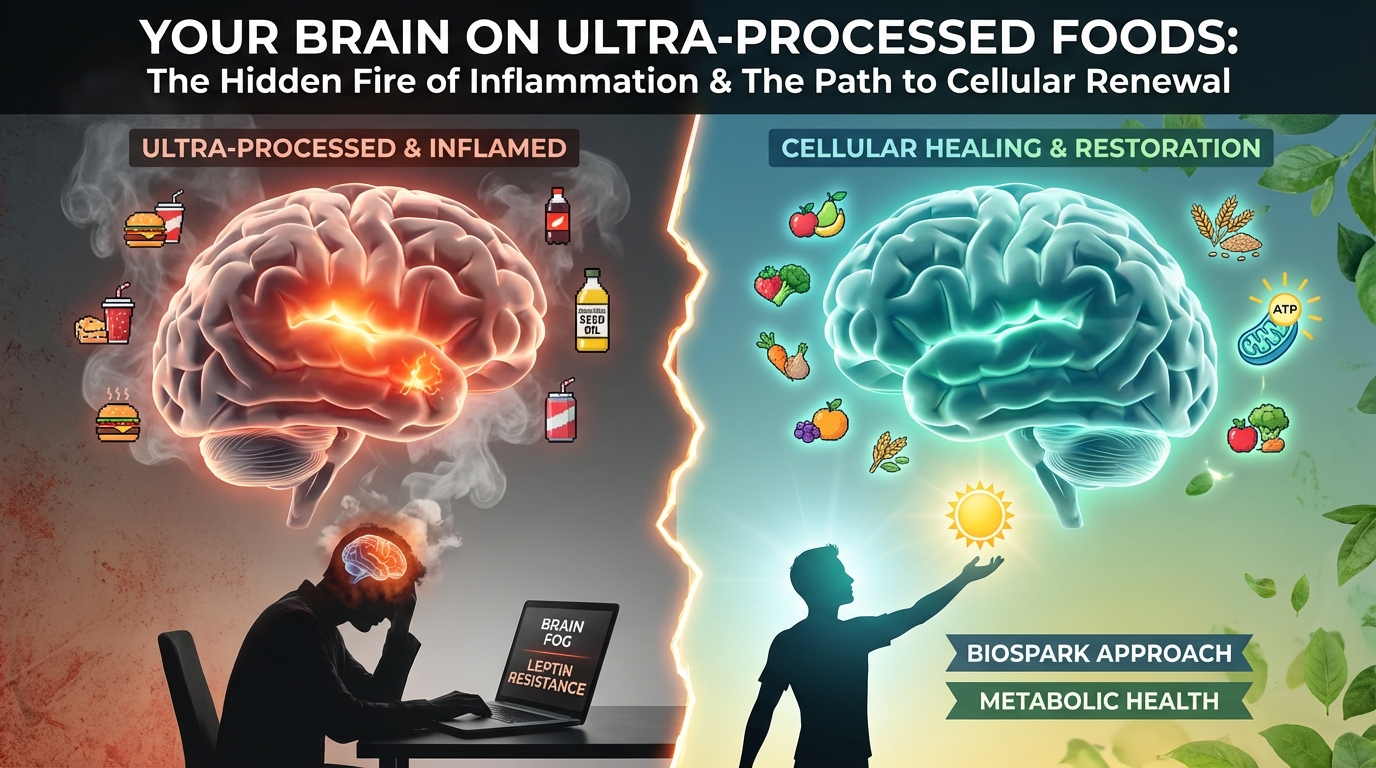
Research suggests that chronic overeating damages brain neurons in the hypothalamus.
When this happens, your body goes into fix-it mode. It sends in a biological repair team to address the injury. This temporarily increases inflammation to the area, just like the soreness you feel for a couple of days when you accidentally cut yourself.
That is how your body heals. Problems arise when you keep damaging the same area over and over by eating lots of ultra-processed foods. It is like poking an open wound with a pointy stick. The inflammation, known as "hypothalamic inflammation," does not go away.
In a groundbreaking study published in the Journal of Clinical Investigation, researchers found something alarming.
Rodent models of obesity induced by consuming a high-fat diet showed inflammation both in peripheral tissues and in hypothalamic areas critical for energy homeostasis.
Here is the critical finding. Unlike inflammation in peripheral tissues, which develops as a consequence of obesity, "hypothalamic inflammatory signaling was evident in both rats and mice within 1 to 3 days of HFD onset, prior to substantial weight gain."
Let that sink in for a moment. The brain damage begins within days of starting a high-fat, ultra-processed diet, before any weight gain even occurs.
Furthermore, "both reactive gliosis and markers suggestive of neuron injury were evident in the hypothalamic arcuate nucleus of rats and mice within the first week of HFD feeding."
What does this mean? It means your brain is being damaged before your body even shows signs of weight gain. The hypothalamic injury comes first.
Although these responses temporarily subsided in the study, suggesting that neuroprotective mechanisms may initially limit the damage, the implications are clear. With continued exposure to ultra-processed foods, "inflammation and gliosis returned permanently to the mediobasal hypothalamus."
The researchers also found evidence of increased gliosis in the mediobasal hypothalamus of obese humans, assessed by MRI. As they concluded, "These findings collectively suggest that, in both humans and rodent models, obesity is associated with neuronal injury in a brain area crucial for body weight control."
Why Is This So Bad?
Hypothalamic inflammation seems to alter how your body responds to appetite and hunger-regulating hormones.
Specifically, it increases ghrelin, a hormone that stimulates appetite. At the same time, it creates resistance to leptin, a hormone that signals fullness.
The greater your leptin resistance, the more your brain ignores the message that you have had enough to eat.
That is a double-whammy that triggers a vicious cycle. You are now biologically programmed to overeat even more. This exacerbates hypothalamic inflammation.
You are now poking the wound with two pointy sticks.
It Gets Worse
Ultra-processed foods have also been shown to negatively affect your microbiome, creating an unhealthy bacterial environment in your gut.
The "bad bugs" start running things instead of the "good bugs."
What does that have to do with your brain? Your gut and brain are constantly chatting with one another. This communication pathway is called the "gut-brain axis." And the health status of one has profound effects on the other.
A comprehensive review in Nature Reviews Gastroenterology & Hepatology found that "ultra-processed foods and food additives have become ubiquitous components of the modern human diet." The researchers noted "increasing evidence of an association between diets rich in UPFs and gut disease, including inflammatory bowel disease, colorectal cancer and irritable bowel syndrome."
The evidence shows that some emulsifiers, sweeteners, colours, and microparticles and nanoparticles "have effects on a range of outcomes, including the gut microbiome, intestinal permeability and intestinal inflammation."
When your gut microbiome is compromised by ultra-processed foods, it produces inflammatory compounds that travel systemically. These compounds can cross the blood-brain barrier and contribute to neuroinflammation.
This is why so many people experience brain fog, mental fatigue, and difficulty concentrating after eating processed meals.
The connection runs even deeper. Your gut produces about 95% of your body's serotonin, often called the "happiness hormone." When ultra-processed foods damage your gut lining and alter your microbiome, serotonin production suffers. This affects your mood, sleep quality, and cognitive function.
Guess what can happen when your gut is not healthy? Two words: hypothalamic inflammation.
Now we are up to three pointy sticks.
How Does All This Impact You Long Term?
The research is only catching up, but it is building quickly.
An umbrella review published in BMJ evaluated the existing meta-analytic evidence of associations between exposure to ultra-processed foods and adverse health outcomes. An umbrella review is one of the most comprehensive forms of evidence synthesis, analyzing multiple meta-analyses to provide the highest level of evidence.
The researchers systematically reviewed meta-analyses from MEDLINE, PsycINFO, Embase, and the Cochrane Database of Systematic Reviews, spanning from 2009 to June 2023.
What did they find? Direct exposure to ultra-processed foods was linked to an increased risk of 32 different health outcomes. These included cancer, cardiovascular, gastrointestinal, metabolic, respiratory, mental, and mortality outcomes.
The strongest associations were seen with cardiometabolic diseases, common mental disorders, and all-cause mortality.
This is not just about willpower or making better choices. Ultra-processed foods are literally damaging the biological systems that regulate your appetite, energy, and cognition.
The Metabolic Perspective: Why Your Brain Needs the Right Fuel
Here is what most brain health articles miss. Your brain is an energy-hungry organ. Although it represents only about 2% of your body weight, it consumes about 20% of your energy.
The primary fuel for your brain is glucose. When you eat ultra-processed foods, you are not providing clean energy. You are providing metabolic poison that disrupts cellular energy production.
The polyunsaturated fats (PUFAs) prevalent in processed vegetable oils are particularly problematic. These fats are highly unstable and prone to oxidation. When they oxidize, they create toxic byproducts that damage mitochondria. Your mitochondria are the energy-producing powerhouses of your cells, including your brain cells.
When mitochondrial function is compromised, your brain cannot produce energy efficiently. This manifests as brain fog, mental fatigue, difficulty concentrating, and mood disturbances.
The mainstream conversation about brain health often ignores this metabolic reality. They talk about "brain foods" and memory supplements while missing the fundamental issue. Your brain cells need to produce energy efficiently to function optimally.
Ultra-processed foods do not just fail to support energy production. They actively sabotage it.
What About Low-Carb and Keto for Brain Health?
You have probably heard that low-carb and ketogenic diets are great for brain health. The marketing claims these diets improve cognitive function, mental clarity, and focus.
Here is what is actually happening.
When you restrict carbohydrates, your body does what it is designed to do. It activates survival mechanisms. Your brain still needs glucose, so your body begins breaking down its own tissue through a process called gluconeogenesis to produce it. This process is energetically wasteful and stressful.
To compensate, your body also produces ketones, which can provide some fuel to your brain. However, this entire state is mediated by stress hormones like cortisol and adrenaline.
These stress hormones are not benign. They downregulate your thyroid function, suppress reproductive hormones, and over time, damage your hypothalamus further. This is why many people on long-term ketogenic diets experience hormonal issues, sleep disturbances, and metabolic slowdown.
The temporary mental clarity some people experience on keto is not because their brain is functioning optimally. It is because they are running on stress hormones, which provides a false sense of energy while slowly depleting their reserves.
True brain health comes from supporting your metabolism, not suppressing it.
The Biospark Approach: Healing Your Brain from the Cellular Level
At Biospark Health, we take a different approach. Rather than giving you a list of foods to avoid or supplements to take, we address the root cause of brain fog and cognitive decline.
We start by understanding your unique metabolic state. Through comprehensive assessment, we identify how your body is producing energy, where inflammation may be originating, and what specific factors are compromising your brain function.
The hypothalamus is incredibly resilient when given the right support. By reducing exposure to ultra-processed foods, supporting mitochondrial function, and restoring metabolic flexibility, we have seen patients experience remarkable improvements in cognitive function, mental clarity, and overall well-being.
This is not about quick fixes or temporary solutions. It is about creating the metabolic conditions that allow your brain to heal and function at its best.
Our Approach Includes
- Comprehensive metabolic assessment to identify your unique patterns
- Cellular energy support to restore optimal mitochondrial function
- Hormonal balance restoration through proper nutrition and lifestyle
- Gut-brain axis repair to reduce systemic inflammation
- Hypothalamic healing protocols to reset appetite and energy regulation
The brain damage caused by ultra-processed foods is real, but it is not inevitable. And more importantly, it is not always permanent. When you address the root metabolic causes, your brain has an incredible capacity to heal.
Ready to restore your brain health at the cellular level?
The Bioenergetic Reset Program addresses the root causes of cognitive decline, brain fog, and metabolic dysfunction. Join 300+ members who have discovered what real metabolic health feels like.
- 9+ hours of comprehensive training on brain health and metabolism
- Twice-monthly LIVE coaching calls with Dr. Presciutti
- Complete meal plans and protocols to support hypothalamic healing
- Direct email support for your questions
$97/month | Cancel anytime
The Advice Here Should Be Obvious
You want to avoid ultra-processed foods and strive to eat a minimally processed, plant-rich, whole-food diet.
This can help you naturally eat less and, as weird as it sounds, literally avoid brain damage. By default, this approach also ensures you consume a healthy amount of all the foods that can actually enhance both your brain and gut health.
Even small changes can help. Research shows that replacing just 10% of ultra-processed foods in your diet with unprocessed or minimally processed alternatives can significantly reduce your risk of adverse health outcomes.
From there, you can keep going for even greater benefits.
What to Eat for Brain Health
Here is what to focus on for optimal brain health.
Load Up on Fiber-Rich Plant Foods
Vegetables, fruits, nuts, seeds, and legumes should form the foundation of your diet. These foods support a healthy microbiome, which reduces systemic inflammation.
A healthy gut means a healthier brain through the gut-brain axis.
Embrace Prebiotic Foods
Prebiotics feed the beneficial bacteria in your gut. Focus on avocados, artichokes, asparagus, berries, peas, chia seeds, and pistachios.
When your gut bacteria are well-fed, they produce compounds that support brain health, including short-chain fatty acids that reduce inflammation.
Include Fermented Foods
Sauerkraut, kimchi, kefir, and yogurt (unsweetened goat or sheep is best) are packed with probiotics. These are friendly bacteria that populate your gut and keep the bad guys in check.
Remember, what is good for your gut is good for your brain.
Do Not Forget Polyphenol-Rich Foods
Berries, dark chocolate, and green tea have been shown to boost cognition and memory. They also taste delicious.
Polyphenols are powerful antioxidants that protect brain cells from oxidative damage. They also improve blood flow to the brain, supporting cognitive function.
Choose Quality Carbohydrates
Your brain needs glucose to function properly. Do not fear carbohydrates. Choose ripe fruits, root vegetables, and well-cooked legumes.
These provide steady energy for your brain without the blood sugar spikes that contribute to inflammation and cognitive decline.
Avoid the Worst Offenders
Some ultra-processed foods are particularly damaging to brain health.
- Industrial seed oils (soybean, corn, canola, vegetable oil)
- Artificial sweeteners
- Foods with long ingredient lists full of chemicals you cannot pronounce
- Products with added sugar disguised under multiple names
- Anything designed to be hyper-palatable and impossible to stop eating
Brain Health and Metabolic Support in Reading and Berks County, Pennsylvania
If you are struggling with brain fog, cognitive concerns, or mental fatigue in the Reading or Wyomissing area, you are not alone. Many residents throughout Berks County face similar challenges, often without access to practitioners who understand the metabolic root causes.
At Biospark Health, we serve clients throughout southeastern Pennsylvania, including Lancaster, Downingtown, Allentown, and the greater Philadelphia suburbs. Our approach to brain health focuses on restoring cellular energy production and reducing the inflammation that compromises cognitive function.
Whether you are in West Chester, King of Prussia, or anywhere in the Chester County area, our virtual and in-person options make it easy to get the metabolic support you need. We do not just treat symptoms. We identify and address the underlying metabolic dysregulation that affects your brain health.
The conventional approach to cognitive decline often waits until symptoms are severe. At Biospark Health, we believe in early intervention and prevention. By addressing hypothalamic inflammation and supporting metabolic health now, you can protect your brain for years to come.
Frequently Asked Questions About Brain-Damaging Foods
What foods affect the hypothalamus?
Unhealthy diets high in fat and sugar can cause hypothalamic inflammation. Research shows that hypothalamic inflammatory signaling is evident within 1 to 3 days of starting a high-fat diet, before substantial weight gain occurs. The hypothalamus regulates appetite, energy expenditure, sleep, emotions, and sex drive. When inflamed, it dysregulates these critical functions.
What are the 5 worst foods that trigger inflammation?
The worst foods for triggering inflammation and brain damage are ultra-processed foods including industrial seed oils (soybean, corn, canola, vegetable oil), artificial sweeteners, foods with long ingredient lists of chemical additives, products with added sugars disguised under multiple names, and anything designed to be hyper-palatable and impossible to stop eating. These foods trigger hypothalamic inflammation, disrupt the gut-brain axis, and compromise mitochondrial energy production.
What causes inflammation of the hypothalamus?
Prolonged over-nutrition leads to sustained hypothalamic inflammatory processes via interactions between neurons and non-neuronal cell populations. Research shows that unlike inflammation in peripheral tissues, which develops as a consequence of obesity, hypothalamic inflammation occurs within days of exposure to a high-fat, ultra-processed diet, before weight gain. This perpetuates initially reversible processes and ultimately results in uncoupling between caloric intake and energy expenditure, fostering overeating and further damage.
What are the five neurotoxic foods to avoid?
The most neurotoxic foods to avoid are ultra-processed foods containing industrial seed oils high in polyunsaturated fats, artificial sweeteners that damage the gut microbiome, foods with chemical emulsifiers and additives that increase intestinal permeability, products with refined sugars that spike blood sugar and inflammation, and any processed foods designed to be hyper-palatable that bypass satiety signals. These foods damage the hypothalamus, mitochondria, and gut-brain axis.
What are hypothalamic inflammation symptoms?
Symptoms of hypothalamic inflammation include increased appetite and cravings (especially for ultra-processed foods), leptin resistance (feeling full despite having eaten enough), ghrelin elevation (constant hunger signals), difficulty losing weight despite dieting, brain fog and mental fatigue, sleep disturbances, mood changes including depression and anxiety, and hormonal imbalances. These occur because the hypothalamus regulates appetite, energy, sleep, emotions, and hormones.
Can ultra-processed foods actually cause brain damage?
Yes. Research published in the Journal of Clinical Investigation shows that chronic consumption of ultra-processed foods damages neurons in the hypothalamus, the brain region that regulates appetite, energy, and hormones. This damage triggers chronic inflammation that accelerates cognitive decline and increases dementia risk. The good news is that the brain can heal when given the right metabolic support through reducing ultra-processed foods and restoring cellular energy production.
How long does it take to see improvements in brain fog after changing diet?
Many people notice improvements in brain fog and mental clarity within 2-4 weeks of reducing ultra-processed foods and supporting metabolic health. However, deeper healing of hypothalamic inflammation and mitochondrial function typically takes 2-3 months. The key is consistency and addressing all the factors that affect cellular energy production, not just diet alone.
How do I reset my hypothalamus naturally?
To reset your hypothalamus naturally, eliminate ultra-processed foods and industrial seed oils that cause inflammation, focus on nutrient-dense whole foods that support mitochondrial function, include quality carbohydrates for brain glucose needs, support gut health with fermented and prebiotic foods, prioritize sleep to reduce stress hormones, and engage in gentle movement that supports metabolic flexibility. Working with a practitioner who understands the metabolic root causes can accelerate this process.
The Bottom Line: Your Brain Needs Real Food
Ultra-processed foods are literally damaging your brain. They injure your hypothalamus, trigger chronic inflammation, disrupt your gut-brain axis, and compromise the mitochondrial energy production your brain needs to function.
The mainstream conversation about brain health often misses this fundamental truth. Your brain is not a separate entity from your body. It is deeply affected by your metabolic state, your gut health, and the quality of fuel you provide.
The good news is that your brain has remarkable capacity for healing when given the right support. By reducing ultra-processed foods, supporting metabolic health, and addressing the root causes of inflammation, you can protect your cognitive function for years to come.
You do not have to accept brain fog as normal. You do not have to believe cognitive decline is inevitable. Your brain was designed to function at a high level throughout your entire life. Sometimes it just needs the right metabolic support to get there.
Tags:
References & Citations
This article is supported by scientific research and peer-reviewed sources. Click citations to verify the evidence.
- [1]Thaler JP, Yi CX, Schur EA, Guyenet SJ, Hwang BH, Dietrich MO, Zhao X, Sarruf DA, Izgur V, Maravilla KR, Nguyen HT, Fischer JD, Matsen ME, Wisse BE, Morton GJ, Horvath TL, Baskin DG, Tschöp MH, Schwartz MW(2012)Obesity is associated with hypothalamic injury in rodents and humans.Journal of Clinical Investigation.View Source
- [2]Hall KD, Ayuketah A, Brychta R, Cai H, Cassimatis T, Chen KY, Chung ST, Costa E, Courville A, Darcey V, Fletcher LA, Forde CG, Gharib AM, Guo J, Howard R, Joseph PV, McGehee S, Ouwerkerk R, Raisinger K, Rozga I, Stagliano M, Walter M, Walter PJ, Yang S, Zhou M(2019)Ultra-Processed Diets Cause Excess Calorie Intake and Weight Gain: An Inpatient Randomized Controlled Trial.Cell Metabolism.View Source
- [3]Lane MM, Gamage E, Du S, Ashtree DN, McGuinness AJ, Gauci S, Baker P, Lawrence M, Rebholz CM, Srour B, Touvier M, Jacka FN, O'Neil A, Segasby T, Marx W(2024)Ultra-processed food exposure and adverse health outcomes: umbrella review of epidemiological meta-analyses.BMJ.View Source
- [4]Whelan K, Bancil AS, Lindsay JO, et al.(2024)Ultra-processed foods and food additives in gut health and disease.Nature Reviews Gastroenterology & Hepatology.View Source
- [5]Zhang Y, Giovannucci EL(2023)Ultra-processed foods and health: a comprehensive review.Critical Reviews in Food Science and Nutrition.View Source
All references have been reviewed for scientific accuracy and credibility. Citations follow standard academic format and link to original research where available.
About Dr. Steven Presciutti, MD
Founder & Health Coach at Biospark Health, specializing in bioenergetic health and metabolism optimization.