The Light Switch for Your Metabolism: Why Red Light Recharges Mitochondria and Lowers Blood Sugar (When You Time It Right)
Red light therapy for blood sugar works by recharging your mitochondria. Learn how 15 minutes lowers post-meal glucose, and the timing mistake that backfires.
Medical Disclaimer
This content is for informational and educational purposes only. It is not a substitute for professional medical advice, diagnosis, or treatment. Always seek the advice of your physician or other qualified health provider with any questions you may have regarding a medical condition.
Here is a sentence that sounds like science fiction but is settled biology: a 15-minute dose of red light, shined on your back, can lower your post-meal blood sugar by nearly 28 percent. No drug. No injection. No fasting. Just light.
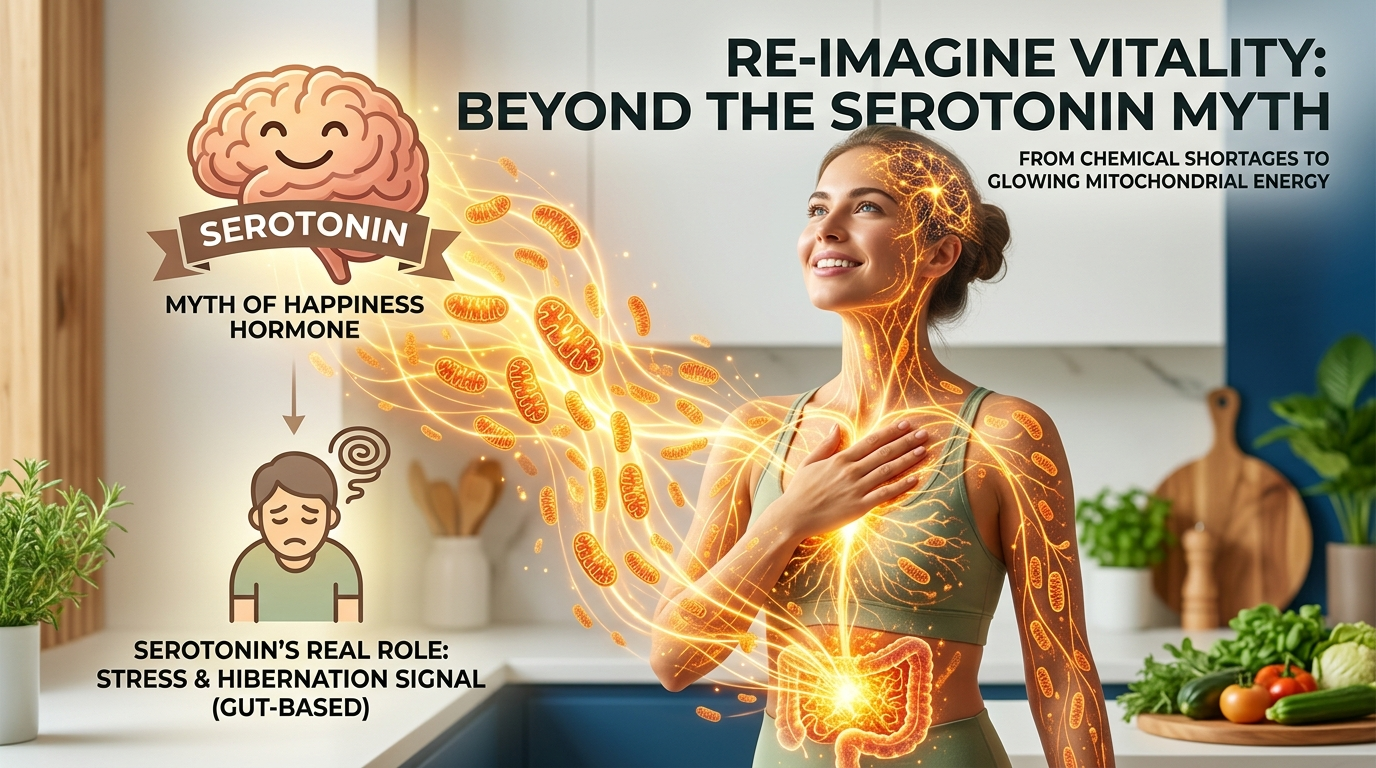
If that surprises you, it should. Most of us were raised to think of light as something for our eyes and our mood, and of sunlight as a hazard to be slathered over with SPF 50. But the deepest truth about red light therapy for blood sugar has nothing to do with vision and everything to do with the tiny power plants inside every one of your cells. Light is not just a signal. Light is fuel.
In this article you will learn how red and near-infrared light physically recharge your mitochondria, why that translates into faster blood sugar clearance and a higher metabolic rate, and the single timing mistake that turns this powerful tool against you. Because here is the catch that almost nobody talks about: using red light, or coffee, or a cold plunge on an empty stomach can backfire badly. The bioenergetic model explains exactly why, and it changes how you should use every metabolic tool you own.
How Red Light Therapy for Blood Sugar Actually Works
To understand why light lowers blood sugar, you have to go down to the level of the mitochondria, the structures inside your cells that turn food and oxygen into usable energy. The final, rate-limiting step of that energy assembly line is an enzyme called cytochrome c oxidase, also known as Complex IV.
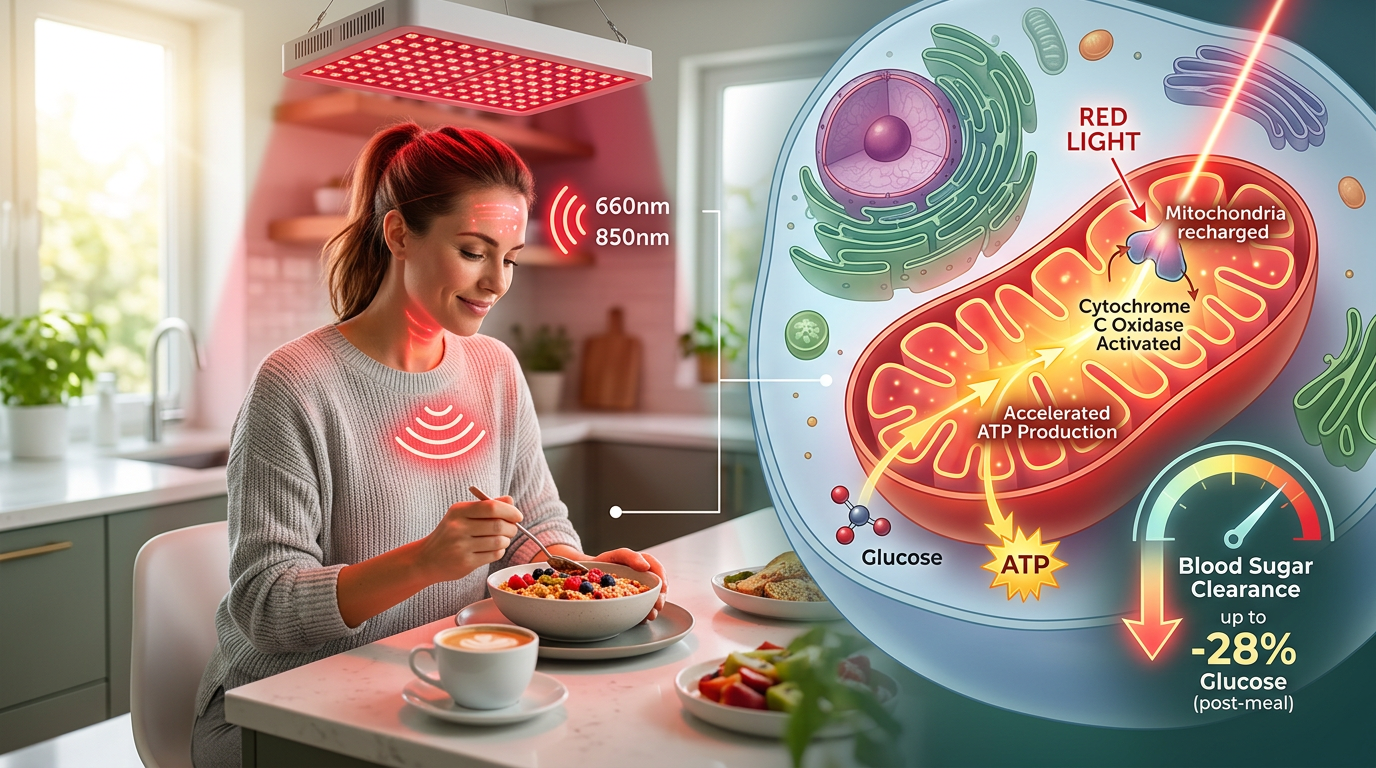
Cytochrome c oxidase is packed with copper and iron atoms. Those metals are not just structural. They act as chromophores, which is a fancy word for molecules that absorb light. When red and near-infrared wavelengths, roughly in the 600 to 1000 nanometer range, reach this enzyme, the metals absorb that light energy and the whole enzyme starts working faster (Hamblin, 2018). The electron transport chain stops bottlenecking. ATP, the cell's energy currency, gets produced more rapidly and more cleanly.
There is an elegant second effect. Near-infrared light also helps build what researchers call structured water inside the cell, a more ordered layer of water that behaves almost like a tiny battery, storing charge and making the final ATP-producing machinery run more smoothly. The practical upshot is simple: light makes your cellular engines run hotter and cleaner.
Now connect that to blood sugar. When your mitochondria are sluggish, your cells cannot fully burn glucose. They fall back on an inefficient, stress-driven pathway called glycolysis, which produces lactic acid and leaves sugar circulating in the blood. When you switch the mitochondria back on with red light, the cells start completely oxidizing glucose for fuel again. Sugar gets pulled out of the bloodstream and burned, rather than left to pile up. That is precisely what researchers observed when 15 minutes of red light exposure produced a 28 percent reduction in post-meal glucose (Powner and Jeffery, 2024). The light did not lower blood sugar by magic. It lowered blood sugar by waking up the machinery that is supposed to consume it.
This is the part mainstream medicine consistently misses. The conventional view treats red light therapy as a skin-deep cosmetic gadget, good for wrinkles or sore shoulders. The bioenergetic view sees it for what it is: a systemic metabolic stimulant that reaches all the way down to how your body handles carbohydrates.
Your Mitochondria Run on Light: The Sunlight Connection
Red light therapy panels are not the original source of this effect. The sun is. Near-infrared light makes up somewhere between 15 and 20 percent of the radiation pouring out of the sun, while the famous UVB rays that make vitamin D account for only about 5 percent. In other words, the dominant metabolic signal in sunlight is not the part dermatologists obsess over. It is the deeply penetrating red and infrared light that reaches your mitochondria.
This reframes the entire conversation about sun exposure. For decades the message has been that sunlight is essentially a carcinogen to be avoided. The bioenergetic perspective does not dismiss sunburn risk, but it insists that hiding from the sun entirely starves you of one of the most fundamental nutrients your metabolism needs. Near-infrared light is to your mitochondria what food is to your stomach.
There is a striking clinical demonstration of this in the eye. Researchers found that looking at a deep red 670 nanometer light for just a few minutes a day improved color vision in adults over 40, and they traced the improvement directly to recharged mitochondria in the retina (Shinhmar et al., 2020; Sivapathasuntharam et al., 2017). The retina is the most energy-hungry tissue in the body, and its mitochondria decline with age. Red light measurably reversed part of that decline. If light can restore failing energy production in the retina, it should not surprise you that it can do the same in muscle, liver, and the thyroid.
Speaking of the thyroid, this is where the bioenergetic tradition gets specific and practical. The late Ray Peat, whose work anchors much of the metabolic health movement, frequently recommended shining red light directly on the front of the neck. The logic is straightforward: red light penetrates the skin, reaches the mitochondria inside the thyroid cells, and stimulates them to produce more hormone. Because thyroid hormone sets your whole-body metabolic rate, supporting the thyroid with light has effects that ripple through your entire metabolism, including how warm you feel, how well you sleep, and how efficiently you burn sugar.
The Timing Mistake That Sabotages Everything
Here is where most enthusiastic biohackers go wrong, and where the bioenergetic model offers a warning you will not hear from the gadget manufacturers. Red light is a metabolic stimulant. It makes your cells work harder and burn glucose faster. That is wonderful when your tank has fuel in it. It is dangerous when your tank is empty.
Think about what happens overnight. While you sleep, you are fasting, and your liver slowly drains its glycogen, the stored backup glucose that keeps your blood sugar stable between meals. By morning, especially if you ate dinner early or skipped carbohydrates, that reserve can be running low. Your brain, which absolutely depends on a steady glucose supply, is already on alert.
Now imagine you wake up and immediately hit your body with a stimulant: a powerful red light session, a strong black coffee, a cold plunge, or all three, all on an empty stomach. You have just told depleted cells to burn glucose faster. But there is little glucose to burn. The body does what it must to keep your brain alive. It pumps out adrenaline and cortisol, the stress hormones, to force the issue.
Those stress hormones do two destructive things. First, cortisol triggers gluconeogenesis, a process in which the body breaks down your own muscle, organ tissue, and even your immune tissue, converting their proteins into emergency glucose. You are quite literally cannibalizing yourself to feed your brain. Second, adrenaline floods your blood with free fatty acids that actively block your cells from using whatever glucose remains, which drives the very insulin resistance you are trying to avoid.
This is the same reason the bioenergetic model warns against coffee on an empty stomach. That jittery, wired, slightly anxious feeling you get from morning coffee before breakfast is not energy. It is your body running on stress hormones because it is starving. Red light on an empty stomach, a cold plunge on an empty stomach, and a fasted morning workout all share the same flaw. They demand energy from a system that has none to give, and they pay for it by breaking down your tissues.
The fix is beautifully simple. Eat first. Pair any metabolic stimulant with adequate, easily digestible carbohydrate, such as ripe fruit, juice, milk, or honey. When you do, red light has the fuel it needs to drive clean, efficient glucose oxidation, and you get all of the benefit with none of the stress response. Used after a meal, red light becomes profoundly protective. Used on an empty stomach, it becomes one more catabolic stressor. Same tool, opposite outcomes, decided entirely by timing.
This same logic explains why artificial blue light at night is so harmful. After sunset, screens and LED bulbs blast your eyes with isolated blue light around 480 nanometers, with none of the balancing red and infrared wavelengths found in nature. Your brain reads that blue light as midday and keeps cortisol elevated when it should be falling. Chronically elevated nighttime cortisol blocks the conversion of inactive T4 thyroid hormone into active T3, which slows your metabolism night after night. Modern research now links artificial light at night directly to a higher risk of type 2 diabetes (Baek et al., 2024), and the broader study of circadian biology shows that when your light signals and your eating fall out of sync, insulin resistance follows (Stenvers et al., 2019). Light is not neutral. The right light at the right time heals. The wrong light at the wrong time harms.
The Biospark Approach: Light as a Metabolic Tool, Not a Gimmick
At Biospark Health, we do not treat red light therapy as a standalone miracle or a box you buy and point at yourself. We treat it as one lever within a complete bioenergetic strategy, and like every lever, it only works when the underlying metabolism is supported.
That means we start with the foundation. Is your thyroid producing and converting hormone properly? Are you eating enough carbohydrate to keep liver glycogen topped up, so that stimulants like light and coffee build energy instead of stress? Are your light signals aligned with your circadian rhythm, bright and full-spectrum by day, warm and dim by night? Dr. Steven Presciutti approaches each of these not as isolated problems but as parts of one connected system, because that is how the body actually works.
When we do use light therapeutically, the protocols are specific and they are paired with food. Morning sunlight, ideally within 30 minutes of waking and always outdoors, since window glass filters out the beneficial wavelengths. Red or near-infrared exposure after meals, not before, to help clear blood sugar when the fuel is present. Red light on the neck to support the thyroid. And on the protective side, strict darkness and warm incandescent light in the evening to keep nighttime cortisol low and protect your thyroid conversion. You do not need to spend thousands of dollars on equipment. The sun is free, and an incandescent bulb costs a dollar.
Ready to restore your metabolism at the cellular level?
The Bioenergetic Reset Program addresses root causes, not symptoms. Join 300+ members who've discovered what real metabolic health feels like.
- 9+ hours of comprehensive training
- Twice-monthly LIVE coaching calls
- Complete meal plans and protocols
- Direct email support
$97/month | Cancel anytime
Red Light Therapy and Metabolic Health in Reading and Berks County, PA
If you are struggling with stubborn blood sugar, low energy, or a metabolism that feels stuck in the Reading or Wyomissing area, you are not alone. Many residents throughout Berks County have been told their labs are normal while they still feel cold, tired, and unable to lose weight. Conventional care rarely connects these symptoms to the deeper question of how well your cells are producing energy.
At Biospark Health, we serve clients throughout southeastern Pennsylvania, including Lancaster, Downingtown, Allentown, and the greater Philadelphia suburbs. Our root-cause approach to metabolic health looks at the whole system, from thyroid function to circadian light exposure to the fuel on your plate, rather than chasing one number at a time.
Whether you are in West Chester, King of Prussia, or anywhere in the Chester County area, our virtual and in-person options make it easy to get the metabolic support you need. Tools like red light therapy work best inside a complete plan, and that is exactly what we build with each client.
Frequently Asked Questions
Does red light therapy raise or lower blood sugar?
It lowers it, when used correctly. By recharging the mitochondria, red light helps your cells fully oxidize glucose instead of leaving it in the bloodstream. Research found that 15 minutes of red light reduced post-meal blood glucose by nearly 28 percent (Powner and Jeffery, 2024). The key is to use it after eating, when there is fuel to burn, rather than on an empty stomach.
Does red light therapy actually speed up metabolism?
Yes, through two paths. Directly, it boosts ATP production inside your cells by activating cytochrome c oxidase. Indirectly, when applied to the neck, it stimulates the thyroid gland, which sets your whole-body metabolic rate. Both effects raise your capacity to burn fuel and generate energy.
Why don't most doctors recommend red light therapy?
Conventional medicine tends to view red light as a cosmetic skin treatment rather than a metabolic intervention, so it falls outside standard diabetes and weight management protocols. The deeper mitochondrial science, while well documented in the photobiomodulation literature, has not yet filtered into routine practice. That gap is exactly where a bioenergetic approach adds value.
When is the best time to use red light therapy?
After a meal that contains some carbohydrate, and during daylight hours rather than late at night. Morning sunlight is the original and best source. Avoid using powerful stimulants of any kind, light, coffee, or cold exposure, on a completely empty stomach, because that can trigger a cortisol and adrenaline stress response instead of clean energy.
Can I just use sunlight instead of a red light device?
For most people, yes, and it is the better starting point. Near-infrared light is the dominant metabolic component of sunlight, far more abundant than the UVB that makes vitamin D. Daily outdoor light exposure, especially in the morning and around midday, delivers the same mitochondrial benefits for free. Devices are a useful supplement in winter or for targeted use like the thyroid.
Conclusion
The most important nutrient your metabolism needs may be the one you cannot eat. Red and near-infrared light reach down into your cells and recharge the very machinery that produces energy and burns sugar, which is why a few minutes of the right light can lower blood glucose, support the thyroid, and lift a sluggish metabolism. This is not a fringe idea. It is mitochondrial biology, and the evidence keeps growing.
But the same tool that heals when timed well can harm when timed badly. Stimulating an empty, fasted body forces it to break itself down for fuel. The lesson is the lesson at the heart of the bioenergetic model: support your body before you push it. Feed the engine, then turn up the light. Get morning sun, protect your evenings from blue light, eat enough to keep your tank full, and use light as the powerful metabolic ally it was always meant to be.
If you are ready to stop guessing and build a complete, root-cause plan for your metabolism, we would love to help you find your spark.
Tags:
References & Citations
This article is supported by scientific research and peer-reviewed sources. Click citations to verify the evidence.
- [1]Powner MB, Jeffery G(2024)Light stimulation of mitochondria reduces blood glucose levels.Journal of Biophotonics.View Source
- [2]Hamblin MR(2018)Mechanisms and Mitochondrial Redox Signaling in Photobiomodulation.Photochemistry and Photobiology.View Source
- [3]Shinhmar H, et al.(2020)Optically Improved Mitochondrial Function Redeems Aged Human Visual Decline.The Journals of Gerontology: Series A, Biological Sciences and Medical Sciences.View Source
- [4]Baek JH, et al.(2024)Artificial Light at Night and Type 2 Diabetes Mellitus.Diabetes and Metabolism Journal.View Source
- [5]Stenvers DJ, et al.(2019)Circadian clocks and insulin resistance.Nature Reviews Endocrinology.View Source
All references have been reviewed for scientific accuracy and credibility. Citations follow standard academic format and link to original research where available.
About Dr. Steven Presciutti, MD
Founder & Health Coach at Biospark Health, specializing in bioenergetic health and metabolism optimization.